Call Us Now:
+92 300 9842234
Side Info Heading
Side Info Text
Gallery Heading
Follow Us

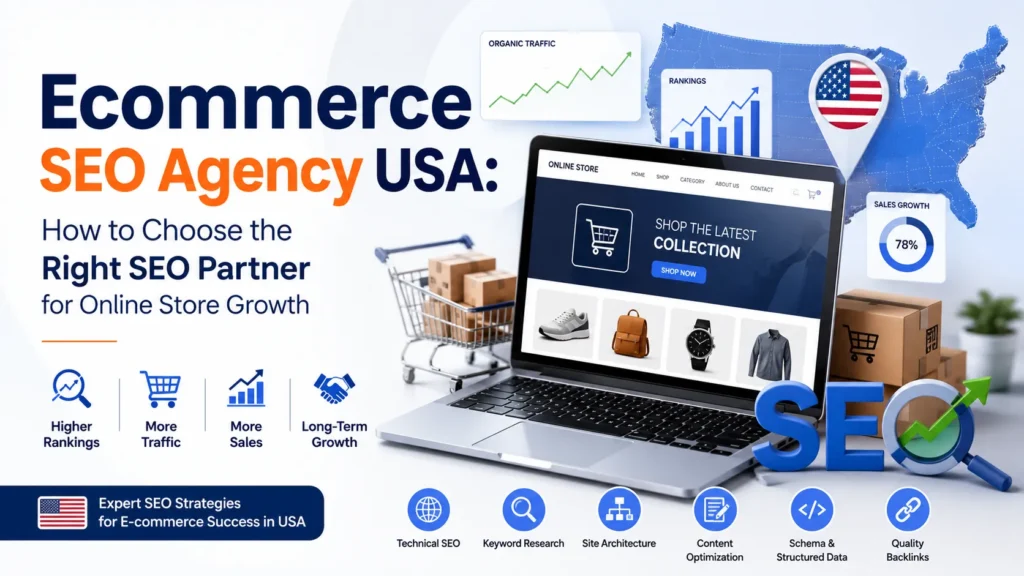
Running an ecommerce store in the United States means competing in crowded search results. Even strong products can struggle to generate sales if customers cannot find them online.
An ecommerce SEO agency USA businesses trust helps improve product and category visibility, technical SEO, site structure, content, and search performance. Tekcurio supports ecommerce businesses with tailored SEO strategies focused on attracting qualified organic traffic and supporting sustainable growth.
This guide explains key ecommerce SEO services, benefits, and how to choose the best ecommerce SEO agency USA for your online store.
What Is an Ecommerce SEO Agency?
An ecommerce SEO agency is a specialized search marketing company that helps online stores improve their visibility in organic search results for product, category, brand, informational, and transactional searches.
For example, a general SEO campaign might focus heavily on service pages and blog articles. An ecommerce campaign may involve hundreds or thousands of URLs representing products, collections, filters, brands, variants, and categories. This creates different challenges.
An ecommerce SEO team may need to determine which filtered URLs should be indexed, how products should be organized into categories, whether discontinued product pages should remain accessible, how product variants should be handled, and how internal links should distribute authority across a large website.
A capable SEO agency in USA markets should therefore understand both search optimization and ecommerce website architecture.
Why Is Ecommerce SEO Important for Online Stores?

Ecommerce SEO helps online stores attract people who are actively searching for products, product categories, brands, comparisons, solutions, and buying information.
Paid advertising can generate traffic quickly, but traffic normally decreases when campaigns stop. SEO works differently. Strong category pages, product pages, useful resources, and technically optimized site architecture can continue attracting organic visitors after the initial optimization work has been completed.
Consider an online store selling running equipment. Potential customers may search for:
- Men’s lightweight running shoes
- Trail running shoes for beginners
- Running shoes for flat feet
- Best shoes for long-distance running
- Waterproof trail running shoes
These searches represent different needs and stages of the customer journey. A well-planned ecommerce SEO strategy maps appropriate pages to each type of intent rather than trying to make one page rank for every related term. SEO can therefore support both product discovery and broader brand visibility.
How Is Ecommerce SEO Different From Traditional SEO?
Ecommerce SEO uses many of the same principles as traditional SEO, including keyword research, technical optimization, content quality, links, and user experience. The difference is largely in scale, architecture, and commercial intent.
Area | Traditional SEO | Ecommerce SEO |
Main pages | Service and informational pages | Products, categories, collections and brands |
Keyword focus | Informational and service intent | Transactional, commercial and informational intent |
Site structure | Usually relatively simple | Often large and multi-level |
Duplicate content risk | Moderate | Often higher because of filters and variants |
Internal linking | Important | Critical for product discovery and crawl paths |
Structured data | Depends on website | Product-related markup is often important |
Inventory changes | Usually limited | Products may regularly become unavailable or discontinued |
Main business metrics | Leads, inquiries and traffic | Revenue, transactions, conversions, and organic visibility |
Technical complexity | Varies | Can become substantial on large catalogs |
A store with 20,000 products cannot always be optimized page by page manually. Prioritization, templates, automation, technical controls, and scalable content standards become much more important.
What Does an Ecommerce SEO Agency in the USA Do?

An ecommerce SEO agency typically combines technical SEO, keyword research, site architecture, category and product optimization, content strategy, structured data, internal linking, digital authority building, and performance measurement. The exact strategy should depend on the store rather than a fixed package.
Ecommerce SEO Audit
A professional campaign often starts with an audit. The agency evaluates how search engines discover, crawl, understand, and index the store. It may also review which pages currently generate impressions, clicks, rankings, conversions, and revenue.
Important areas can include indexation, canonicalization, redirects, duplicate pages, XML sitemaps, robots directives, internal links, structured data, Core Web Vitals, mobile usability, and site architecture.
The purpose of an audit is not simply to produce a long list of errors. A useful audit prioritizes issues according to their likely business impact and implementation difficulty.
Ecommerce Keyword Research
Keyword research for an online store should connect search demand with actual products and categories. An agency may classify keywords according to intent, such as:
- Transactional: A shopper is close to purchasing a specific product.
- Commercial investigation: The user is comparing products, brands, features, or alternatives.
- Informational: The user wants advice, education, or help solving a problem.
Good research also considers product terminology, category relationships, modifiers, audience language, seasonality, and search-result competition.
Category Page Optimization
Category and collection pages are often among an ecommerce website’s most important organic landing pages because they can target broader commercial searches while displaying multiple relevant products.
Optimization may involve:
- Improving titles, headings, and page copy without keyword stuffing
- Matching categories with the correct search intent
- Strengthening internal links and breadcrumbs
- Creating useful subcategories where search demand justifies them
- Improving metadata and page templates
- Preventing unnecessary filter URLs from creating indexation problems
The objective is to make the category useful for both shoppers and search engines.
Product Page SEO
Product pages usually need clear, original, and accurate information. A strong product page may contain a descriptive product name, useful specifications, images, availability information, shipping or return information where relevant, reviews, FAQs, and related-product links.
Manufacturers often distribute the same descriptions to many retailers. Simply copying those descriptions can make it difficult for a store to provide distinctive search value. For priority products, original descriptions and genuinely helpful buying information can create a stronger page.
What Technical SEO Issues Affect Ecommerce Websites?

Technical SEO is particularly important for ecommerce because stores can generate large numbers of URLs. Filters for size, color, price, material, brand, rating, and other attributes can sometimes create thousands of URL combinations. If these are handled poorly, search engines may spend resources crawling low-value or repetitive pages.
Common ecommerce technical issues include duplicate URLs, incorrect canonical tags, redirect chains, orphan pages, broken internal links, poor mobile performance, slow templates, inconsistent pagination, unnecessary indexable filters, outdated sitemaps, and discontinued product URLs.
An experienced agency should not automatically block every filtered page. Some filter combinations may represent useful search landing pages. Decisions should be based on search demand, uniqueness, crawl behavior, and user value.
How Should Ecommerce Site Architecture Be Structured?
A good ecommerce architecture allows shoppers and search engines to move logically from broad sections to categories, subcategories, and products without unnecessary complexity.
A simplified structure might look like:
Home → Main Category → Subcategory → Product
For example:
Home → Women’s Clothing → Jackets → Waterproof Jacket
Important commercial pages should generally not be buried unnecessarily deep within the website. Breadcrumbs, navigation menus, related categories, contextual links, and product recommendations can all strengthen navigation and internal linking.
The architecture should also reflect how real customers shop. Search volume alone should not determine the entire structure.
Why Does Content Matter for Ecommerce SEO?
Ecommerce SEO is not limited to optimizing product descriptions. Useful content can attract people before they are ready to purchase and help them make better buying decisions later.
A furniture retailer, for instance, might publish information about choosing the right dining-table size, comparing materials, measuring a room, maintaining wooden furniture, or understanding different furniture styles.
This creates opportunities to rank for informational and commercial queries that product pages alone may not satisfy. Strong ecommerce content can include buying guides, comparisons, educational articles, sizing resources, FAQs, care instructions, product-selection guides, and category-level advice.
The important principle is usefulness. Publishing hundreds of thin articles merely to target keywords is unlikely to create the same long-term value as building genuinely useful resources around customer needs.
What Role Does Structured Data Play in Ecommerce SEO?
Structured data helps search engines understand specific information on a webpage in a machine-readable format. For ecommerce sites, relevant structured data may describe products, offers, prices, availability, reviews, breadcrumbs, organizations, and other supported information.
Correct implementation can make a page eligible for certain enhanced search-result features, although using structured data does not guarantee that those features will appear.
Markup should accurately reflect information visible on the page. Creating misleading ratings, prices, availability, or other structured information can cause problems rather than improve performance.
How Does an Ecommerce SEO Agency Build Authority?
Authority building should focus on earning relevant, credible references rather than generating large numbers of low-quality backlinks.
Depending on the business, opportunities might include digital PR, original research, useful industry resources, supplier relationships, legitimate business directories, expert contributions, partnerships, and editorial coverage.
A top ecommerce SEO agency USA businesses consider should be able to explain how links are acquired. Be cautious when an agency promises a fixed number of high-authority links without explaining their relevance or acquisition method. Link quality cannot be judged by a third-party authority metric alone.
How Does SEO Support AI and Generative Search Visibility?
Search discovery is expanding beyond traditional lists of blue links. AI-powered search systems may summarize information, compare options, surface products, or answer detailed questions directly. This makes clear website information increasingly valuable.
An ecommerce site can improve its machine readability by maintaining logical architecture, descriptive headings, accurate product information, clear entity relationships, useful FAQs, structured data where appropriate, consistent brand information, and original expert content.
There is no special optimization technique that guarantees inclusion in an AI-generated answer. The stronger approach is to create accurate, accessible, well-structured information that search and retrieval systems can understand.
How Do You Choose the Best Ecommerce SEO Agency USA?
The best ecommerce SEO agency USA businesses should fit their platform, catalog size, competitive environment, internal resources, budget, and growth goals. Before hiring an agency, evaluate the following areas:
- Ecommerce experience: Ask whether the team has worked with stores similar to yours in scale or complexity.
- Technical expertise: The agency should understand crawling, indexation, canonicalization, faceted navigation, structured data, JavaScript issues, and website performance.
- Platform knowledge: Experience with platforms such as Shopify, WooCommerce, BigCommerce, Magento/Adobe Commerce, or custom systems can be valuable.
- Strategy transparency: You should understand what will be done, why it matters, and how success will be measured.
- Business-focused reporting: Reports should connect SEO activity with qualified traffic, conversions, revenue, and important commercial pages where tracking allows.
- Realistic expectations: Avoid agencies promising guaranteed rankings or instant results.
- Communication: Clarify who manages the account, how often progress is discussed, and who is responsible for implementing technical recommendations.
A good agency should also ask questions about your margins, priority categories, seasonal products, competitors, customer journey, analytics setup, and development resources before finalizing its strategy.
What Is the Difference Between Affordable and Cheap Ecommerce SEO?
An affordable SEO company in USA market is not necessarily the agency with the lowest monthly price. Affordability is better understood as appropriate value for the available budget.
A smaller store may not require the same technical resources as a retailer managing hundreds of thousands of URLs. A sensible agency can prioritize work according to business impact rather than selling unnecessary services.
Very cheap SEO becomes risky when the low price depends on automated content, spammy links, superficial audits, or minimal strategic work. When comparing proposals, ask what is actually included, who performs the work, how implementation is handled, and which outcomes will be measured.
What Should an Ecommerce SEO Strategy Include?
A sustainable ecommerce strategy usually combines several interconnected activities rather than relying on one tactic. A practical sequence is:
- Measure the current position. Review organic traffic, important rankings, indexed pages, conversions, revenue attribution, and technical health.
- Identify technical barriers. Resolve high-impact crawling, indexing, architecture, speed, or duplicate-content issues.
- Map search intent. Match keywords and customer needs with categories, products, brands, and informational resources.
- Optimize priority commercial pages. Start with categories and products offering meaningful business opportunities.
- Strengthen internal linking. Help users and crawlers discover important pages logically.
- Develop useful supporting content. Address questions customers ask before, during, and after product selection.
- Build legitimate authority. Earn relevant mentions and links through valuable resources and relationships.
- Measure and refine. Use performance data to determine where further improvements are likely to matter.
SEO should be treated as an ongoing improvement process because product catalogs, competitors, search behavior, websites, and search systems change.
Which Metrics Should an Ecommerce SEO Agency Track?
Rankings can be useful indicators, but they should not be the only measure of success.
An ecommerce campaign can monitor organic impressions, clicks, non-brand visibility, category-page performance, product-page performance, organic conversions, revenue attributed to organic search, conversion rate, new-user acquisition, indexed-page trends, and technical health.
Revenue measurement requires context. A ranking improvement for a high-volume keyword can look impressive but provide little value if visitors do not engage with the store or purchase relevant products. Conversely, a lower-volume transactional term may produce highly qualified visitors.
The best SEO company in USA for an ecommerce business should therefore connect search metrics with meaningful business outcomes whenever reliable analytics data is available.
How Long Does Ecommerce SEO Take?
Ecommerce SEO usually requires sustained work rather than producing predictable results within a fixed number of days.
The timeline varies according to the website’s current condition, domain history, technical problems, competition, catalog size, development resources, content quality, and how quickly recommended changes are implemented.
Some technical improvements may be completed relatively quickly, but search engines still need time to recrawl and reassess affected pages. Competitive category growth can take considerably longer. Businesses should be cautious of anyone guaranteeing a particular ranking by a specific date.
Should You Hire an Agency or Build an In-House SEO Team?
Both approaches can work. An agency may be suitable when a business needs access to technical SEO, content strategy, digital PR, analytics, and ecommerce expertise without hiring several full-time specialists. An internal team can provide deeper day-to-day knowledge of products, customers, merchandising, and company priorities.
Larger ecommerce businesses sometimes use a hybrid model. Internal marketing, merchandising, content, and development teams work alongside a specialized agency that provides strategy, technical expertise, audits, research, or additional execution capacity.
The right model depends on budget, store complexity, available staff, and the amount of SEO work required.
What Questions Should You Ask Before Hiring an Ecommerce SEO Agency?
Before signing an agreement, ask specific questions rather than relying entirely on sales presentations. Useful questions include:
How will you audit our ecommerce website?
The answer should cover technical, content, architecture, search intent, and performance considerations.
How do you prioritize SEO work?
Strong agencies usually consider impact, effort, business importance, and technical dependencies.
How do you handle faceted navigation?
The agency should understand that there is no universal rule for every filter or ecommerce platform.
Who will create and implement recommendations?
Clarify whether developers, writers, strategists, or your internal team will be responsible.
How will you measure success?
Look for reporting that goes beyond a simple ranking report.
How do you approach link acquisition?
Avoid unclear answers involving bulk or guaranteed links.
What happens if results are slower than expected?
A trustworthy agency should discuss analysis and strategy adjustments rather than make unrealistic guarantees.
What Are Common Ecommerce SEO Mistakes?
One common mistake is focusing entirely on product pages while ignoring category pages and architecture. Another is creating large amounts of near-duplicate content just to target slight keyword variations. Modern search optimization should focus on satisfying meaningful intent rather than manufacturing a separate page for every phrase.
Other problems include allowing unlimited filter URLs to be indexed, deleting discontinued products without considering redirects or alternatives, relying only on manufacturer descriptions, neglecting internal links, using inaccurate structured data, and measuring success entirely through rankings.
Technical SEO, content, merchandising, development, and user experience need to work together.
Can Ecommerce SEO Increase Sales?
Ecommerce SEO can contribute to sales by increasing qualified organic visibility, but rankings and traffic do not automatically produce revenue. Sales also depend on product-market fit, pricing, availability, shipping, website usability, trust, product presentation, checkout experience, and conversion rate.
This is why responsible SEO reporting distinguishes between visibility, traffic, engagement, conversions, and revenue. SEO brings relevant potential customers to the store. The entire ecommerce experience determines what happens afterward.
Frequently Asked Questions
What does an ecommerce SEO agency do?
An ecommerce SEO agency improves the organic visibility of online stores through technical SEO, keyword research, category and product optimization, content, internal linking, structured data, and authority building.
What is the best ecommerce SEO agency USA businesses should choose?
There is no single best agency for every store. Choose one with relevant ecommerce experience, transparent methods, strong technical skills, realistic expectations, and reporting connected to business goals.
How much does ecommerce SEO cost in the USA?
Costs vary considerably based on catalog size, competition, technical complexity, content requirements, platform, and scope. Compare deliverables and expertise rather than choosing solely by monthly price.
Is ecommerce SEO worth it?
It can be valuable for stores where customers actively search for the products, categories, brands, or solutions they sell. Its value should ultimately be assessed using qualified traffic, conversions, and revenue-related metrics.
Can an affordable SEO company in USA deliver good results?
Yes. An affordable provider can offer strong value when its scope matches the business’s needs. Low cost becomes a concern when it relies on poor-quality content, spammy links, or minimal strategic work.
Does Shopify need SEO?
Yes. Shopify provides useful SEO functionality, but stores still need keyword strategy, architecture, content optimization, internal linking, technical management, and ongoing performance analysis.
Is SEO better than paid advertising for ecommerce?
They serve different purposes. Paid advertising can provide immediate visibility, while SEO focuses on building organic discoverability over time. Many ecommerce businesses use both channels together.
Conclusion
Choosing an ecommerce SEO agency USA businesses can trust requires more than comparing prices or ranking promises. The right agency should understand ecommerce technical SEO, product and category optimization, site architecture, content, and search intent.
Tekcurio helps ecommerce businesses build practical SEO strategies focused on stronger organic visibility, qualified traffic, and sustainable growth. Whether you need a top ecommerce SEO agency USA, an affordable SEO company in USA, or the best SEO company in USA for your needs, prioritize experience, transparency, and measurable business value.
Ready to improve your ecommerce search presence? Book your ecommerce SEO services with Tekcurio today and start building a stronger foundation for long-term organic growth.


Restaurant SEO Agency: How to Grow Restaurant Visibility, Traffic, and Reservations in Los Angeles
Jump To Restaurant SEO Agency: How to Grow Restaurant Visibility,
SEO Agency Los Angeles: How to Choose the Right SEO Partner for Business Growth
Jump To SEO Agency Los Angeles: How to Choose the
Best Google Ads Agency: How to Choose the Right PPC Partner in the USA
Jump To Best Google Ads Agency: How to Choose the
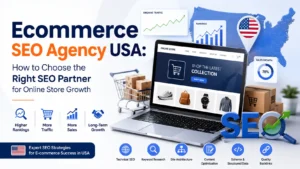
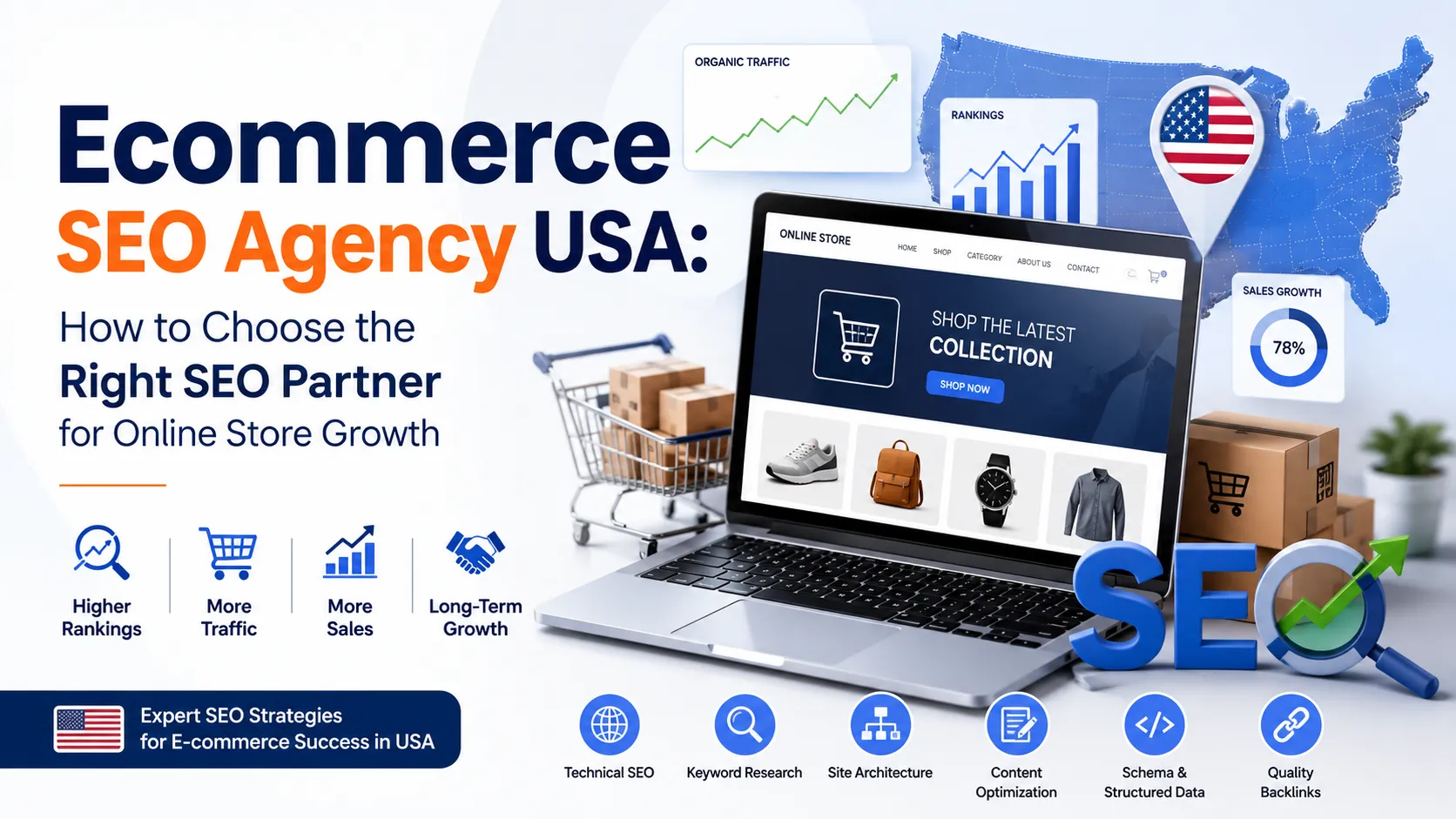
Ecommerce SEO Agency USA: How to Choose the Right SEO Partner for Online Store Growth
Jump To Ecommerce SEO Agency USA: How to Choose the