Call Us Now:
+92 300 9842234
Side Info Heading
Side Info Text
Gallery Heading
Follow Us


Finding the best Google Ads agency means choosing a partner that understands your business, audience, goals, and budget, not simply the agency with the biggest name. A skilled agency combines smart targeting, conversion tracking, compelling ads, landing-page optimization, and ongoing campaign improvements to generate meaningful results.
For businesses looking for the best Google Ads agency in USA, Tekcurio offers data-driven Google Ads management focused on qualified leads, sales, and measurable growth. Whether you run a small business, ecommerce store, or local company, the right PPC strategy can help you reach customers when they are actively searching for your products or services.
This guide explains what to look for in a Google Ads agency and how to choose the right PPC partner for your business.
What Is a Google Ads Agency?
A Google Ads agency is a digital marketing company that plans, creates, manages, measures, and optimizes advertising campaigns across Google’s advertising ecosystem. Depending on the business and campaign strategy, an agency may manage Search, Shopping, Performance Max, Display, YouTube, remarketing, and other campaign types.
The goal should not be to generate as many clicks as possible. A capable agency focuses on meaningful business outcomes such as qualified leads, online sales, booked appointments, phone calls, revenue, or profitable customer acquisition. A typical Google Ads agency may handle:
- Keyword and search-intent research
- Competitor and market analysis
- Campaign and ad group structure
- Search ad creation
- Negative keyword management
- Audience targeting
- Google Merchant Center and Shopping campaigns
- Performance Max campaigns
- Conversion tracking
- Landing-page recommendations
- Bid and budget optimization
- Search-term analysis
- Remarketing strategies
- Performance reporting
For many businesses, the most valuable part of agency management is continuous improvement. A campaign that performs well today still needs monitoring as competitors, search behavior, costs, offers, and customer demand change.
What Makes the Best Google Ads Agency?

The best agency is one that can connect advertising activity to business results. Clicks, impressions, click-through rate, and average cost per click are useful advertising metrics, but they do not tell the complete story. Businesses ultimately need to understand what they receive in return for their advertising investment.
A strong agency therefore pays attention to metrics such as cost per qualified lead, conversion rate, customer acquisition cost, revenue, return on ad spend (ROAS), lead quality, and profitability where the necessary data is available.
1. Strong Google Ads Expertise
Google Ads contains multiple campaign types, bidding strategies, targeting options, measurement tools, and automation features. An experienced agency should know when each option makes sense rather than automatically using the same campaign structure for every client.
For example, a local attorney, an ecommerce retailer, and a B2B software company may all advertise through Google, but they require very different strategies.
2. Reliable Conversion Tracking
Conversion tracking is one of the foundations of effective PPC management. An agency should be able to measure the actions that matter to the business, such as purchases, qualified form submissions, phone calls, appointment requests, or other valuable customer actions.
Without reliable measurement, optimization can become focused on traffic rather than actual business performance.
3. Transparent Reporting
A trustworthy agency should explain where the budget is going and what the campaigns are producing. Clients should be able to distinguish advertising spend from management fees and understand the most important performance metrics. Reports should provide context rather than presenting large amounts of data without explanation.
4. Ongoing Optimization
Google Ads management is not a one-time setup. Campaigns require ongoing analysis of search terms, keywords, bidding, budgets, ads, audiences, conversion data, landing pages, and competitive conditions.
An agency that launches campaigns and rarely changes them is unlikely to deliver the same value as a team that actively tests and improves performance.
How Do You Choose the Best Google Ads Agency in USA?

Start with your business objectives rather than an agency ranking. There is no universally best Google Ads agency in the world for every advertiser.
An agency that performs exceptionally well for large ecommerce brands may not be the best choice for a local home-service company. Similarly, a specialized B2B agency may be better suited to a manufacturer than an agency focused on direct-to-consumer brands. Use the following factors when comparing agencies:
Factor | What to Look For | Why It Matters |
Google Ads expertise | Demonstrated PPC experience | Reduces avoidable campaign mistakes |
Industry experience | Relevant clients or comparable business models | Helps the agency understand customer intent |
Conversion tracking | Proper measurement strategy | Connects advertising to results |
Reporting | Clear and transparent reports | Shows how the budget is performing |
Communication | Defined contact and review process | Makes collaboration easier |
Optimization | Regular testing and analysis | Helps improve campaigns over time |
Landing-page knowledge | Conversion-focused recommendations | Traffic alone does not create leads |
Fees | Clear management and setup costs | Helps calculate total investment |
Case studies | Results with sufficient context | Provides evidence of relevant experience |
Business understanding | Focus on leads, revenue and profitability | Keeps PPC aligned with business goals |
A useful first question is: How will you measure whether my campaign is successful? The answer can reveal a great deal about an agency’s approach.
What Should a Google Ads Agency Do Before Launching a Campaign?
A good agency should understand the business before spending a significant advertising budget. This usually means reviewing the company’s products or services, customer profile, locations, competitors, previous advertising data, margins, sales process, website, landing pages, and conversion tracking.
Campaign structure should come after this research. For example, imagine a company offers both emergency repair services and scheduled maintenance.
Customers searching for emergency repairs may have much stronger immediate intent than people researching maintenance options. Treating both groups identically can lead to inefficient spending. The campaign should reflect those differences in search intent.
Google Ads Agency for Small Business: What Matters Most?

A Google Ads agency for small business should be especially disciplined with budget allocation. Small companies often cannot afford to spend large amounts gathering low-quality traffic. The agency needs to identify the keywords, locations, times, services, and customer segments most likely to generate valuable conversions.
For a small business, look for an agency that prioritizes:
- High-intent searches rather than traffic volume
- Accurate geographic targeting
- Strong negative keyword lists
- Call and lead tracking
- Budget allocation based on performance
- Clear monthly reporting
- Landing pages built around a specific customer need
- Lead quality, not just lead quantity
A smaller budget does not automatically prevent Google Ads from working. It does, however, make focus and measurement more important.
How Should Local Businesses Search for a Google Ads Agency Near Me?
Searching for a Google Ads agency near me can help businesses find agencies familiar with their regional market, but physical proximity should not be the main selection criterion. Google Ads campaigns can be managed remotely, which means a company in Texas can potentially work successfully with an agency in California, New York, Florida, or another state.
Local knowledge becomes particularly useful when advertising performance depends heavily on neighborhoods, service areas, regional terminology, local competitors, or customer behavior. A local service company should ask whether the agency understands:
- Location targeting: Ads should focus on areas the business can realistically serve.
- Local search intent: Searches containing city, neighborhood, “near me,” and service-related terms can indicate strong intent.
- Call tracking: Phone calls can be an important conversion for local service businesses.
- Scheduling: Advertising may need to align with opening hours, sales-team availability, or emergency service availability.
Choose expertise over distance. A remote agency with deep experience in your industry can be a better choice than an inexperienced agency located a few miles away.
What Is the Best Google Ads Agency for Ecommerce?
A Google Ads agency for ecommerce should understand more than standard search advertising. Ecommerce performance depends heavily on product feeds, purchase tracking, product economics, and the relationship between advertising costs and revenue.
The agency should be comfortable working with Shopping campaigns, Performance Max, Merchant Center, product feeds, remarketing, purchase values, and ecommerce analytics. It should also understand that revenue alone is not always the same as profitability.
Suppose Product A generates $100 in revenue with a strong margin, while Product B generates the same $100 but has a much smaller margin. Optimizing purely around revenue may treat both products as equally valuable even though their business impact is different.
Where reliable margin and customer data are available, mature ecommerce strategies can use deeper business information to guide decisions.
Important Ecommerce Metrics
Common metrics include:
- ROAS: Revenue generated relative to advertising spend.
- Cost per acquisition: The advertising cost required to generate a customer or order.
- Conversion rate: The percentage of relevant visitors who complete a purchase.
- Average order value: The average value of completed orders.
- New customer acquisition cost: Particularly useful when growth depends on acquiring first-time buyers.
The right metrics depend on the company’s economics and goals.
Should You Hire an SEO and Google Ads Agency?
Hiring an SEO and Google Ads agency can make sense when paid and organic search are both important growth channels. SEO focuses on developing organic search visibility over time, while Google Ads can provide paid visibility for selected searches more quickly. Used together, the two channels can provide useful insights.
Paid search data can reveal which search terms convert well. SEO research can identify important informational and commercial topics. Landing-page insights from PPC may also help improve website usability.
However, simply offering both services does not make an agency good at both. Ask who manages SEO and PPC, how the teams collaborate, what each service includes, and how performance is reported separately.
Is a Google Ads Agency on Clutch Automatically a Good Choice?
Businesses often search for terms such as Google Ads agency Clutch when researching providers and reviews.
Third-party directories can be useful for discovering agencies and reviewing information such as service focus, client feedback, company size, and market positioning. They should be treated as one research source rather than a substitute for due diligence.
Before hiring an agency discovered through a directory, verify its claims independently. Review relevant case studies, ask for context behind results, discuss your goals directly with the team, understand the fee structure, and confirm who will actually manage your account. No directory position can guarantee future campaign performance.
What Questions Should You Ask Before Hiring a Google Ads Agency?
An agency consultation should help you determine whether the team understands both advertising and your business.
Consider asking:
- What types of Google Ads campaigns would you recommend for our business, and why?
- How will you track leads, sales, calls, or other conversions?
- How do you evaluate lead quality?
- How frequently will our account be reviewed?
- Who will manage the campaigns?
- What information will appear in our reports?
- How do you handle negative keywords and search terms?
- How do you determine budget allocation?
- Do you provide landing-page recommendations?
- What are your management, setup, or additional fees?
- Will we retain access to and ownership of our advertising account?
- How will success be evaluated after the first few months?
The quality of the answers matters more than polished sales language.
What Are the Warning Signs of a Poor Google Ads Agency?
Some warning signs should make advertisers cautious.
Guaranteed Results
No credible agency can guarantee a specific number-one ad position, fixed ROAS, or exact lead volume under all market conditions. Competition, demand, budgets, auction dynamics, website quality, pricing, and many other factors influence results.
Obsession With Clicks
Traffic is useful only when it supports a business objective. An agency celebrating a large increase in clicks while ignoring falling lead quality or profitability may be optimizing for the wrong outcome.
Weak Reporting
Reports that show only impressions, clicks, and CTR can hide the metrics that matter most.
No Discussion of Tracking
If an agency wants to increase spending without first understanding how conversions are measured, ask why.
Poor Transparency
You should understand the relationship between media spend, management fees, campaign activity, and results.
How Much Does a Google Ads Agency Cost?
There is no single standard Google Ads management price in the USA. Agencies commonly use flat monthly retainers, a percentage of advertising spend, tiered management packages, performance-related structures, or combinations of these models.
The cheapest agency is not necessarily the most economical. For example, saving several hundred dollars on management has little value if weak targeting wastes thousands in advertising spend. At the same time, expensive management does not automatically mean superior performance.
Evaluate total value, including strategy, management quality, tracking, reporting, communication, and results. Businesses should also distinguish between:
- Advertising budget: Money paid toward media placement.
- Agency fee: The amount paid for strategy and management.
- Additional costs: These might include landing-page development, creative production, tracking implementation, feed management, or other services depending on the agreement.
Ask for these costs to be explained before signing a contract.
How Long Does It Take a Google Ads Agency to Improve Results?
Google Ads can begin generating traffic soon after campaigns become eligible to serve, but meaningful optimization takes time.
The agency needs sufficient data to understand which searches, ads, audiences, devices, locations, landing pages, and other variables contribute to conversions. A practical optimization process often moves through four stages:
Stage 1: Research and Tracking
The agency defines goals, audits measurement, researches search intent, and develops campaign structure.
Stage 2: Launch and Data Collection
Campaigns begin gathering information about traffic and conversions.
Stage 3: Optimization
Search terms, keywords, budgets, bids, ads, audiences, and landing-page opportunities are evaluated and refined.
Stage 4: Scaling
Once reliable patterns emerge, successful areas may receive additional investment while inefficient areas are reduced or reworked.
Businesses should be cautious of agencies promising instant, predictable profitability before they have reviewed the account and underlying business economics.
How Can You Compare the Best Google Ads Agencies?
Create a shortlist rather than choosing the first agency you discover. Evaluate each company using the same criteria and give particular weight to experience relevant to your business model.
For example, an ecommerce brand might prioritize Shopping expertise and product-feed management. A local contractor might prioritize call tracking and geographic targeting. A B2B company may care more about qualified leads, CRM attribution, and long sales cycles.
Do not ask only, “Which is the best Google Ads agency?”
Ask:
“Which agency is best equipped to achieve our specific business objective with our budget, market, and sales process?”
That question usually leads to a better decision.
Frequently Asked Questions
What is the best Google Ads agency?
The best Google Ads agency is one that combines PPC expertise, accurate tracking, transparent reporting, ongoing optimization, and experience relevant to your business.
What is the best Google Ads agency in USA?
There is no single agency that is best for every U.S. advertiser. Compare agencies based on specialization, relevant experience, tracking capabilities, communication, fees, and measurable results.
Is there one best Google Ads agency in the world?
No objective agency is universally best for every business. Industry expertise, geography, budget, business model, campaign goals, and service requirements can change which agency is the strongest fit.
Is Google Ads good for small businesses?
It can be effective when campaigns target high-intent searches, use reliable conversion tracking, control geographic targeting, and allocate limited budgets carefully.
Should a small business hire a Google Ads agency?
An agency can be useful when the business lacks the time or expertise to manage PPC effectively. The management cost should still make financial sense relative to the available advertising budget.
Should I choose a Google Ads agency near me?
Not necessarily. Local knowledge can help, but relevant expertise, communication, tracking, and campaign management ability are usually more important than physical distance.
What should an ecommerce Google Ads agency provide?
Look for experience with Shopping, Merchant Center, product feeds, Performance Max, purchase-value tracking, remarketing, ROAS analysis, and ecommerce conversion optimization.
Is it better to hire an SEO and Google Ads agency?
It can be beneficial when you want an integrated search strategy, provided the agency has genuine expertise in both SEO and PPC.
How do I know whether my Google Ads agency is performing well?
Compare performance with business objectives. Qualified leads, sales, acquisition costs, conversion rates, revenue, and profitability are usually more meaningful than clicks alone.
Conclusion
Choosing the best Google Ads agency means finding a partner that understands your goals, audience, budget, and search intent while focusing on measurable results. Strong campaign management combines accurate conversion tracking, continuous optimization, transparent reporting, and smart budget allocation.
For businesses searching for the best Google Ads agency in USA, Tekcurio provides strategic Google Ads solutions for small businesses, ecommerce brands, and growing companies. With an integrated approach to SEO and Google Ads, Tekcurio focuses on generating qualified leads, increasing sales, and achieving sustainable business growth.
Choose an agency based on expertise, transparency, and measurable performance, not simply size or rankings. Ready to grow your business with Google Ads? Book your appointment with Tekcurio today and discuss the right advertising strategy for your business.
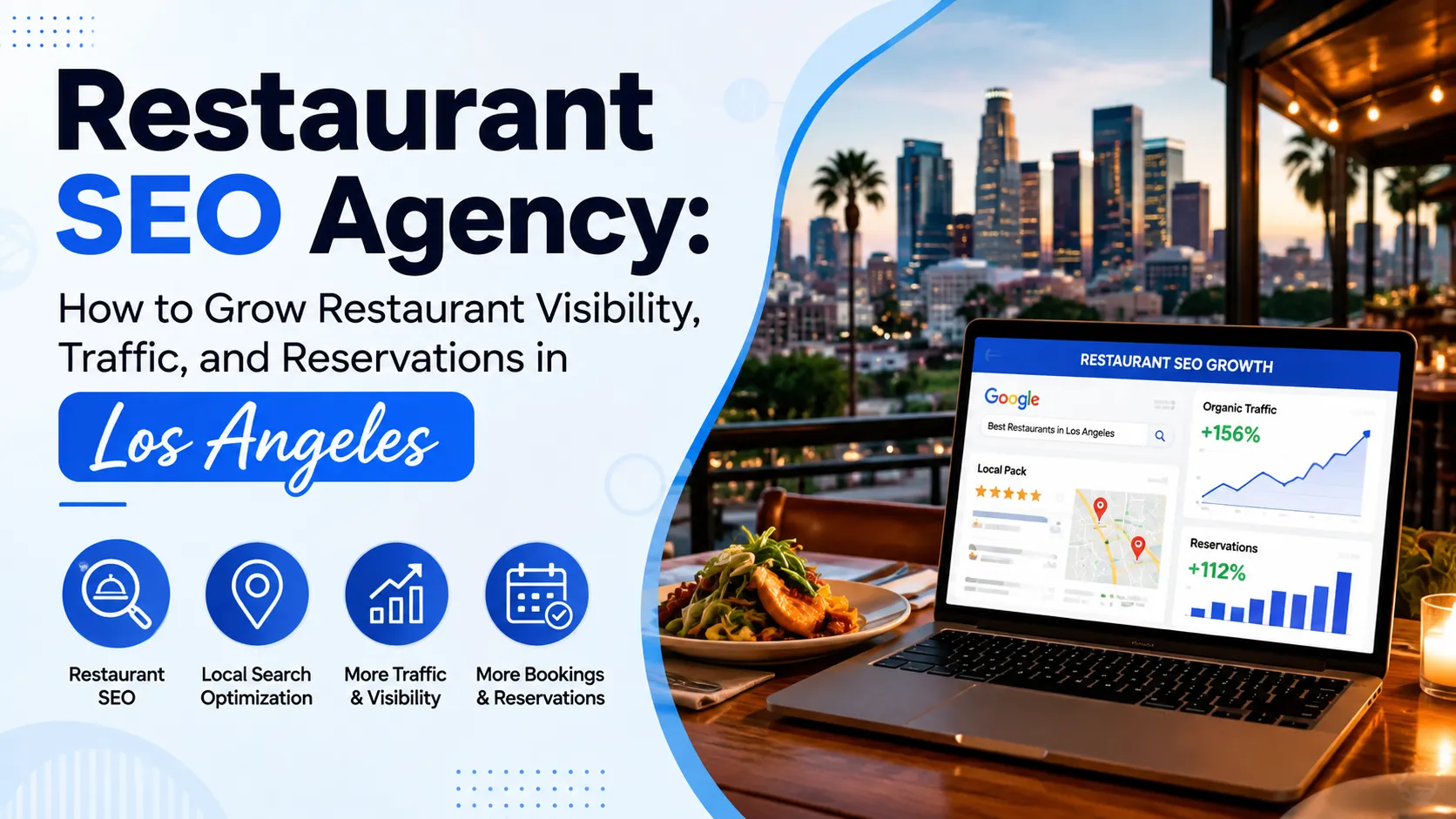
Restaurant SEO Agency: How to Grow Restaurant Visibility, Traffic, and Reservations in Los Angeles
Jump To Restaurant SEO Agency: How to Grow Restaurant Visibility,
SEO Agency Los Angeles: How to Choose the Right SEO Partner for Business Growth
Jump To SEO Agency Los Angeles: How to Choose the
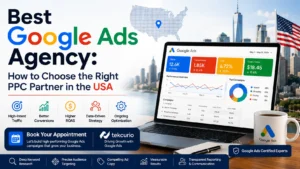
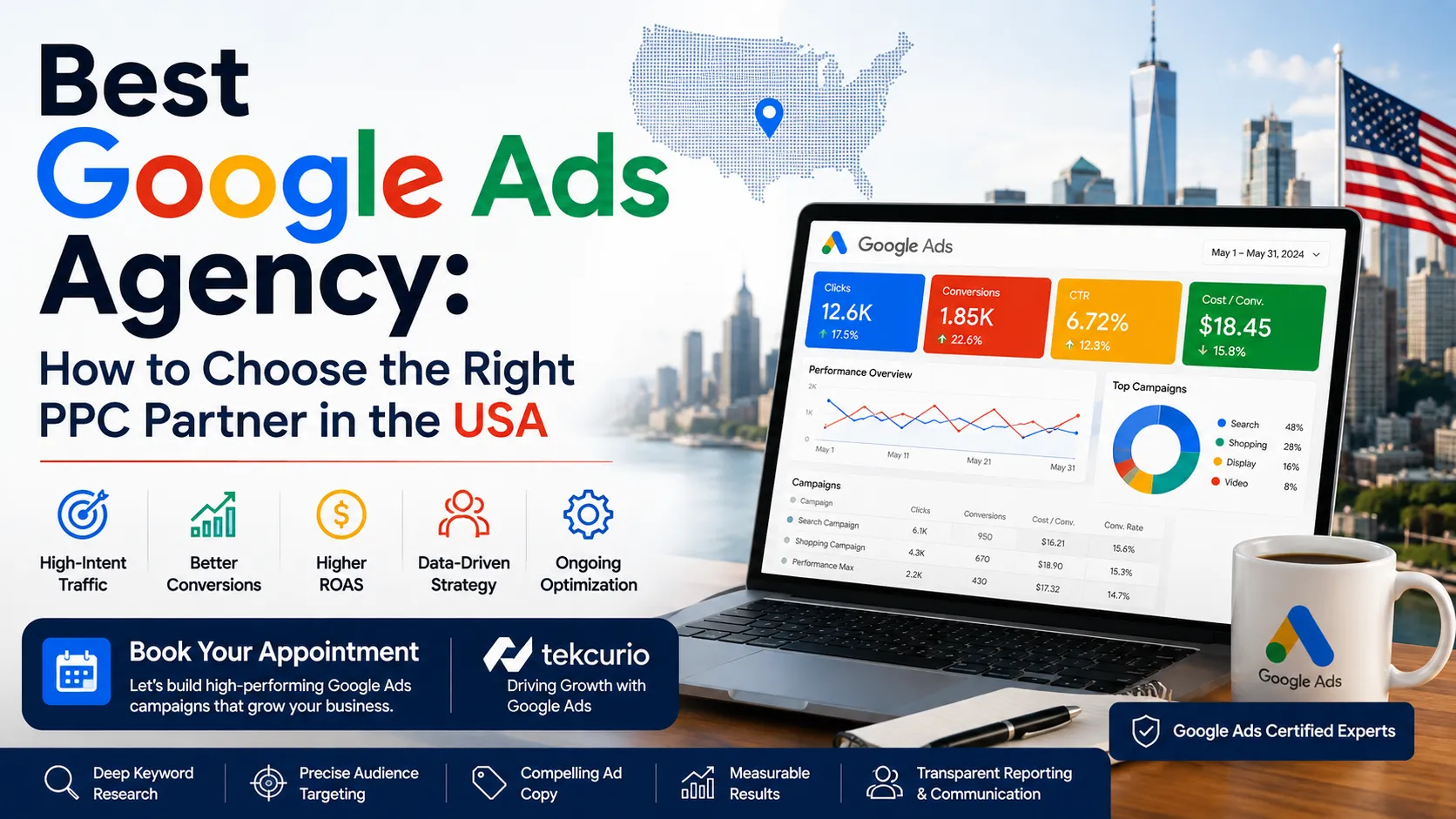
Best Google Ads Agency: How to Choose the Right PPC Partner in the USA
Jump To Best Google Ads Agency: How to Choose the
Ecommerce SEO Agency USA: How to Choose the Right SEO Partner for Online Store Growth
Jump To Ecommerce SEO Agency USA: How to Choose the