
Call Us Now:
+92 300 9842234
Side Info Heading
Side Info Text
Gallery Heading
Follow Us


What Is a Technology Marketing Agency?
A technology marketing agency is a marketing company that specializes in promoting technology products and services. It may work with SaaS companies, software firms, IT providers, AI platforms, cybersecurity brands, cloud services, and other B2B technology companies.
Technology marketing can be harder than marketing a simple consumer product. A customer buying shoes can often make a quick choice. A business buying software may need weeks or months. The buyer may ask:
- Does the product solve our problem?
- Will it work with our current systems?
- Is it secure?
- How hard is setup?
- What support is included?
- What will it cost?
- Is the return worth the investment?
A technology marketing agency creates content and campaigns that answer these questions. Its main job is simple: make a complex product easier to understand, find, and trust.
Why Do Technology Companies Need Specialized Marketing?
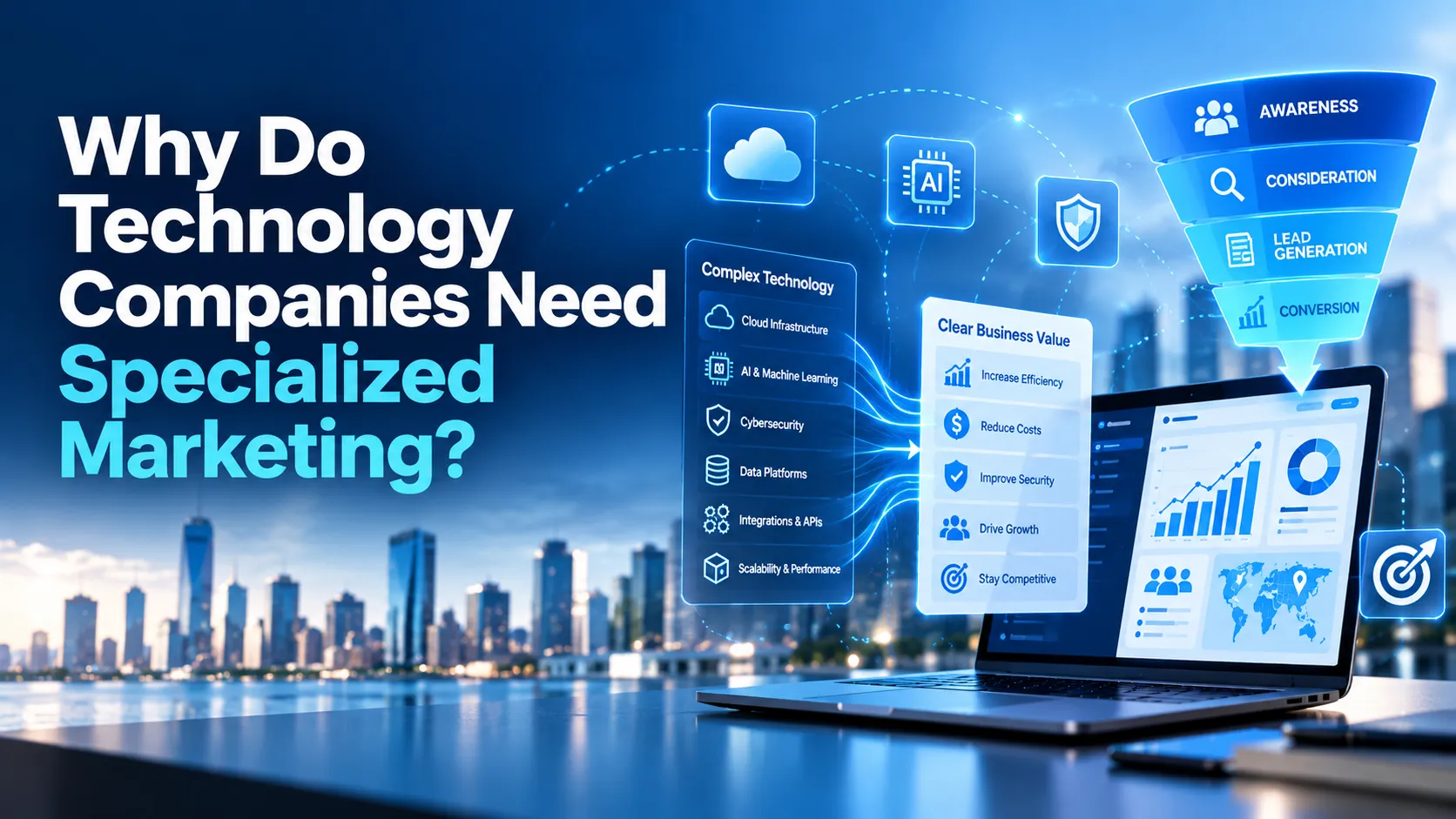
Many technology companies speak in technical language. Their product teams understand APIs, automation, integrations, infrastructure, machine learning, and security standards. Their customers may not. That creates a communication problem. For example, a company may describe its product like this:
“AI-enabled workflow automation with predictive task routing.”
The product may be excellent. But the message is not clear to every buyer. A simpler message might be:
“Reduce repetitive work and help your team complete tasks faster.”
Both statements may describe the same product. The second one makes the benefit easier to see. Good technology marketing connects the technical feature with the business result.
It also understands that several people may take part in a B2B purchase. A manager may care about productivity. An IT team may care about security. A finance team may focus on cost. Strong marketing gives each buyer the information they need.
What Does a Technology Marketing Agency Do?
A technology marketing agency may provide several services. The exact mix depends on the company and its goals.
Technology Marketing Strategy
Good marketing starts with research. An agency should first understand the product, market, customer, and sales process. It may study your competitors and current website. It may also review your existing campaigns. The agency then builds a plan around real business goals.
For example, a SaaS company may not need “more traffic.” It may need more demo requests from companies with 50 to 500 employees. That is a much clearer goal. A strong strategy defines who the company wants to reach and why those people should care.
SEO for Technology Companies
SEO helps potential buyers discover a company through search. Technology SEO often needs more than standard blog articles. A software company may need pages about integrations. It may also need competitor comparison pages, feature pages, use cases, and security information.
A cloud platform may create content about migration, setup, pricing, compatibility, and performance. A cybersecurity business may need clear pages about threats, compliance, protection, and risk.
These pages can answer questions that buyers search before they contact a sales team. The best SEO content does not repeat keywords again and again. It gives readers useful answers.
Technology Content Marketing
Technology buyers often research before they speak to a company. Content helps them during that process. A company may publish guides, case studies, comparison pages, FAQs, reports, and product education. The content should match the buyer’s stage.
Someone who has just discovered a problem may need a simple guide. Someone close to buying may want a comparison page, case study, security document, or product demo.
Technology content should also avoid unnecessary jargon. A reader should not need an engineering background to understand the main value.
Paid Advertising
Paid ads can help technology companies reach buyers faster. Common channels include Google Ads, LinkedIn Ads, paid social media, display campaigns, and retargeting. But traffic alone is not the goal.
For many technology companies, the real targets are product trials, qualified leads, demo requests, booked calls, and sales opportunities. For example, 50 well-matched visitors may have more business value than 5,000 random clicks. That is why targeting and conversion tracking matter.
Social Media Marketing
Social media can help a technology company build trust and stay visible. For B2B brands, content may focus on useful industry insight rather than constant promotion.
A company can share customer problems, product lessons, expert views, short videos, case studies, and company updates. The aim is not simply to post every day. Each post should support brand awareness, trust, education, or demand.
Website and Conversion Optimization
A marketing campaign can bring the right visitor to a website. The website must then do its job. Visitors should quickly understand what the company offers. They should also understand who the product is for and why it matters. A good technology website usually answers these questions early:
What does the product do? Who should use it? What problem does it solve? Why is it different? What should I do next? Small changes can improve conversions. Clearer headlines, shorter forms, better landing pages, stronger proof, and simple calls to action can all help.
A Practical Example of Technology Marketing
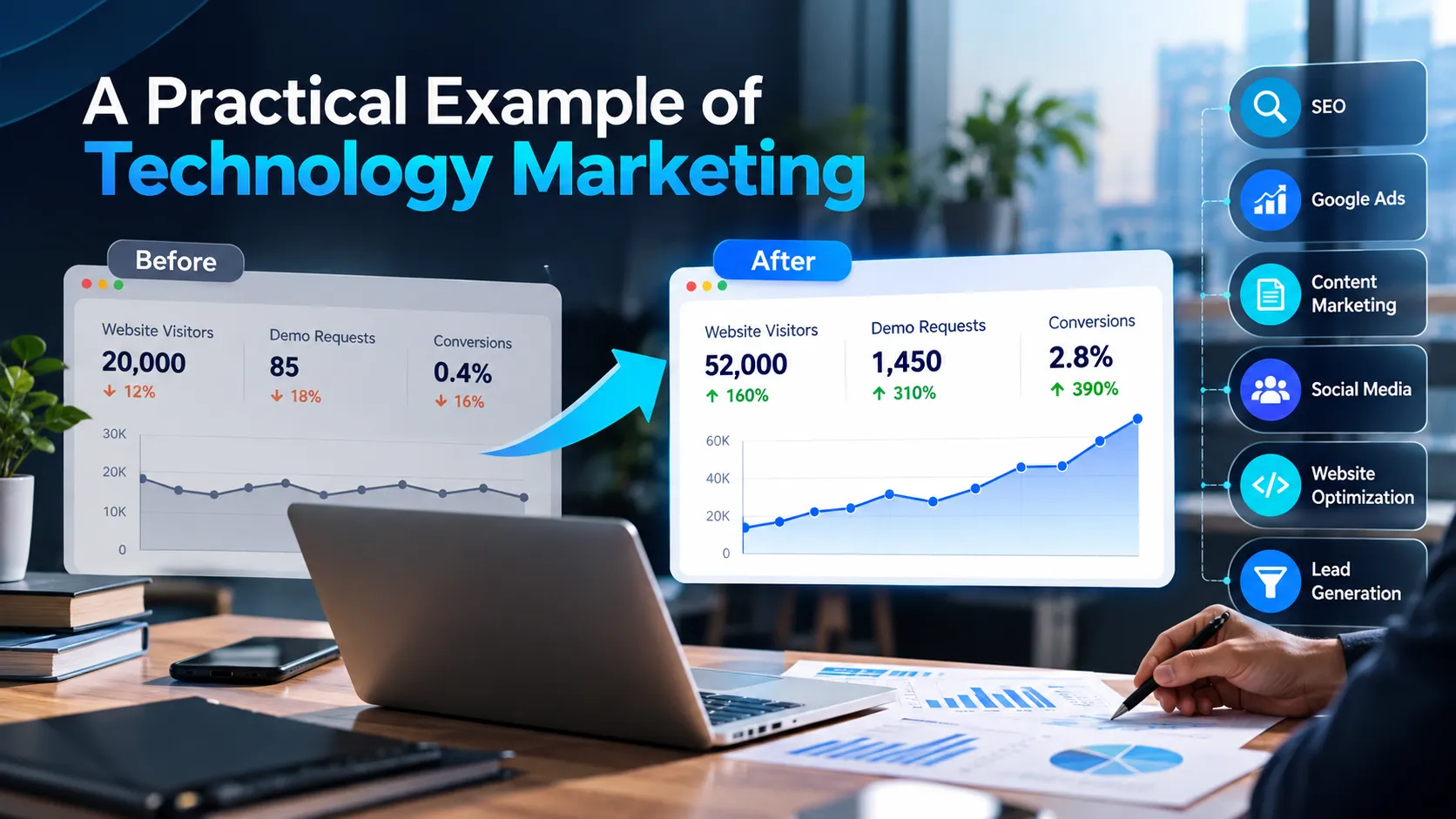
Consider a fictional SaaS company. The business gets 20,000 organic visits each month. However, only a few visitors request a demo. It may seem like an SEO problem. It may not be. A technology marketing agency would look deeper.
It may find that most traffic comes from general informational searches. Those users may never become buyers. The agency may also find weak product positioning. Visitors reach the website but cannot tell who the software is for.
The demo page may have another problem. It asks for too much information before explaining the product’s value. The solution is not simply “get more traffic.”
The company may need better keyword targeting, clearer product pages, stronger calls to action, and a simpler demo process. This example shows why technology marketing should connect visibility with conversion.
Technology Marketing Agency vs General Digital Marketing Agency
A specialist technology agency and a general digital agency may offer many of the same services. The difference is often in product and buyer knowledge.
Area | Technology Marketing Agency | General Digital Marketing Agency |
Technology knowledge | Often familiar with complex products | Experience may vary |
SaaS and software | Often a core area | May or may not specialize |
Technical content | Usually more comfortable with it | Depends on the team |
B2B sales cycles | Often familiar with longer journeys | May focus on many business types |
SEO | Common service | Common service |
Paid media | Common service | Common service |
Product positioning | Often tech-focused | Usually broader |
Buyer education | Often a major part of strategy | Depends on the agency |
A general digital marketing agency may still be a strong choice. What matters most is relevant experience. If an agency understands your audience, product, sales process, and goals, the label matters less.
The 4-Part Technology Marketing Review
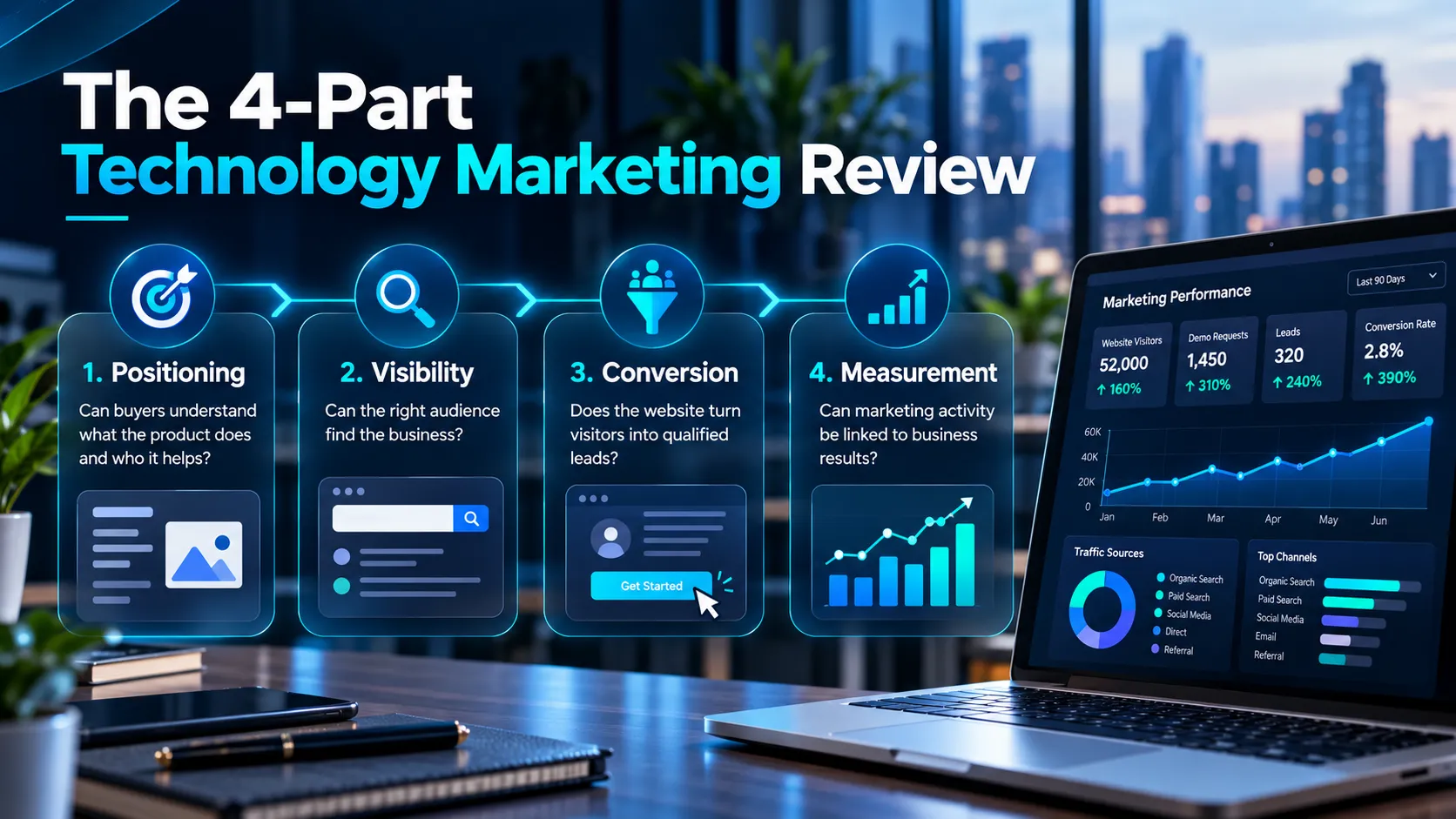
Before hiring an agency, a company can review four basic areas.
1. Positioning
Can a new visitor understand the product within a few seconds? A clear message should explain what the product does, who it helps, and why it matters. If the answer is unclear, marketing may bring traffic without results.
2. Visibility
Can the right buyers find the company? Visibility may come through search, ads, social media, referrals, industry sites, or AI-powered discovery tools. The goal is not to appear everywhere. The goal is to appear where real buyers are looking.
3. Conversion
Does the website turn interest into action? The desired action may be a demo, trial, consultation, signup, download, or sales inquiry. A website can have strong traffic and still have weak conversions.
4. Measurement
Can the company connect marketing work to business results? It should know which campaigns bring leads and which leads become sales opportunities. This is more useful than reporting impressions alone. This four-part review can also help you judge a potential agency. A good partner should be able to improve more than one part of this system.
What Makes a Good Technology Marketing Agency?
There is no single best technology marketing agency for every business. A startup has different needs from a large software company. A cybersecurity brand may also need a different strategy from a consumer app. Focus on fit rather than claims.
Good signs include relevant technology experience, clear communication, useful case studies, sensible reporting, and a strategy linked to business goals. You should also ask one important question:
Will the people presenting the strategy also work on the account?
Some agencies use senior staff during sales calls. The daily work may later move to a different team. Knowing the delivery team helps you set clear expectations.
How Do You Choose a Technology Marketing Agency in USA?
If you are looking for a technology marketing agency in USA, start with your business problem. Do not begin by comparing logos or agency size. Use this process:
- Define your main goal. Decide whether you need leads, trials, demos, traffic, stronger positioning, or another result.
- Check relevant experience. Look for work with SaaS, software, IT, AI, cloud, cybersecurity, or similar markets.
- Review case studies with context. Look for the problem, strategy, work completed, and measurable outcome.
- Understand the process. Ask who handles research, content, paid media, reporting, and account management.
- Ask how results are measured. The agency should explain what it will track and why those metrics matter.
- Check communication. Make sure you know how often meetings and reports will happen.
A clear process can help prevent confusion after the contract starts.
What Is an Agency Network?
An Agency Network is a group of agencies or specialist teams that work under a shared company or partnership. This model can be useful for larger technology businesses. For example, a company may need one team for SEO, another for paid media, another for web development, and local teams for several countries.
An Agency Network may offer access to all these skills through one wider structure. A smaller business may not need that level of support. It may prefer one focused technology marketing agency with a smaller team and direct communication.
Neither model is always better. The right choice depends on scope, budget, markets, and the number of services required.
What Are GEO, AEO, and AIO in Technology Marketing?
Search is changing. People still use traditional search engines, but they also use AI assistants and conversational search tools. This has led marketers to use terms such as GEO, AEO, and AIO.
These terms do not always have one fixed meaning across the industry. In general, they describe ways to make useful information easier for search and AI systems to find, understand, and present.
GEO
GEO often means Generative Engine Optimization. It focuses on clear, useful, and well-structured information that generative search systems can understand. Good GEO content may include direct definitions, expert context, original data, clear examples, and detailed answers.
AEO
AEO often means Answer Engine Optimization. It focuses on answering questions clearly. For example:
What does a technology marketing agency do?
A technology marketing agency helps technology companies improve visibility, explain their products, attract qualified buyers, and turn interest into leads or sales opportunities. This direct format is useful for both readers and answer systems.
AIO
AIO is often used to describe AI Optimization. The term can cover several methods. In content marketing, it often means making information easy for AI systems to understand.
Clear structure helps. So do strong topic relationships, useful examples, expert input, and consistent company information. None of these methods can guarantee that an AI system will cite or recommend a page. They can, however, improve clarity and content quality.
Can an Agency Improve AI Search Visibility?
A technology agency can improve the quality and structure of information that AI systems may use. It may improve product pages, create useful comparisons, publish original research, add expert authorship, strengthen internal links, and make technical information easier to understand.
Case studies can also help. They give readers proof that a company has worked on real problems. Original research can be useful as well. It gives other websites and search systems a reason to reference the brand. The goal should not be to “trick” AI tools. The goal should be to publish information worth finding.
How Much Does a Technology Marketing Agency Cost?
There is no fixed price. Cost depends on the work involved. A company using only SEO will have a different budget from a company using SEO, paid ads, content, web development, and social media.
Price may also change based on market competition, content volume, campaign size, and team experience. Common pricing models include monthly retainers, project fees, hourly rates, and campaign fees.
Do not compare agencies by price alone. Compare what each proposal includes. A lower monthly price may exclude strategy, content production, landing pages, or reporting. A higher price does not guarantee better results either. The goal is to find a service level that matches your needs and budget.
Should You Choose a Large or Small Technology Marketing Agency?
Both can work well. A large agency may have more specialists. It may also support several markets and services. A smaller agency may offer closer contact. Decisions may happen faster. Senior team members may also stay more involved.
Companies searching for the best digital marketing agency in the USA should not assume that size equals quality. Look at the team that will actually work on your account. Also check how well that team understands your product. That matters more than the number of employees listed on the agency website.
Questions to Ask Before Hiring an Agency
Before signing a contract, ask:
- Have you worked with products like ours?
- How will you learn about our customers?
- Which channels would you start with?
- How will you define a qualified lead?
- Who will manage our account?
- Who creates technical content?
- How often will we get reports?
- What will you change if results are weak?
- How will marketing support our sales team?
- Which services are handled in-house?
Clear answers can reveal how the agency works after the sales process ends.
When Should You Hire a Technology Marketing Agency?
You may need outside support when your internal team lacks time or specialist skills. An agency may also help when your company is launching a new product, entering the U.S. market, or struggling to generate qualified leads.
Other warning signs include weak website conversions and rising advertising costs. You may also have strong traffic but poor sales results. In that case, getting more visitors may not solve the real problem.
A technology marketing agency can help identify where the customer journey breaks. Tekcurio, for example, supports businesses through SEO, Google Ads, social media management, web development, creative design, video editing, and AI video creation. The aim is to improve both online visibility and the path from visitor to potential customer.
The right support should address the real problem instead of simply adding more marketing activity.


Best Google Ads Agency in Pakistan: How to Choose the Right PPC Partner
Jump To Best Google Ads Agency in Pakistan: How to

Creative Design Agency: How to Choose the Right Partner for Your Brand
Jump To Creative Design Agency: How to Choose the Right

Best Marketing Agency in Los Angeles: How to Choose the Right Partner
Jump To Best Marketing Agency in Los Angeles: How to
B2B Social Media Agency: How to Choose the Right Partner for Growth
Jump To B2B Social Media Agency: How to Choose the