

Call Us Now:
+92 300 9842234
Side Info Heading
Side Info Text
Gallery Heading
Follow Us

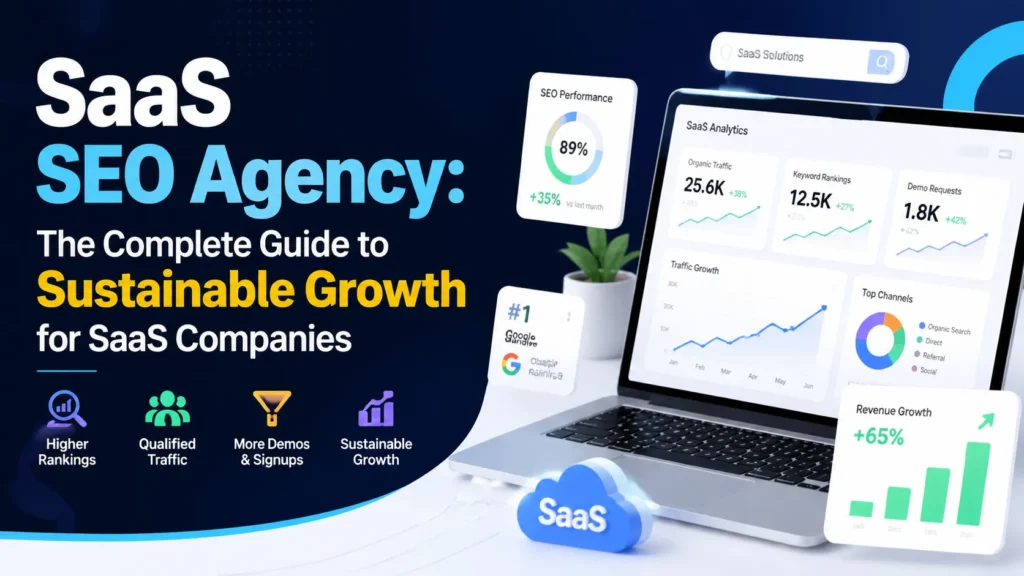
What Is a SaaS SEO Agency?
A SaaS SEO agency helps software companies improve their search engine visibility and attract qualified organic traffic. Unlike general SEO providers, these agencies create strategies tailored to SaaS businesses, focusing on the entire customer journey rather than just rankings.
The goal is to bring in visitors who are ready to start a free trial, request a demo, or become paying subscribers. By combining technical SEO, content strategy, user experience, and conversion optimization, a specialized agency helps turn organic traffic into long-term business growth.
Why Are More SaaS Companies Investing in SEO?

The SaaS market is more competitive than ever, making it difficult to rely on paid advertising alone. SEO provides long-term visibility by helping your business appear when potential customers are actively searching for software solutions.
Unlike paid traffic, organic visitors usually have clear intent, making them more likely to explore your product, request a demo, or start a free trial. As AI-powered search continues to grow, businesses that publish helpful, well-structured content are also more likely to earn visibility in AI Overviews and other modern search experiences.
How Is SaaS SEO Different from Traditional SEO?
SEO may follow the same basic principles across industries, but SaaS requires a different approach. Software buyers rarely make instant decisions. They compare features, pricing, integrations, reviews, and alternatives before choosing a solution, creating a longer buying journey.
That’s why SaaS SEO focuses on search intent and topical authority rather than just high-volume keywords. By creating educational content, comparison pages, product guides, FAQs, and feature pages, businesses can build trust, answer customer questions, and improve their visibility throughout every stage of the decision-making process.
SaaS SEO vs Traditional SEO
Feature | SaaS SEO | Traditional SEO |
Primary Goal | Generate qualified trials, demos, and subscriptions | Increase traffic or local inquiries |
Customer Journey | Long and research-driven | Usually shorter |
Content Focus | Educational resources, comparisons, product pages, integrations | Service pages, blogs, local landing pages |
Success Metrics | Organic leads, trials, MRR growth, customer acquisition | Rankings and website visits |
SEO Strategy | Topical authority with conversion-focused content | Keyword-focused optimization |
The difference may seem subtle, but it has a major impact on results. Businesses that treat SaaS SEO like ordinary SEO often struggle to convert traffic into paying customers because their content fails to match how software buyers actually make decisions.
What Does a SaaS SEO Agency Actually Do?
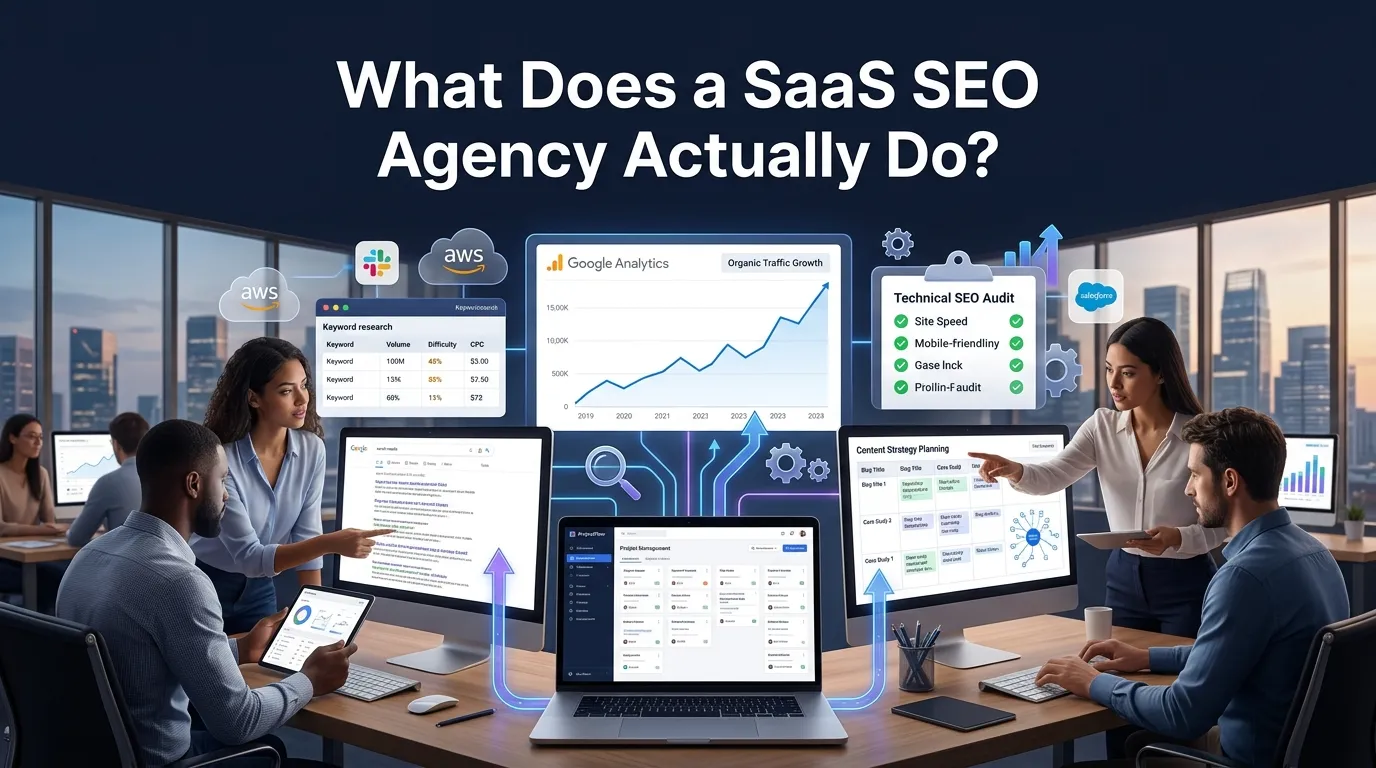
Modern SaaS SEO is much more than adding keywords to blog posts. A professional agency starts by understanding your product, target audience, competitors, and business goals before creating a customized SEO strategy.
This strategy typically includes technical SEO, search intent keyword research, content planning, internal linking, and ongoing optimization. Because search trends and Google algorithms constantly evolve, continuous improvements are essential. The goal isn’t just higher rankings; it’s attracting qualified visitors who are more likely to become paying customers.
Why Search Intent Matters More Than Search Volume?
Many businesses make the mistake of chasing keywords with the highest search volume. While these terms may bring traffic, they do not always bring potential customers. Imagine two different searches:
- “What is CRM software?”
- “Best CRM software for manufacturing companies.”
The first search is informational and broad. The second reflects a user who is actively comparing solutions and may be close to making a purchase.
An experienced SaaS SEO agency focuses on identifying keywords that align with commercial intent rather than simply targeting the largest search numbers. This approach typically generates fewer but significantly more valuable visitors who are ready to take action. For SaaS companies, quality almost always matters more than quantity.
Building a SaaS SEO Strategy That Generates Qualified Leads
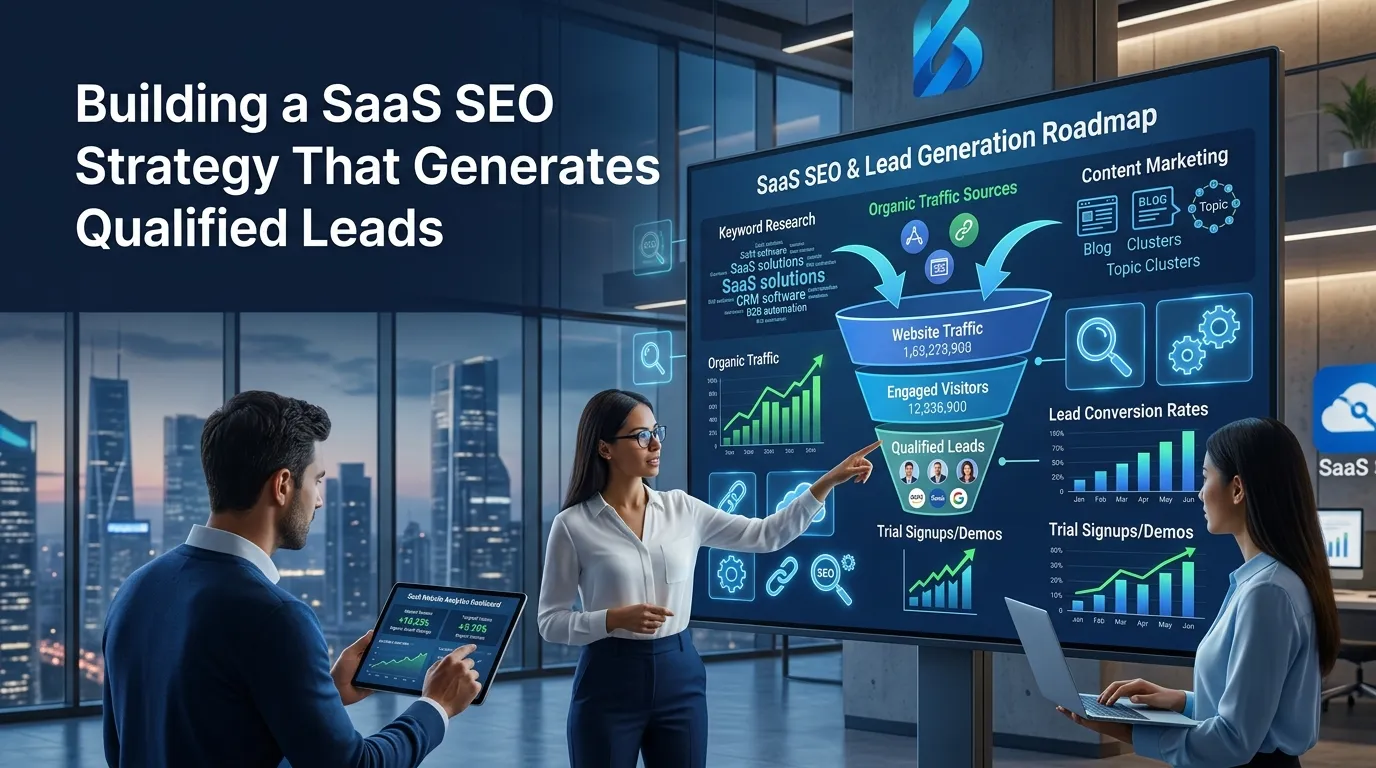
Ranking on Google is an achievement, but it is not the finish line. For a SaaS business, real success begins when organic visitors become free trial users, demo requests, and eventually loyal subscribers. That is why experienced agencies focus on building an SEO strategy that supports both visibility and business growth.
A strong SaaS SEO campaign is rarely built around a single tactic. Instead, it combines technical excellence, valuable content, thoughtful website architecture, and continuous optimization. Each element strengthens the others, creating a system that becomes more effective over time.
What Services Should You Expect from the Best SaaS SEO Agency?
The Best SaaS SEO agency does far more than optimize a few pages or publish occasional blog posts. It becomes a strategic growth partner that understands your product, your audience, and your long-term business goals.
Rather than chasing short-term ranking wins, the agency creates a roadmap designed to improve visibility across the entire customer journey. Every page, every keyword, and every piece of content should move potential customers one step closer to choosing your software.
A comprehensive SaaS SEO strategy typically includes technical optimization, in-depth keyword research, content planning, on-page improvements, authority building, conversion optimization, and performance reporting. Each service supports a different stage of organic growth, but they work best when managed together.
Core SaaS SEO Services and Their Business Impact
SEO Service | How It Helps a SaaS Business |
Technical SEO | Improves website performance, crawlability, indexing, and Core Web Vitals. |
Search Intent Keyword Research | Finds keywords that attract decision-makers instead of casual visitors. |
Content Strategy | Builds topical authority and answers customer questions at every buying stage. |
On-Page SEO | Makes each page easier for search engines and users to understand. |
Internal Linking | Connects related topics and strengthens website authority. |
Link Building | Earns high-quality backlinks that improve domain credibility. |
Conversion Optimization | Turns organic visitors into trial users, demo requests, or paying customers. |
SEO Reporting | Measures traffic, rankings, conversions, and revenue impact. |
Notice that rankings are only one part of the process. The real objective is business growth through qualified organic traffic.
Why Technical SEO Is the Foundation of SaaS Growth?
Even the best content cannot perform well if search engines struggle to crawl or understand your website. Technical SEO creates the foundation that allows every other optimization to succeed. It ensures your website loads quickly, works smoothly on mobile devices, follows a logical structure, and provides a positive user experience.
Modern SaaS websites often contain product pages, pricing pages, documentation, knowledge bases, blogs, integrations, and customer portals. Without proper organization, search engines may overlook important pages or waste crawl budget on less valuable content.
A professional agency regularly audits technical issues such as broken links, duplicate content, redirect chains, indexing errors, slow-loading pages, and structured data implementation. These improvements may not always be visible to visitors, but they play a significant role in long-term SEO performance.
As Google’s algorithms continue prioritizing page experience and user satisfaction, technical SEO has become a business necessity rather than an optional enhancement.
Why Content Is the Engine Behind SaaS SEO?
When people think about SEO, they often think about keywords. In reality, content is what gives those keywords meaning. A software buyer rarely searches once and immediately signs up.
Instead, they gather information, compare alternatives, and evaluate whether a solution fits their needs. Every question they ask is an opportunity for your business to provide helpful answers. This is where a SaaS content marketing agency creates measurable value.
Instead of producing articles just to increase page count, experienced content marketers build an interconnected library of resources. Each article supports a specific topic while naturally guiding readers toward product pages, free trials, or demonstrations.
For example, if your company sells project management software, your content strategy might include educational guides about workflow optimization, remote collaboration, project planning, team productivity, software comparisons, and implementation best practices. Together, these resources establish topical authority and demonstrate expertise.
Search engines reward websites that consistently provide useful, trustworthy information, and potential customers appreciate brands that educate before they sell.
The Importance of Topical Authority
Google now values websites that demonstrate expertise across an entire topic, not just individual pages. This is called topical authority. Instead of publishing unrelated blog posts, successful SaaS companies create content clusters that cover a subject from multiple angles.
For example, an HR software company can publish content on recruitment, onboarding, payroll, compliance, employee engagement, and HR analytics. This connected content helps build trust, improves search visibility, and makes it easier for AI-powered search engines to understand and reference your website.
How a SaaS SEO Consultant Creates a Growth Roadmap
Many SaaS businesses hire a SaaS SEO consultant to develop a clear growth strategy before expanding their marketing efforts. A consultant evaluates your website, rankings, competitors, technical SEO, and customer journey to identify the biggest opportunities.
Based on this analysis, they create a roadmap that improves both visibility and conversions. Their focus goes beyond rankings, ensuring your SEO strategy attracts qualified leads, increases demo requests, and supports measurable business growth.
Product-Led SEO: Connecting Search to Your Software
One of the biggest trends in SaaS marketing is product-led growth, where the product itself becomes the primary driver of customer acquisition. SEO plays an important role in this approach.
Instead of creating content that exists separately from the product, agencies develop pages that naturally connect educational information with software features.
For instance, an accounting platform might publish a guide explaining how businesses can simplify expense tracking. Within that guide, readers can see practical examples of how the software performs those tasks, making the transition from education to product discovery feel natural rather than promotional.
This strategy improves user experience because readers receive helpful information while also learning about practical solutions.
Why Conversion Optimization Matters?
Traffic alone does not generate revenue. A website attracting ten thousand visitors each month may still struggle if users leave without taking action.
This is why experienced SaaS agencies continuously improve conversion paths. They evaluate whether visitors can easily understand the product, navigate important pages, access pricing information, request demonstrations, or begin free trials.
Simple improvements such as clearer calls to action, stronger product messaging, faster loading pages, and better page layouts can dramatically increase conversion rates without requiring additional traffic. SEO and conversion optimization should always work together because attracting visitors is only half the equation.
Does Location Matter When Choosing a SaaS SEO Agency?
Many businesses search for a saas seo agency near Los Angeles because they value local collaboration and the opportunity to meet with their marketing partner. Others specifically look for a saas seo agency near downtown Los Angeles, particularly if their headquarters or operations are based in the city’s technology and startup ecosystem.
Working with a nearby agency can certainly offer advantages, including easier communication, local networking opportunities, and a better understanding of regional markets.
However, SaaS is fundamentally a digital business. Many of the industry’s highest-performing SEO agencies successfully manage campaigns for clients across different states and even internationally. What matters most is not the agency’s office location but its ability to understand your product, your audience, and your growth objectives.
When evaluating agencies, prioritize proven SaaS experience, transparent reporting, and strategic thinking over geographic proximity alone.
The Characteristics of High-Performing SaaS SEO Campaigns
Successful SaaS SEO campaigns often share several common qualities:
- They focus on solving customer problems before promoting the product.
- They build comprehensive topic clusters instead of isolated blog posts.
- They prioritize qualified leads over vanity traffic metrics.
- They continuously improve existing content rather than publishing and forgetting it.
- They measure success using business outcomes such as demos, subscriptions, and recurring revenue instead of rankings alone.
These principles create sustainable growth because they align SEO efforts with real customer needs.
Choosing the Right SaaS SEO Partner and Building Long-Term Organic Growth
Finding an SEO agency is easy. Finding one that truly understands the SaaS business model is much harder. Many agencies promise higher rankings within a few months, but rankings alone do not pay the bills.
A successful SaaS business needs qualified visitors who become free trial users, request demos, and eventually convert into paying customers. That requires an SEO strategy built around revenue, not vanity metrics.
The right agency should understand how your customers research software, compare solutions, and make purchasing decisions. More importantly, they should be able to explain why they recommend a strategy instead of asking you to trust a generic SEO checklist.
How to Choose the Best SaaS SEO Agency?
Every agency has its own process, pricing, and expertise. Before signing a contract, spend time understanding how they approach strategy, reporting, and long-term growth.
A reliable agency will begin by learning about your software, target audience, competitors, and business goals. They will ask questions about your ideal customer, your sales process, and your current marketing performance before recommending any SEO activities. This discovery phase is often a good indicator of how seriously they take your business.
Transparency is equally important. A trustworthy agency explains what they are doing, why they are doing it, and how success will be measured. Instead of promising overnight rankings, they set realistic expectations and provide regular reports that connect SEO performance with meaningful business outcomes.
Another important factor is industry experience. SaaS companies have different challenges than eCommerce stores, local businesses, or corporate websites. Agencies that have worked with software companies are more likely to understand subscription models, long sales cycles, feature-driven content, and customer acquisition metrics.
Questions You Should Ask Before Hiring an SEO Agency
The conversation you have before hiring an agency often tells you more than any sales presentation. Ask questions that reveal how they think rather than simply what services they offer.
For example, ask how they perform keyword research, how they identify content opportunities, and how they measure success. Their answers should go beyond rankings and traffic to include metrics such as qualified leads, demo requests, free trial signups, customer acquisition cost, and organic revenue.
You should also ask whether they conduct technical SEO audits, how they approach link building, how frequently they update content, and how they adapt to Google algorithm changes. Agencies that openly explain their methodology usually build stronger long-term partnerships than those relying on vague promises.
Common SaaS SEO Mistakes That Limit Growth
Even well-funded software companies sometimes struggle with organic growth because they repeat the same avoidable mistakes. The most common issue is creating content solely to publish more articles rather than solving real customer problems. Publishing dozens of low-value posts may increase page count, but it rarely builds authority or earns trust.
Another mistake is focusing only on high-volume keywords. These terms often attract broad audiences that have little intention of purchasing software. Companies achieve better results when they target searches that reflect genuine buying intent.
Many businesses also overlook technical SEO. Slow-loading pages, poor website architecture, broken internal links, duplicate content, and indexing issues can quietly reduce search visibility over time.
A final mistake is treating SEO as a one-time project. Search behavior evolves continuously, competitors publish new content, and Google regularly updates its algorithms. Businesses that review and improve their SEO strategy consistently are usually the ones that maintain long-term visibility.
Why AI Search Has Changed SEO Forever
Search is no longer limited to a list of blue links. Today, users increasingly receive answers through AI-generated summaries, conversational search experiences, and intelligent assistants that combine information from multiple trusted sources. Instead of simply ranking webpages, search engines now evaluate whether content is clear, reliable, and easy to understand.
This shift has made content quality more important than ever. Articles written only for search engines often struggle because they fail to provide depth or genuine insight. In contrast, content that explains concepts clearly, answers common questions, and demonstrates real expertise is more likely to appear in AI-generated responses.
For SaaS businesses, this means every article should be written with both people and AI systems in mind. Well-structured headings, concise explanations, accurate information, and natural language all contribute to stronger visibility in modern search experiences.
Measuring SEO Success Beyond Rankings
Ranking improvements are encouraging, but they represent only one part of the bigger picture. A growing SaaS company should evaluate SEO based on its contribution to business performance. Organic search should generate qualified traffic, increase product awareness, and support revenue growth.
Instead of celebrating every ranking increase, monitor whether organic visitors engage with your content, explore product pages, request demonstrations, begin free trials, and eventually become paying customers. Over time, these indicators provide a much clearer picture of SEO performance than keyword positions alone.
Key Performance Metrics Every SaaS Business Should Track
Metric | Why It Matters |
Organic Traffic | Shows how many visitors discover your website through search engines. |
Qualified Leads | Measures visitors who match your ideal customer profile. |
Demo Requests | Indicates commercial intent and sales opportunities. |
Free Trial Signups | Tracks how effectively SEO supports product acquisition. |
Organic Conversion Rate | Measures how many visitors complete valuable actions. |
Customer Acquisition Cost (CAC) | Helps compare SEO with paid marketing channels. |
Monthly Recurring Revenue (MRR) from Organic Search | Demonstrates the direct business impact of SEO. |
These metrics help business leaders evaluate whether SEO is contributing to sustainable growth instead of simply increasing website traffic.
Frequently Asked Questions
Is SEO still worth investing in for SaaS companies in 2026?
Yes. As paid advertising costs continue to rise, SEO remains one of the most cost-effective channels for attracting qualified users. A well-executed strategy creates long-term visibility that continues generating value long after content is published.
How long does SaaS SEO take to show results?
Most businesses begin noticing meaningful improvements within four to six months, although highly competitive industries may require additional time. SEO is a long-term investment that builds momentum through consistent optimization.
Should startups invest in SEO?
Absolutely. Early investment helps startups establish authority before competitors dominate valuable search topics. Publishing high-quality educational content from the beginning often creates lasting competitive advantages.
Can a SaaS SEO agency help with content creation?
Yes. Many agencies provide complete content strategies, including keyword research, topic planning, content writing, on-page optimization, and performance analysis. This ensures every article supports both search visibility and business objectives.
What makes a successful SaaS SEO strategy?
A successful strategy combines technical excellence, search intent research, topical authority, high-quality content, internal linking, user experience improvements, and continuous optimization. Rather than chasing quick wins, it focuses on sustainable business growth.
Conclusion
A successful SaaS business needs more than a great product; it needs a smart SEO strategy that consistently attracts qualified customers. Unlike paid advertising, SEO delivers long-term growth by increasing your visibility, authority, and organic leads over time.
Whether you need a SaaS SEO consultant, a SaaS content marketing agency, or the Best SaaS SEO agency, Tekcurio helps SaaS companies grow with data-driven SEO strategies focused on rankings, qualified leads, and recurring revenue.
Book an appointment with Tekcurio today to discover how a customized SaaS SEO strategy can accelerate your business growth.


Graphic Design Services in Pakistan: A Complete Guide for Businesses
SUMMARIZE THIS POST WITH ChatGPT GoogleAI Perplexity Claude Jump To

Best Social Media Marketing Agency in Pakistan: A Complete Guide for 2026
SUMMARIZE THIS POST WITH ChatGPT GoogleAI Perplexity Claude Jump To
SEO Services in Pakistan: A Complete Guide to Growing Your Business Online
SUMMARIZE THIS POST WITH ChatGPT GoogleAI Perplexity Claude Jump To

Website Development Services in Pakistan: Build a Website That Grows Your Business
Jump To Website Development Services in Pakistan: Build a Website