

Call Us Now:
+92 300 9842234
Side Info Heading
Side Info Text
Gallery Heading
Follow Us

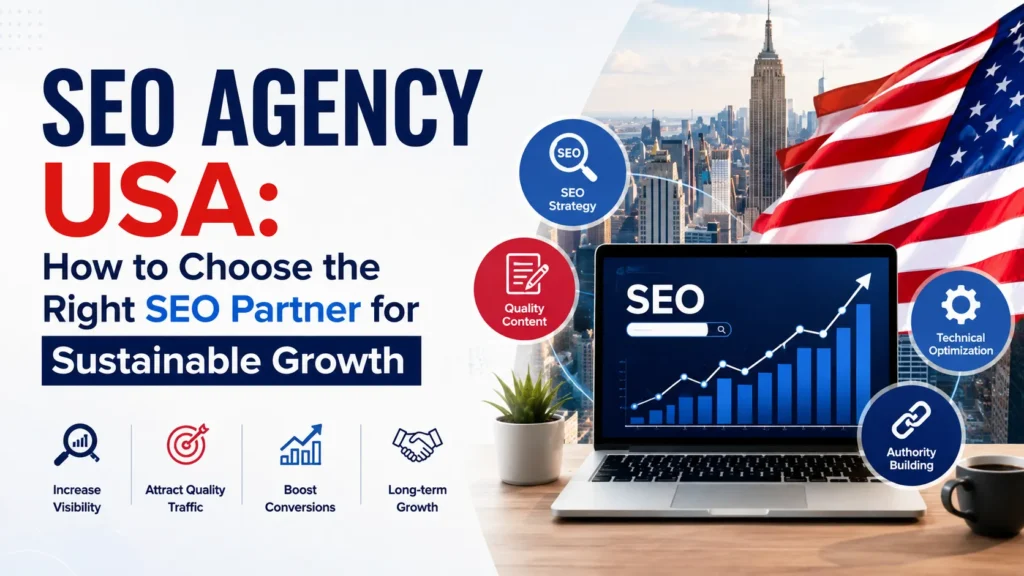
Choosing the right SEO agency USA businesses can rely on is no longer simply about getting a website onto the first page of Google. Search behavior has changed. Customers now discover companies through traditional search results, local listings, AI-generated answers, featured snippets, comparison pages, and conversational search platforms.
A professional SEO strategy therefore needs to address the entire search ecosystem. The right agency should help search engines understand your website, improve its technical foundation, develop useful content around real customer needs, strengthen authority, and turn organic visibility into meaningful business opportunities.
For businesses looking for professional SEO support, Tekcurio provides SEO services designed around sustainable organic visibility, relevant traffic, and long-term digital growth.
This guide explains what an SEO agency does, what services businesses should expect, how much SEO may cost, what separates an affordable provider from a low-quality one, and how to choose an agency that fits your goals.
What Is an SEO Agency?
An SEO agency is a company that helps businesses improve their visibility in organic search results by optimizing their websites, content, technical structure, online authority, and search presence. SEO stands for Search Engine Optimization.
In practical terms, an SEO company identifies what potential customers search for, determines whether a website can properly compete for those searches, and develops a strategy for improving its visibility.
This may involve fixing technical problems, researching keywords, improving existing pages, creating new content, strengthening internal links, earning relevant external links, improving local visibility, and analyzing performance. Modern SEO also goes beyond traditional keyword rankings.
Businesses increasingly need content that is clear enough to be understood by traditional search engines as well as AI-powered search and answer systems. This makes topical depth, entity clarity, structured information, trustworthy claims, and useful answers increasingly important.
What Does an SEO Agency in the USA Actually Do?
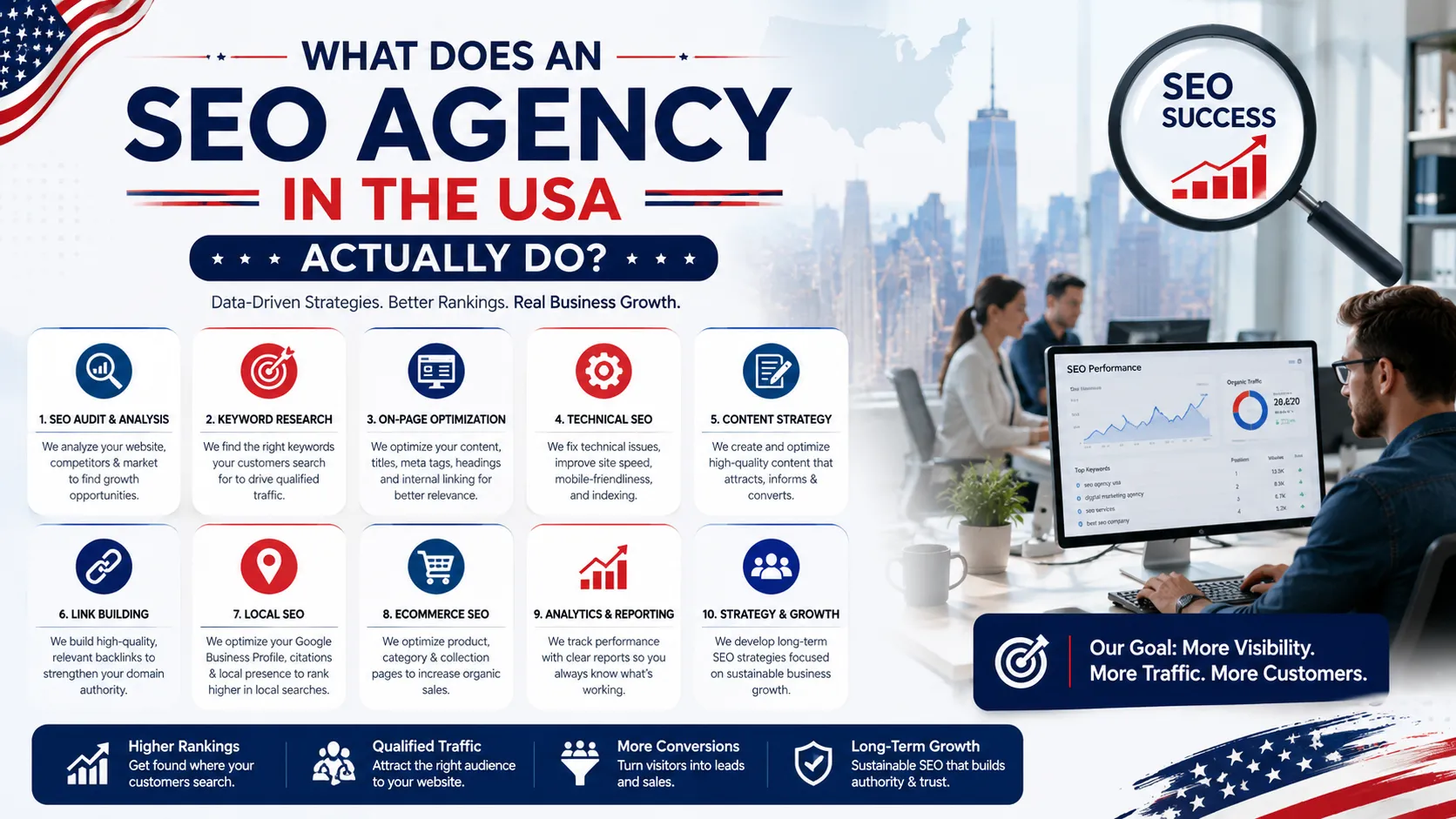
An SEO agency typically manages several areas of organic search marketing rather than performing one isolated task. The process usually begins with research and auditing.
An agency needs to understand your website, competitors, target customers, products or services, geographic market, and existing organic performance before recommending changes. From there, SEO work commonly covers:
- Technical SEO: crawling, indexing, site architecture, redirects, duplicate content, mobile usability, structured data, page performance, and other technical issues.
- On-page and content SEO: keyword research, search intent, service pages, informational content, titles, headings, internal linking, local optimization, and content improvement.
Off-page SEO and authority development may then support these efforts through relevant mentions, digital PR, quality backlinks, citations, and other legitimate authority signals.
The important point is that these areas work together. Publishing dozens of articles will not necessarily solve serious technical problems, while technically perfect pages may still struggle if they fail to satisfy what users are actually searching for.
Why Do Businesses Hire an SEO Agency?
Businesses usually hire an SEO agency because sustainable organic growth requires a combination of strategy, technical knowledge, content expertise, analysis, and ongoing execution. A business owner can certainly learn SEO fundamentals.
However, competitive campaigns often involve hundreds or thousands of pages, multiple competitors, changing search behavior, technical issues, content planning, analytics, and continuous optimization. An experienced agency can coordinate these activities into one strategy.
For example, imagine a home-service company operating across several cities. Simply creating one generic service page may not be enough.
The business might need dedicated service pages, appropriate location coverage, stronger internal linking, local business optimization, useful informational resources, conversion improvements, and accurate tracking. SEO agencies help connect those individual activities to a broader business objective.
What Services Should the Best SEO Agency USA Businesses Choose to Provide?
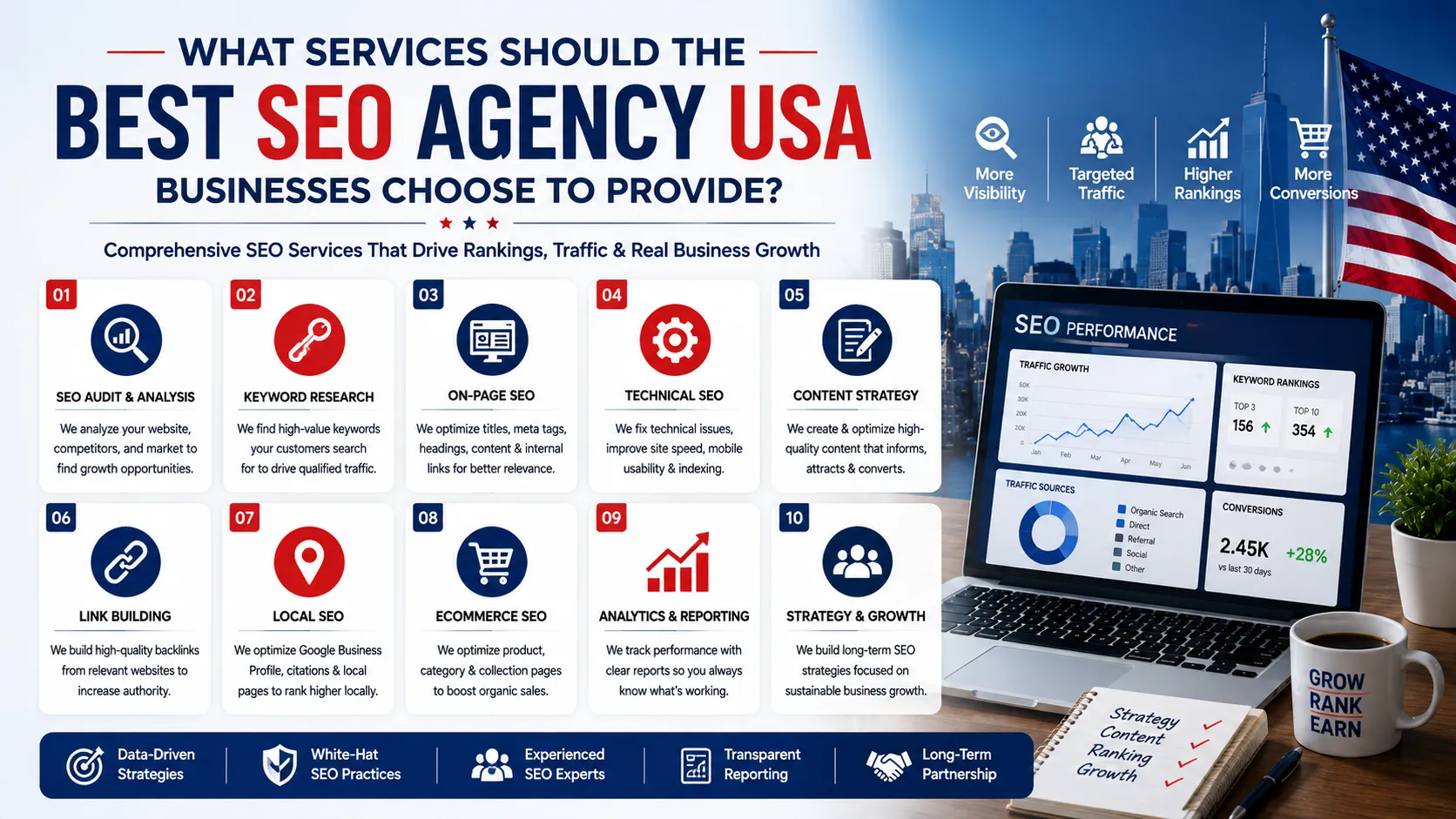
There is no universal package that works for every company. A local dental practice, national ecommerce store, SaaS company, law firm, and enterprise website have very different requirements. However, a comprehensive SEO provider should usually be able to evaluate and manage the following areas.
SEO Area | What It Covers | Why It Matters |
Technical SEO | Crawling, indexing, architecture, redirects, performance | Helps search engines access and understand pages |
Keyword Research | Search terms, intent, and opportunities | Connects content with real searches |
On-Page SEO | Titles, headings, copy, and internal links | Improves page relevance and clarity |
Content Strategy | Service pages, guides and topical content | Builds useful search coverage |
Local SEO | Local pages, profiles and citations | Supports geographically relevant searches |
Authority Building | Relevant links, mentions and digital PR | Strengthens website credibility |
Analytics | Traffic, conversions and search performance | Shows whether SEO is producing useful results |
AI Search Optimization | Structured, answer-focused, entity-rich content | Makes information easier for AI systems to interpret |
A good agency does not necessarily perform every activity every month. Priorities should depend on what is currently limiting the website.
What Is Technical SEO?
Technical SEO focuses on making a website accessible, understandable, efficient, and properly structured for search engines and users.
Search engines discover webpages through automated crawling and indexing processes. If important pages are accidentally blocked, duplicated, poorly linked, or difficult to crawl, good content may not reach its potential.
Technical SEO can include XML sitemaps, robots directives, canonical tags, redirect management, HTTPS, structured data, internal architecture, mobile usability, page experience, broken links, JavaScript rendering, and indexation management.
A professional SEO agency should prioritize technical problems based on their actual impact instead of producing a large audit containing hundreds of low-priority warnings.
Why Is Keyword Research Still Important?
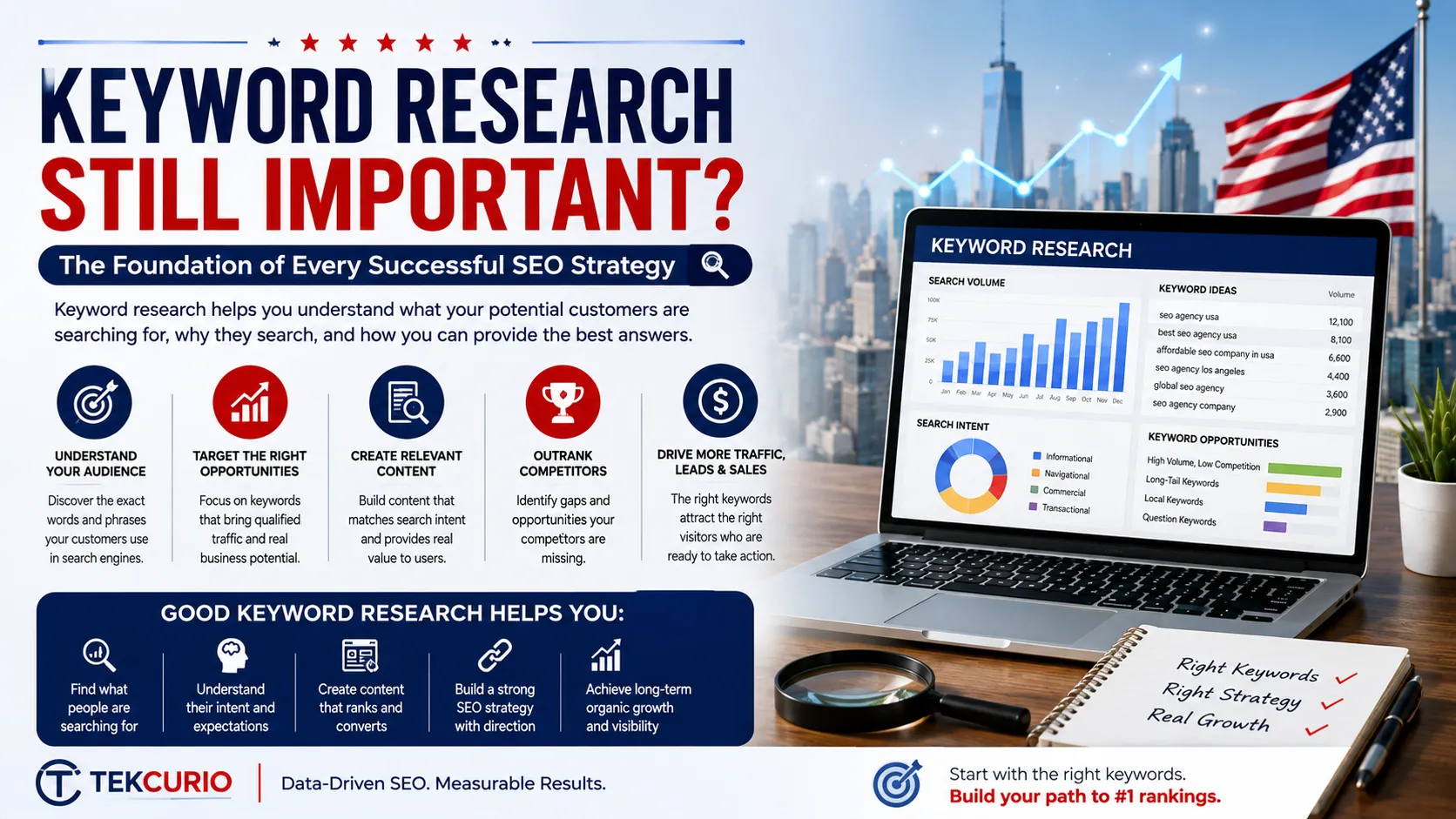
Keyword research helps businesses understand how their customers express demand through search. Consider a company offering SEO services.
Potential customers might search:
- “SEO agency USA”
- “Affordable SEO company in USA”
- “SEO agency Los Angeles”
- “SEO company for small business”
- “ecommerce SEO agency”
- “local SEO services”
These searches may relate to the same general industry, but their intent is not identical. Someone searching for an SEO agency is probably closer to hiring a provider than someone searching “what is SEO?”
A strong strategy therefore maps different searches to different stages of the customer journey instead of forcing every keyword onto one page.
What Is Search Intent?
Search intent is the purpose behind a search query. It is usually grouped into informational, navigational, commercial, and transactional intent. Understanding intent prevents one of the most common SEO mistakes: creating the wrong type of page for a keyword.
For example, a detailed educational article may perform well for “how does SEO work,” while someone searching “SEO services for ecommerce” is more likely to want a commercial service page. Good SEO aligns the format, depth, message, and conversion path of a page with what the searcher is trying to accomplish.
How Does Content SEO Support Organic Growth?
Content gives a website opportunities to answer questions, demonstrate expertise, explain services, and cover topics that matter to potential customers. But publishing more content is not automatically better. Effective SEO content should have a clear purpose.
A useful article answers the main question quickly, explains related concepts naturally, provides enough detail to satisfy the reader, and leads users toward an appropriate next step.
This approach is also valuable for modern AI-powered discovery because well-structured explanations and direct answers are easier for retrieval systems to understand. The objective should therefore be information quality and clarity first, optimization second.
What Are GEO, AEO, and AI Search Optimization?
Search optimization is expanding beyond conventional blue-link results. AEO, or Answer Engine Optimization, focuses on structuring information so answer systems can understand and extract useful responses.
GEO, or Generative Engine Optimization, generally refers to improving how content and brands can be understood, retrieved, referenced, or represented by generative AI search experiences. These concepts do not make traditional SEO obsolete.
Strong technical foundations, useful content, authority, accurate information, and clear site structure remain important. AI optimization should build on these fundamentals rather than replace them.
For businesses, that means creating pages containing clear definitions, direct answers, logical headings, trustworthy supporting information, consistent brand/entity details, and comprehensive topic coverage.
What Is Local SEO?
Local SEO helps businesses become more visible for searches connected to a particular geographic area. For example, SEO agency Los Angeles represents geographically specific commercial intent.
Local optimization may involve location pages, Google Business Profile management, accurate business information, reviews, relevant citations, local content, internal linking, and locally meaningful authority signals.
This is particularly important for businesses such as doctors, dentists, attorneys, contractors, repair companies, restaurants, and other service providers whose customers are concentrated within specific areas.
Local SEO vs National SEO vs Global SEO
Businesses should choose an SEO strategy based on where their customers actually come from. A Los Angeles contractor generally needs a very different campaign from a software company serving customers across the United States.
A global SEO agency strategy becomes even more complex because businesses may need to consider countries, languages, international site architecture, localized content, hreflang implementation, regional competition, and cultural differences in search behavior.
National SEO focuses more broadly on competitive searches across the United States without necessarily attaching every keyword to a city. The right geographic strategy prevents businesses from investing resources in markets they do not actually serve.
How Do You Choose the Best SEO Agency USA?
The best SEO agency USA businesses can hire is not necessarily the largest company or the provider making the boldest ranking claims. It is the agency whose capabilities match the company’s objectives, market, resources, and competitive situation.
Before choosing an SEO partner, evaluate how the agency approaches research, implementation, communication, reporting, and measurement. Ask what happens during the first few months.
A credible agency should be able to explain its process in understandable language. If every explanation is hidden behind jargon, that can make it difficult to determine what you are actually paying for. You should also ask how success will be measured.
Rankings are useful diagnostic indicators, but businesses ultimately need outcomes such as qualified organic traffic, inquiries, appointments, purchases, subscriptions, or other meaningful conversions.
Affordable SEO Company in USA: Does Affordable Mean Cheap?
No. Affordable SEO should mean that the service provides reasonable value relative to your budget and objectives. Cheap SEO is different. Extremely low-cost packages often depend on standardized deliverables because personalized research, technical work, content development, and experienced specialists require time.
This does not mean every company needs an expensive enterprise retainer. A small business may benefit from a focused campaign covering its highest-priority technical issues, commercial pages, local visibility, and a manageable content strategy. The better question is not:
“How can I find the cheapest SEO company?”
Instead ask:
“What level of SEO investment makes sense for the opportunity available to my business?”
How Much Does an SEO Agency Cost in the USA?
There is no reliable universal SEO price because campaign scope varies significantly. A small local website with 20 pages may require far fewer resources than an ecommerce website containing 50,000 product and category URLs.
Pricing can be affected by website size, competition, geographic reach, technical condition, content requirements, link acquisition needs, industry, current authority, and growth objectives.
Agencies may charge monthly retainers, project fees, hourly consulting rates, or customized campaign pricing. Instead of comparing prices alone, businesses should compare scope, expertise, deliverables, transparency, and expected business value.
Can an SEO Agency Guarantee First-Place Rankings?
No credible agency can control Google’s rankings. Search results depend on many factors outside an agency’s direct control, including competition, search intent, website quality, algorithmic systems, market changes, and competitor activity.
Businesses should therefore be cautious when an agency guarantees a specific number-one ranking. A responsible SEO provider can explain the strategy, opportunities, risks, work completed, and measurable progress. It cannot legitimately promise complete control over an independent search engine.
How Long Does SEO Take?
SEO usually requires patience because search engines need time to discover, process, evaluate, and respond to website changes. Some improvements can be reflected relatively quickly, while other changes can take weeks or months. The timeline depends heavily on the starting point.
A technically healthy website with existing authority may respond differently from a new domain competing against established national brands. SEO should therefore be treated as an ongoing growth process rather than a one-time switch that produces instant rankings.
What Are Warning Signs of a Poor SEO Agency?
Businesses should investigate carefully when an SEO provider relies heavily on promises rather than explaining its methodology.
Common warning signs include guaranteed rankings, unexplained link-building tactics, mass-produced content, keyword stuffing, unclear reporting, unwillingness to explain deliverables, and strategies designed mainly to manipulate search systems.
Transparency matters. You should know what your agency is changing, why those changes are being made, and how progress will be evaluated.
What Should Be Included in an SEO Agency Report?
A useful report should help decision-makers understand what happened, not simply display hundreds of metrics. Reporting may include organic traffic trends, conversions, important keyword movements, landing-page performance, technical improvements, content published or updated, authority development, local visibility, and upcoming priorities.
More importantly, the agency should explain what the data means. For example, a 20% increase in organic traffic sounds positive, but the result is less valuable if none of that additional traffic comes from relevant potential customers. Business context should always accompany SEO metrics.
How Is SEO Success Measured?
Successful SEO measurement should connect visibility with business outcomes. Depending on the business model, important KPIs may include organic impressions, qualified traffic, non-branded visibility, leads, calls, booked appointments, ecommerce revenue, assisted conversions, and cost efficiency.
Rankings still matter, but they should not be evaluated in isolation. A company moving from position 50 to position 15 for an irrelevant keyword may gain little commercial value. Moving from position 8 to position 3 for a high-intent service search could be much more meaningful. Measurement should therefore prioritize relevance over vanity metrics.
Why Consider Tekcurio for SEO Services?
Businesses looking for professional SEO support need a strategy that connects technical optimization, content, search intent, and sustainable visibility rather than treating SEO as a collection of disconnected tasks.
Tekcurio can be considered by businesses seeking SEO services focused on improving their organic search presence and creating stronger pathways from search visibility to potential customer acquisition.
The appropriate campaign should begin by understanding the website’s current condition, competitive environment, target audience, services, and business objectives.
From there, priorities can be established across technical SEO, keyword targeting, content development, on-page optimization, local or national visibility, and performance measurement.
For businesses competing across the USA, this customized approach is generally more useful than purchasing a generic package built around the same deliverables for every website.
Frequently Asked Questions
What does an SEO agency do?
An SEO agency improves a website’s organic visibility through technical optimization, content, keyword research, on-page SEO, authority development, and performance analysis.
Is hiring an SEO agency worth it?
It can be worthwhile when organic search is an important customer-acquisition channel and the agency’s work is aligned with measurable business objectives.
How do I find the best SEO agency USA?
Compare agencies based on strategy, relevant experience, transparency, communication, reporting, ethical practices, and their ability to connect SEO performance with business outcomes.
What is an affordable SEO company in USA?
An affordable SEO company provides an appropriate level of strategy and execution for a business’s budget without relying on low-quality or manipulative shortcuts.
Can SEO guarantee more sales?
No. SEO can improve visibility and attract relevant visitors, but sales also depend on factors such as your offer, pricing, website experience, reputation, and conversion process.
Does SEO work for small businesses?
Yes. Small businesses can use SEO to target relevant service, informational, and local searches, especially when the strategy focuses on realistic opportunities.
Do businesses still need SEO because of AI search?
Yes. Search behavior is evolving, but strong technical foundations, trustworthy information, useful content, authority, and clear website structure remain important for both traditional and AI-assisted discovery.
Conclusion
Choosing an SEO agency USA businesses can trust requires more than searching for the company promising the fastest rankings.
Effective SEO starts with understanding customers and search intent. It combines technical accessibility, useful content, strong commercial pages, appropriate geographic targeting, authority development, and meaningful performance measurement.
Businesses should also think beyond traditional rankings. Search discovery increasingly includes local results, featured answers, AI-generated experiences, and conversational platforms. That makes clarity, topical expertise, structured information, and trustworthy content increasingly valuable.
Whether you need local SEO, national visibility, ecommerce optimization, or a broader global strategy, choose an agency that can explain what it is doing and connect its work to measurable business objectives.
For companies ready to strengthen their organic presence, Tekcurio offers SEO services designed to help businesses build sustainable search visibility and attract more relevant potential customers. Get SEO Services from Tekcurio to discuss your website, target market, current search performance, and opportunities for long-term organic growth.


Graphic Design Services in Pakistan: A Complete Guide for Businesses
SUMMARIZE THIS POST WITH ChatGPT GoogleAI Perplexity Claude Jump To
Best Social Media Marketing Agency in Pakistan: A Complete Guide for 2026
SUMMARIZE THIS POST WITH ChatGPT GoogleAI Perplexity Claude Jump To
SEO Services in Pakistan: A Complete Guide to Growing Your Business Online
SUMMARIZE THIS POST WITH ChatGPT GoogleAI Perplexity Claude Jump To

Website Development Services in Pakistan: Build a Website That Grows Your Business
Jump To Website Development Services in Pakistan: Build a Website