Call Us Now:
+92 300 9842234
Side Info Heading
Side Info Text
Gallery Heading
Follow Us

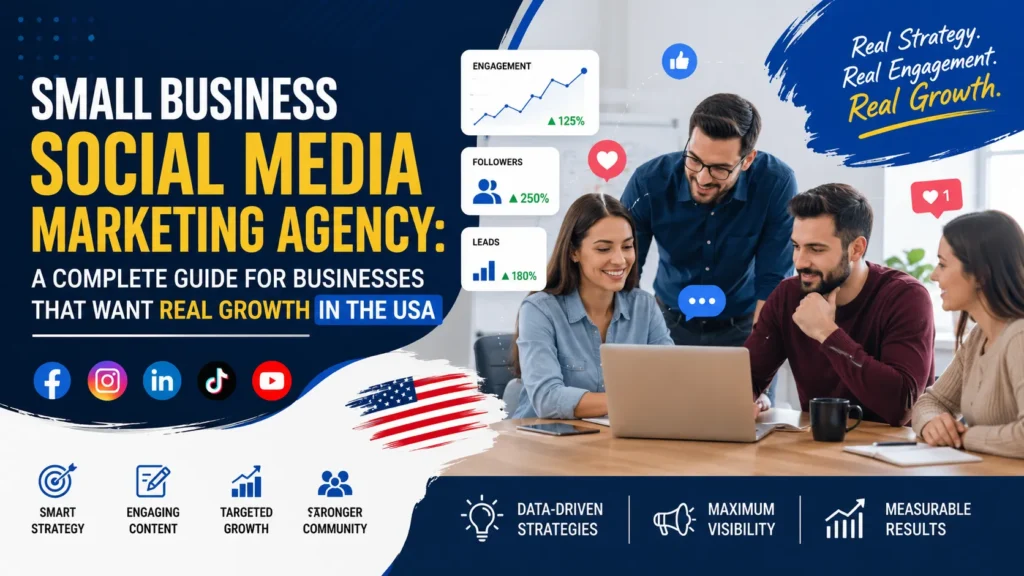
Growing a small business in today’s competitive market takes more than simply posting on social media. Customers often check a company’s Facebook, Instagram, LinkedIn, or TikTok profiles before visiting its website or making a purchase. An active, professional social presence has become an important part of building trust and attracting new customers.
This is where a small business social media marketing agency adds real value. By creating a clear strategy, engaging content, and data-driven campaigns, agencies help businesses increase visibility, connect with the right audience, and generate measurable growth.
If you are looking for a small business social media marketing agency in USA, Tekcurio helps small businesses build stronger brands, generate qualified leads, and maximize their return on social media through customized marketing strategies.
This guide explains how these agencies work, what services they offer, and how to choose the right partner for long-term success.
Why Has Social Media Become So Important for Small Businesses?
A few years ago, many small businesses viewed social media as an optional marketing channel. Today, it plays a much larger role in how customers discover, evaluate, and interact with brands.
Think about your own buying habits. Before choosing a restaurant, hiring a contractor, or booking an appointment, there is a good chance you have looked at the business’s social media profiles. Customers do the same every day. They want to see recent activity, customer feedback, product photos, educational content, and signs that a business is active and responsive.
An inactive page often creates doubt, even if the business itself offers excellent products or services. On the other hand, a well-managed profile communicates professionalism without saying a single word.
For small businesses, social media is no longer just about posting attractive images. It has become part of the customer experience.
What Does a Small Business Social Media Marketing Agency Actually Do?
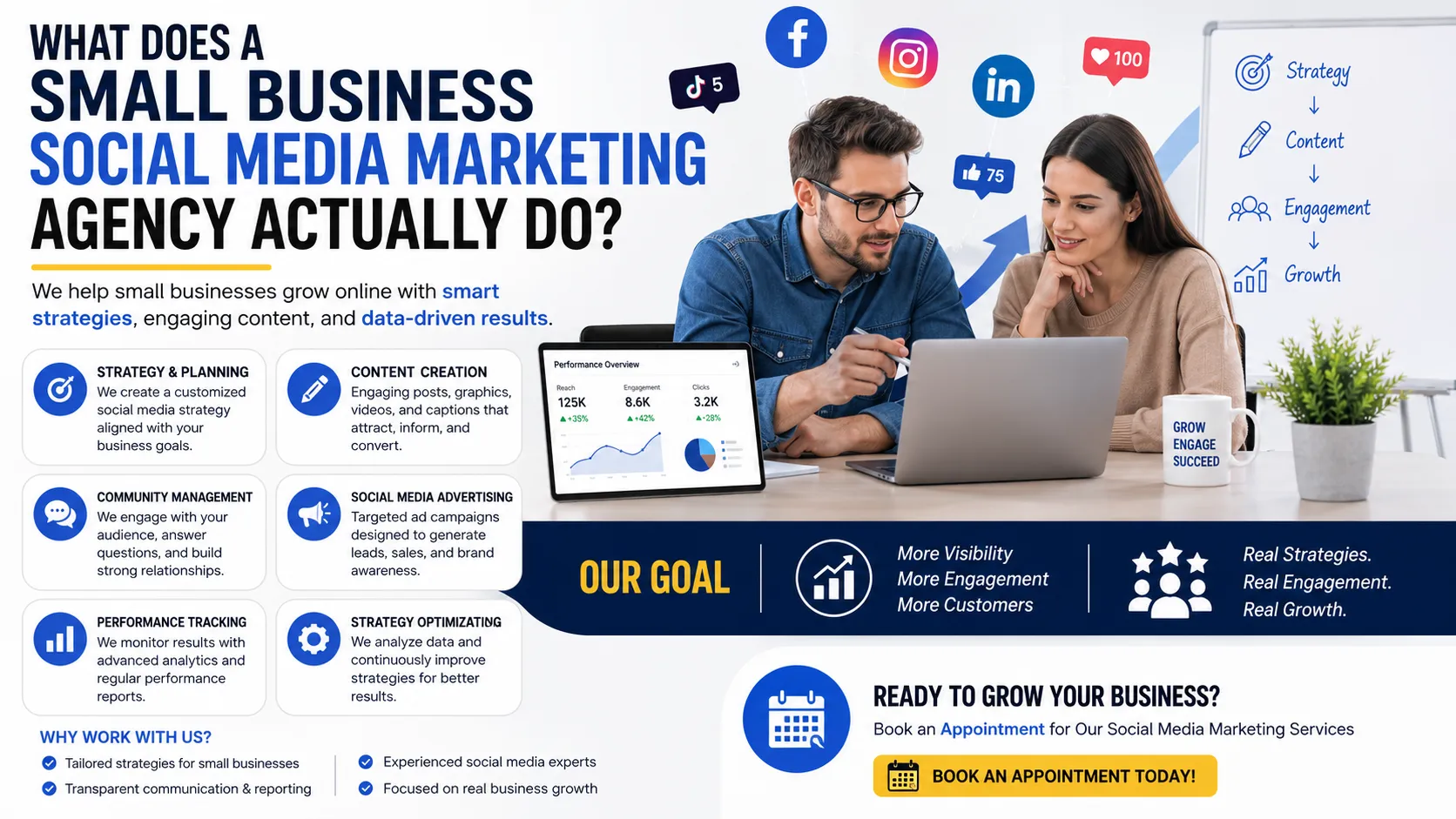
Many people assume an agency simply creates graphics and schedules posts. While content creation is certainly part of the job, professional agencies work much deeper than that. Their first responsibility is understanding the business itself.
Before recommending a strategy, experienced marketers study the company’s goals, target audience, competitors, and industry trends. They want to know who the ideal customers are, where those customers spend time online, and what type of content influences purchasing decisions. Only after understanding these factors do they begin building a marketing strategy.
A quality agency focuses on creating a social media presence that supports long-term business goals rather than chasing short-lived trends. Every post, advertisement, video, and campaign is designed with a purpose, whether that purpose is increasing local visibility, generating qualified leads, improving customer trust, or driving website traffic.
This strategic approach is one of the biggest differences between professional management and simply posting content whenever time allows.
Why Are More Small Businesses in the USA Hiring Professional Agencies?
Business owners usually reach a point where they realize social media requires more attention than they can realistically provide.
Managing inventory, serving customers, handling employees, answering emails, and overseeing daily operations already consume most of the workday. Adding content planning, graphic design, video editing, audience engagement, and advertising management often becomes overwhelming.
Hiring professionals allows business owners to focus on running the company while experienced marketers handle digital growth. There is another reason this trend continues to grow.
Social media platforms constantly update their algorithms. What worked on Instagram last year may no longer produce the same results today. Facebook advertising continues to evolve, LinkedIn changes how professional content is distributed, and TikTok rewards different content styles every few months.
Professional agencies monitor these changes as part of their daily work. Instead of relying on outdated tactics, they adjust strategies based on current platform behavior and audience trends. For many businesses, this knowledge alone can prevent wasted marketing budgets.
What Separates Professional Social Media Marketing from Simply Posting Content?
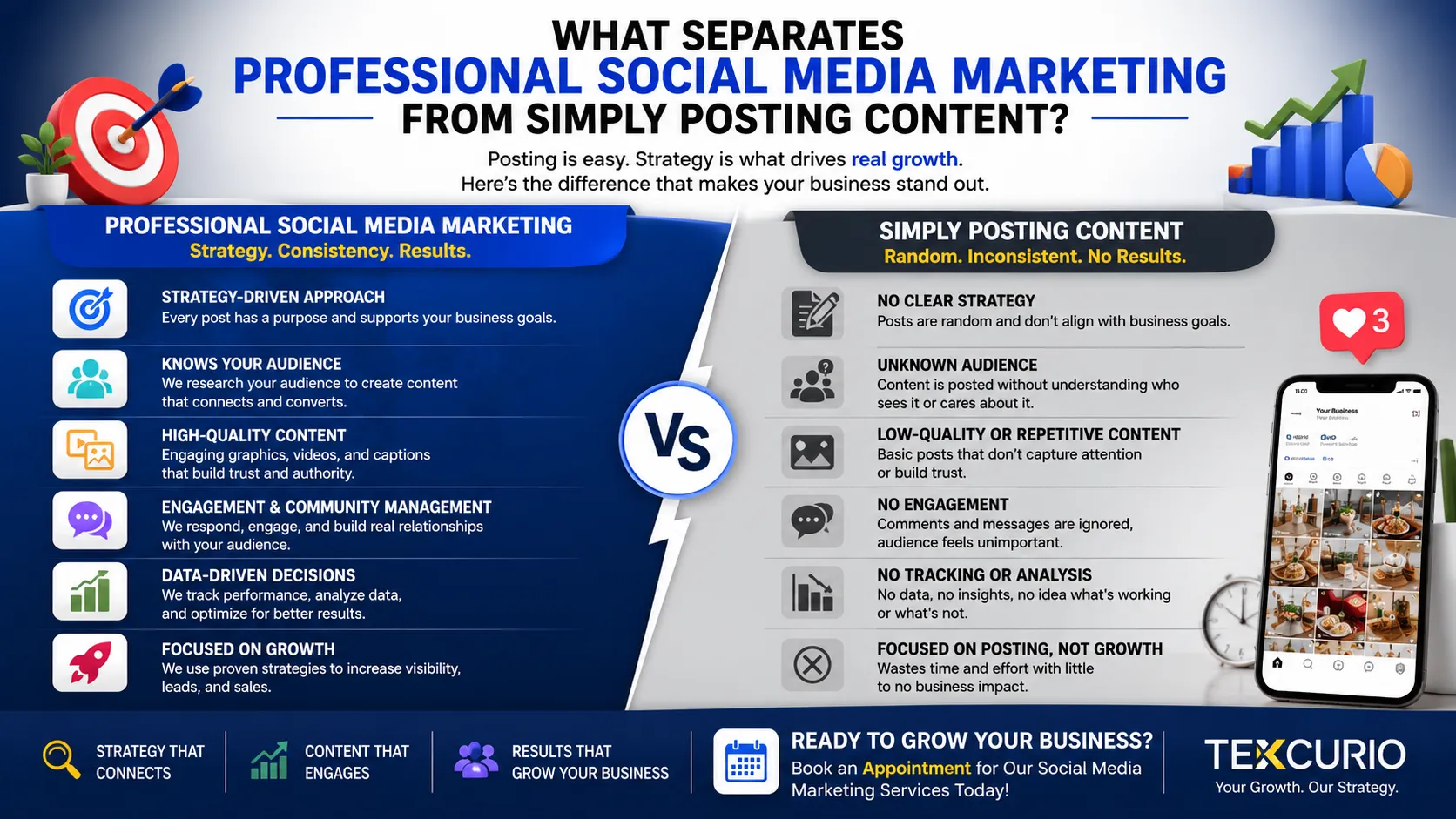
One of the most common misconceptions is that success comes from posting every day. In reality, frequency matters far less than purpose. Imagine two local businesses. The first uploads random promotional graphics several times each week. Every post focuses on selling products, and there is little interaction with followers.
The second shares customer success stories, answers common questions, publishes educational videos, responds to comments promptly, highlights behind-the-scenes moments, and occasionally promotes services when appropriate.
Although both businesses are active, the second approach builds stronger relationships by providing value before asking customers to make a purchase.
That is how experienced agencies think. Rather than asking, “What should we post today?” they ask, “What content will help potential customers trust this business?” That small shift in thinking often leads to much stronger long-term results.
Is Every Social Media Platform Worth Your Time?
A common mistake among growing businesses is trying to be active everywhere at once. More platforms do not automatically mean more customers. The best agencies usually recommend focusing on the platforms where your audience already spends time, rather than spreading resources too thin.
A local home service company may generate excellent results from Facebook because homeowners frequently search for recommendations there. A boutique fashion brand may perform much better on Instagram because visual content influences purchasing decisions.
A B2B software company is likely to find higher-quality leads on LinkedIn, where professionals actively network and research business solutions. Instead of chasing every new platform, experienced marketers identify where the highest-value conversations are already happening and invest their efforts there.
Why Strategy Always Matters More Than Posting Frequency?
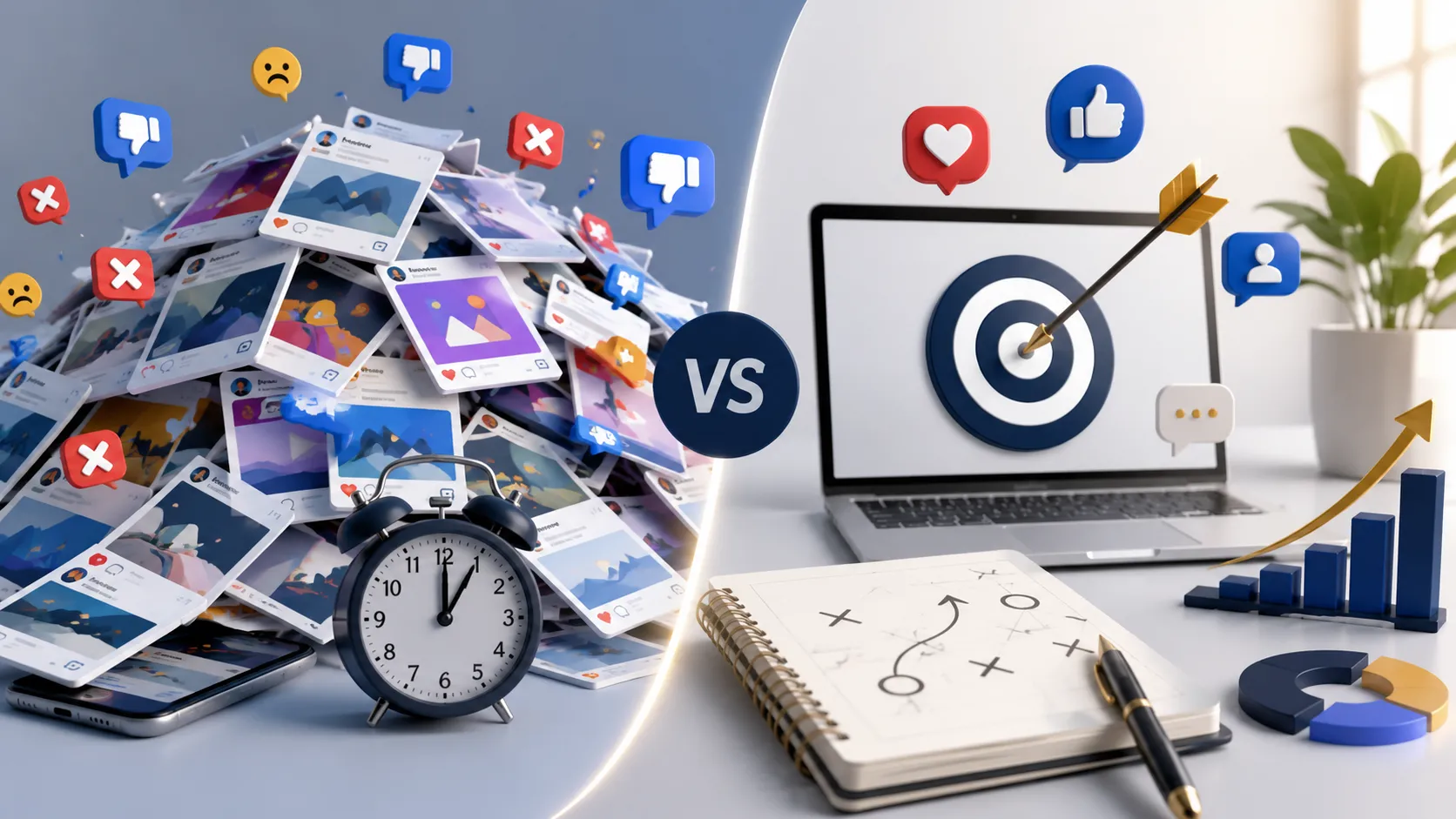
Many businesses become discouraged because they post consistently but see little engagement. The problem usually is not consistency; it is direction. Without a clear strategy, content becomes a collection of unrelated posts.
Customers struggle to understand what the business stands for, and algorithms receive mixed signals about the audience the content is trying to reach. Professional marketers approach social media differently.
Before creating a single post, they define objectives such as increasing local awareness, generating consultation requests, growing an email list, promoting seasonal offers, or strengthening customer loyalty.
Every piece of content then supports one of those objectives. That level of planning creates a consistent customer experience while making marketing efforts easier to measure and improve over time.
What Services Should You Expect from a Professional Social Media Marketing Agency?
One reason businesses feel disappointed after hiring an agency is that they expect someone to “manage social media,” while the agency assumes its job is only to publish posts. That gap in expectations often leads to frustration.
A professional small business social media marketing agency should become an extension of your marketing team. Instead of focusing on isolated tasks, it should build a complete system that attracts the right audience, keeps them engaged, and encourages them to become customers.
The exact services vary from one agency to another, but the strongest agencies usually cover every stage of the customer journey, from the moment someone first discovers your business until they decide to buy.
It Always Starts with Understanding Your Business
Experienced marketers rarely begin by designing graphics or writing captions. Instead, they spend time learning about your business because every company has a different audience, different goals, and different challenges.
A restaurant trying to increase weekend reservations requires a completely different strategy than a law firm looking for consultation requests. Likewise, an online clothing store has different marketing priorities than a local plumbing company. Before building a strategy, a professional agency usually studies:
- Your products or services
- Your ideal customers
- Your competitors
- Your local or national market
- Your existing social media performance
- Your business objectives
This research allows every future decision to be based on data rather than assumptions.
Content Should Educate Before It Sells
One of the biggest mistakes businesses make is treating every social media post like an advertisement. Customers rarely open Instagram or Facebook hoping to see sales pitches all day. They spend time on social media because they want to learn something, solve a problem, or simply be entertained. The best agencies understand this behavior.
Instead of constantly promoting products, they create a healthy mix of educational, informative, and promotional content that feels natural within the user’s feed.
For example, a landscaping company might share seasonal lawn care tips before introducing its maintenance services. A dental clinic may explain the benefits of preventive care long before promoting appointments. This approach builds credibility first, making promotional content far more effective later.
Consistency Builds Trust More Than Viral Posts
Many business owners dream of creating one viral video that transforms their business overnight. While viral content can generate temporary attention, it rarely creates sustainable growth on its own. Successful businesses usually grow because they remain consistently visible over time.
Customers notice when a business continues sharing valuable information, answers questions promptly, and maintains a professional presence month after month.
Consistency quietly builds familiarity. Familiarity builds trust. And trust often leads to purchasing decisions. Professional agencies understand that long-term consistency usually delivers stronger business results than chasing short-term internet trends.
Community Management Is Often More Valuable Than Posting
Publishing content is only one part of social media management. The conversation that happens after publishing is equally important. Imagine a potential customer asks a question about your service in the comments section. If nobody responds for several days, that customer may simply move on to a competitor.
Professional agencies monitor conversations, respond to comments, answer messages, and help maintain positive relationships with followers. These interactions may appear small individually, but together they create a stronger customer experience. People appreciate businesses that communicate promptly and professionally.
Paid Advertising Should Support Organic Growth
Many businesses believe social media advertising is simply boosting random posts. In reality, professional advertising involves much more strategic planning.
Experienced marketers define specific audiences based on demographics, interests, behaviors, and purchasing intent. They then test multiple advertisements, compare performance, and continually optimize campaigns based on real data.
Organic content helps build credibility. Paid advertising helps accelerate visibility. When both strategies work together, businesses often see better results than relying on either one alone.
How Does a Professional Agency Manage an Entire Campaign?
Behind every successful social media account is a structured workflow. Although each agency has its own process, most experienced teams follow a similar path.
Stage | What Happens |
Discovery | Learn about your business, goals, competitors, and audience. |
Strategy | Create a content and marketing plan based on business objectives. |
Content Production | Design graphics, write captions, produce videos, and prepare campaigns. |
Publishing | Schedule and publish content consistently across selected platforms. |
Community Management | Respond to comments, messages, and customer interactions. |
Performance Review | Analyze data, identify improvements, and refine future campaigns. |
This structured approach allows marketing efforts to improve over time instead of relying on guesswork.
Boutique Social Media Agency or Large Marketing Company?
Business owners often assume that bigger agencies automatically deliver better results. That is not always true. A boutique social media agency usually works with fewer clients, allowing it to provide more personalized service and closer collaboration.
Team members often become deeply familiar with each client’s business, making communication quicker and strategies more customized. Larger agencies, on the other hand, may offer a broader range of services and larger teams. They can be an excellent choice for companies with complex marketing needs, multiple locations, or national campaigns.
Neither option is universally better. The right choice depends on your business goals, budget, and preferred working style. For many small businesses, personalized attention often delivers more value than simply hiring the largest agency available.
What Makes the Best Small Business Social Media Marketing Agency?
The best small business social media marketing agency is rarely the one promising thousands of followers within a few weeks. Instead, experienced agencies focus on business outcomes rather than vanity metrics.
When comparing agencies, pay attention to how they communicate. Do they ask thoughtful questions about your business? Do they explain their strategy clearly? Are they transparent about reporting and expectations?
An agency that takes time to understand your goals before discussing packages usually demonstrates a more strategic approach. Client testimonials, case studies, and long-term partnerships can also provide useful insight into how consistently an agency delivers results.
Are Top Social Media Management Companies Always the Right Choice?
Many lists highlight the top social media management companies, but choosing a well-known name does not automatically guarantee the best fit. Large agencies often have extensive experience and impressive portfolios, yet they may also manage hundreds of accounts simultaneously.
Smaller agencies sometimes provide more direct communication, faster response times, and highly customized strategies. Rather than asking, “Which agency is the biggest?” ask a more useful question:
“Which agency understands my business, my audience, and my growth goals?”
That answer often leads to a better long-term partnership.
Should Influencers Work with Specialized Agencies?
Not every business needs influencer marketing, but when it becomes part of your strategy, choosing the right partner matters. A social media agency for influencers specializes in helping creators build personal brands, negotiate collaborations, manage sponsorships, and grow engaged audiences.
Businesses planning influencer campaigns can also benefit from agencies that understand how to identify creators whose audiences genuinely match the brand instead of simply choosing influencers with the largest follower counts. Successful influencer marketing depends far more on audience relevance than follower numbers.
Why Reporting Matters More Than Most Businesses Realize
One of the easiest ways to tell whether an agency is genuinely improving your marketing is by looking at the quality of its reporting. A professional report should explain more than how many likes or followers you gained. It should answer practical business questions such as:
- Which content attracted the most qualified audience?
- Which campaigns generated enquiries?
- Which platform produced the strongest return?
- What should be improved next month?
Good reporting helps business owners make informed decisions instead of relying on assumptions. Over time, these insights become one of the most valuable parts of working with an experienced agency.
How Much Should a Small Business Invest in Social Media Marketing?
One of the first questions business owners ask is, “How much should we spend?” Unfortunately, there isn’t a single answer that fits every business.
A neighborhood coffee shop, an online clothing brand, and a software startup all have different goals, audiences, and competition. Because of that, their marketing investment should also be different.
Instead of deciding on a budget first, it is often more effective to define the outcome you want to achieve. Are you trying to increase local brand awareness? Generate appointment bookings? Drive online sales? Launch a new product? The answer determines how much effort and investment will be required.
Another important point is to separate agency fees from advertising spend. Paying an agency covers strategy, creative work, campaign management, and optimization, while advertising budgets are spent directly on platforms like Facebook, Instagram, LinkedIn, or TikTok to reach potential customers.
Businesses that understand this difference usually make better marketing decisions because they view social media as a long-term growth investment rather than a monthly expense.
How Long Does It Take to See Meaningful Results?
Many agencies lose clients simply because expectations are not discussed at the beginning. Some business owners hope to see dramatic growth within a few weeks. While early improvements in engagement and reach are certainly possible, sustainable business growth usually develops over time.
During the first month, an agency is often collecting data, testing content formats, identifying the strongest audience segments, and learning how people respond to different campaigns.
Over the following months, those insights help refine the strategy. Content becomes more targeted, advertising becomes more efficient, and customer engagement improves because decisions are based on real performance rather than guesswork.
Businesses that stay consistent generally see stronger and more sustainable results than those who expect immediate success and abandon their strategy too soon.
Mistakes That Prevent Small Businesses from Growing on Social Media
Interestingly, many businesses do not struggle because social media has stopped working. They struggle because they unknowingly repeat the same mistakes.
One of the most common is treating every post like an advertisement. People rarely open social media looking to buy something immediately. They are looking for ideas, solutions, inspiration, or useful information. Brands that constantly push sales messages often receive less engagement over time.
Another mistake is copying competitors without understanding why their content works. What succeeds for one business may fail for another because audiences, products, and customer expectations are different.
Inconsistent branding also creates confusion. When every post uses different colors, messaging, or tone of voice, customers find it harder to recognize and remember the business.
Perhaps the biggest mistake is measuring success only through follower counts. A business with 3,000 engaged local followers may generate far more sales than a page with 100,000 inactive followers. Meaningful growth comes from attracting the right audience, not simply the largest one.
How Can You Tell if Your Social Media Strategy Is Working?
A successful strategy should produce business improvements, not just attractive reports. Instead of asking how many likes a post received, consider questions such as:
- Are more people visiting your website?
- Are enquiries becoming more frequent?
- Is your audience engaging with your content?
- Are customers mentioning that they found you through social media?
- Are advertising campaigns producing qualified leads rather than random clicks?
These indicators reveal whether social media is contributing to real business growth. Professional agencies focus on these practical outcomes because they align marketing performance with business objectives.
What Should You Look for Before Hiring an Agency?
Choosing an agency is similar to choosing a long-term business partner. Technical skills matter, but communication, transparency, and strategic thinking matter just as much. Before making a decision, consider the following:
- Look for agencies that ask detailed questions about your business instead of immediately recommending a package.
- Review case studies to understand how they have helped businesses achieve measurable growth.
- Ask how performance will be tracked and reported each month.
- Make sure content creation, strategy, and community management are clearly included in the service.
- Choose a team that explains marketing concepts in a way you can easily understand.
The right partnership should leave you feeling informed and confident, not confused by technical jargon.
Is Working with a Boutique Agency Better for Small Businesses?
Many entrepreneurs automatically assume that larger agencies provide better service because they have bigger teams or more recognizable clients. In reality, that is not always the case.
A boutique social media agency often works with a smaller portfolio of clients, allowing it to provide more personalized attention, faster communication, and strategies tailored to each business.
Larger agencies may be ideal for national brands managing multiple campaigns across different markets, but smaller businesses frequently benefit from the flexibility and close collaboration that boutique agencies offer. The best choice depends less on the agency’s size and more on whether its experience aligns with your business goals.
Frequently Asked Questions
Is hiring a social media marketing agency worth it for a small business?
Yes, if your goal is sustainable growth rather than simply maintaining an online presence. A professional agency helps businesses develop a strategy, create high-quality content, manage advertising, and measure results that contribute to long-term success.
How do I choose the best small business social media marketing agency?
Look beyond pricing. Evaluate the agency’s experience, communication style, client reviews, reporting process, and ability to understand your business before recommending solutions.
Do all small businesses need every social media platform?
No. Most businesses achieve better results by focusing on the platforms where their target audience is already active instead of trying to maintain a presence everywhere.
Can social media generate real sales?
Yes. While social media often begins by building awareness and trust, consistent strategy combined with targeted advertising can generate qualified leads, online purchases, and long-term customer relationships.
Should influencers hire a specialized agency?
For creators focused on brand partnerships and audience growth, working with a social media agency for influencers can provide valuable expertise in campaign management, sponsorship negotiations, and personal branding.
Final Thoughts
Choosing the right small business social media marketing agency is about finding a partner that understands your business goals and delivers measurable results. With the right strategy, consistent content, and data-driven optimization, social media can become a reliable source of brand awareness, leads, and long-term growth.
If you are looking for a small business social media marketing agency in USA, Tekcurio provides customized social media solutions designed to help small businesses grow faster and achieve a stronger return on investment.
Book an appointment today to discuss your business goals and discover how our social media marketing services can help you reach the right audience and drive sustainable growth.


Boutique SEO Agency: A Practical Guide for Growing Your Business
Jump To Boutique SEO Agency: A Practical Guide for Growing
SEO Agency for Ecommerce: How to Choose the Right SEO Partner in the USA
Jump To SEO Agency for Ecommerce: How to Choose the
Multilingual SEO Agency: How to Choose the Right Partner for Global Growth
Jump To Multilingual SEO Agency: How to Choose the Right

B2B Social Media Marketing Agency for US Businesses
Jump To B2B Social Media Marketing Agency for US Businesses