
+92 300 9842234
Side Info Heading
Side Info Text
Gallery Heading

Follow Us

The international online shopping business is expanding at a rate that has never been witnessed before. Other brands emerge, new products are released, and new clients start their search for what they will purchase every hour.
But even as the millions of buyers are willing to spend, the majority of online shops are silently missing out on them. The reason is not the product. And even the price does not give the reason. The truth of the matter is that the majority of online shops drive away visitors without even noticing.
Tourists come in with purpose and interest. They are ready to explore. They want to trust. They desire to have confidence before they can press the buy button. However, when the experience is slow, disorienting, amateurish, or challenging, they move in a matter of seconds. They do not complain. They do not give feedback. They just moved to a competitor.
This paper exposes the top ten most destructive modes through which online stores lose good audiences. These are not small issues. These are the unseen holes that are bleeding the sales day by day. The resolution of these issues will turn a failing store into a brand’s cash cow.
Why an Ecommerce Website Fails to Capture and Hold Modern Buyers
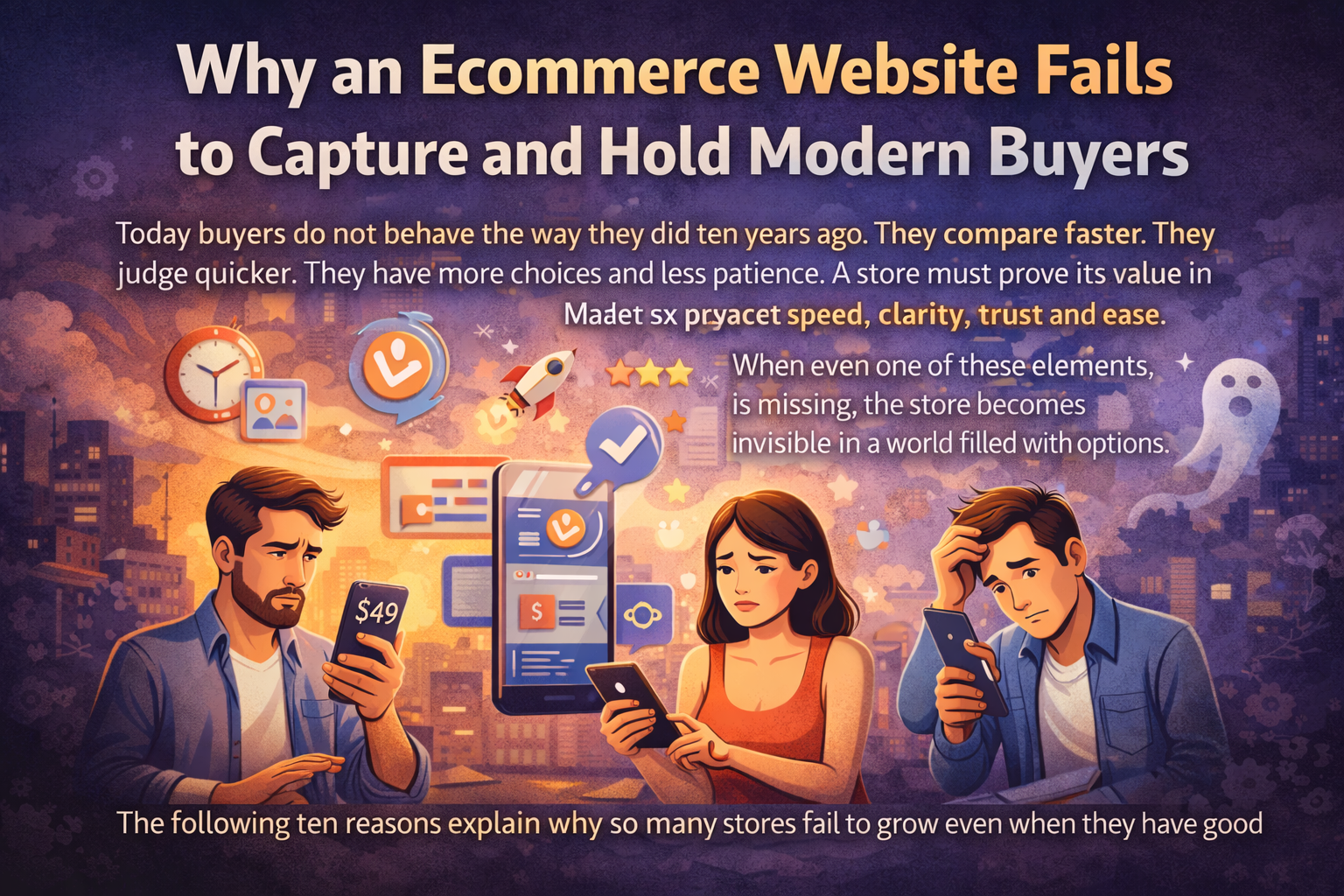
Customers are not acting as they used to a decade ago. They compare faster. They judge quicker. They are less patient and have more options. A shop should demonstrate its worth within a few seconds, or it will be disregarded.
Contemporary consumers desire fast, clear, reliable, and convenient. The absence of any of these aspects causes the store to be unrecognized in the world of choices.
This is because there are ten reasons why so many stores fail to grow, even in cases where they have good products.
1. Design That Focuses on Looks Instead of Sales
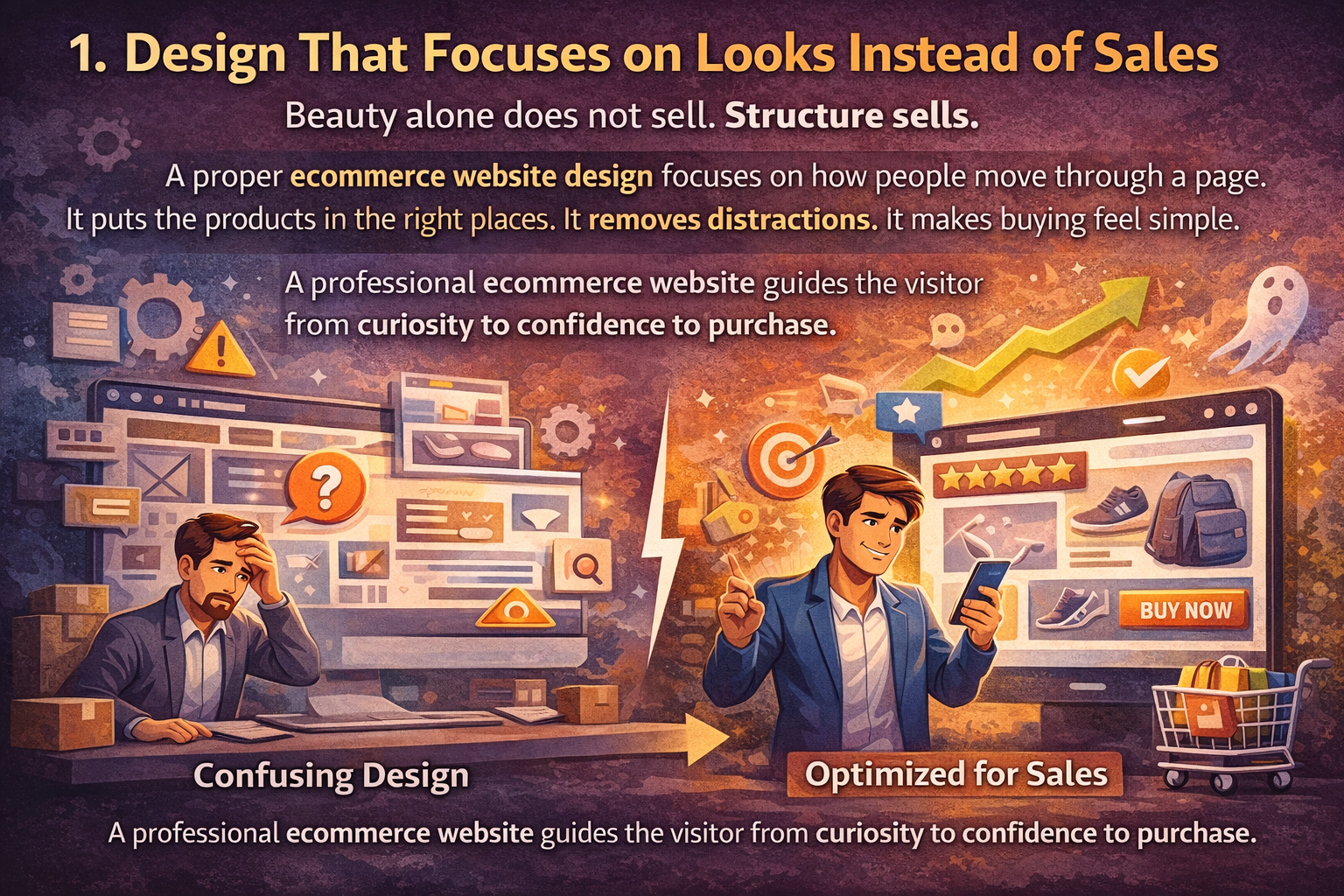
A great number of business owners take it that as attractive a store looks, the better it must be operating. This is among the most expensive errors. Beauty alone does not sell. Structure sells.
A proper ecommerce website design focuses on how people move through a page. It puts the products in the right places. It removes distractions. It makes buying feel simple.
When businesses use free ecommerce website templates, they often get layouts that look stylish but are not created for conversion. These designs are constructed in such a way that they suit numerous industries rather than being directed towards a single kind of buyer. The outcome is the confusion, the slowness of the decision making, and missed sales.
The visitor is guided through the process of curiosity, confidence, and purchase using a professional layout.
2. Weak Mobile Experience
The majority of shoppers are becoming phone savvy. Still, there are a lot of stores acting like buyers are at the desktop computers.
The buttons are too small. Text is too tight. Images load slowly. Forms are difficult to fill out. Big frustration arises as a result of these trivial problems.
A modern ecommerce website builder is created to adapt to every screen size automatically. The best ecommerce website builder builds pages that feel smooth and natural on phones and tablets. Buyers are impatient when the mobile experience is bad. They leave and rarely return.
3. Slow Loading Pages
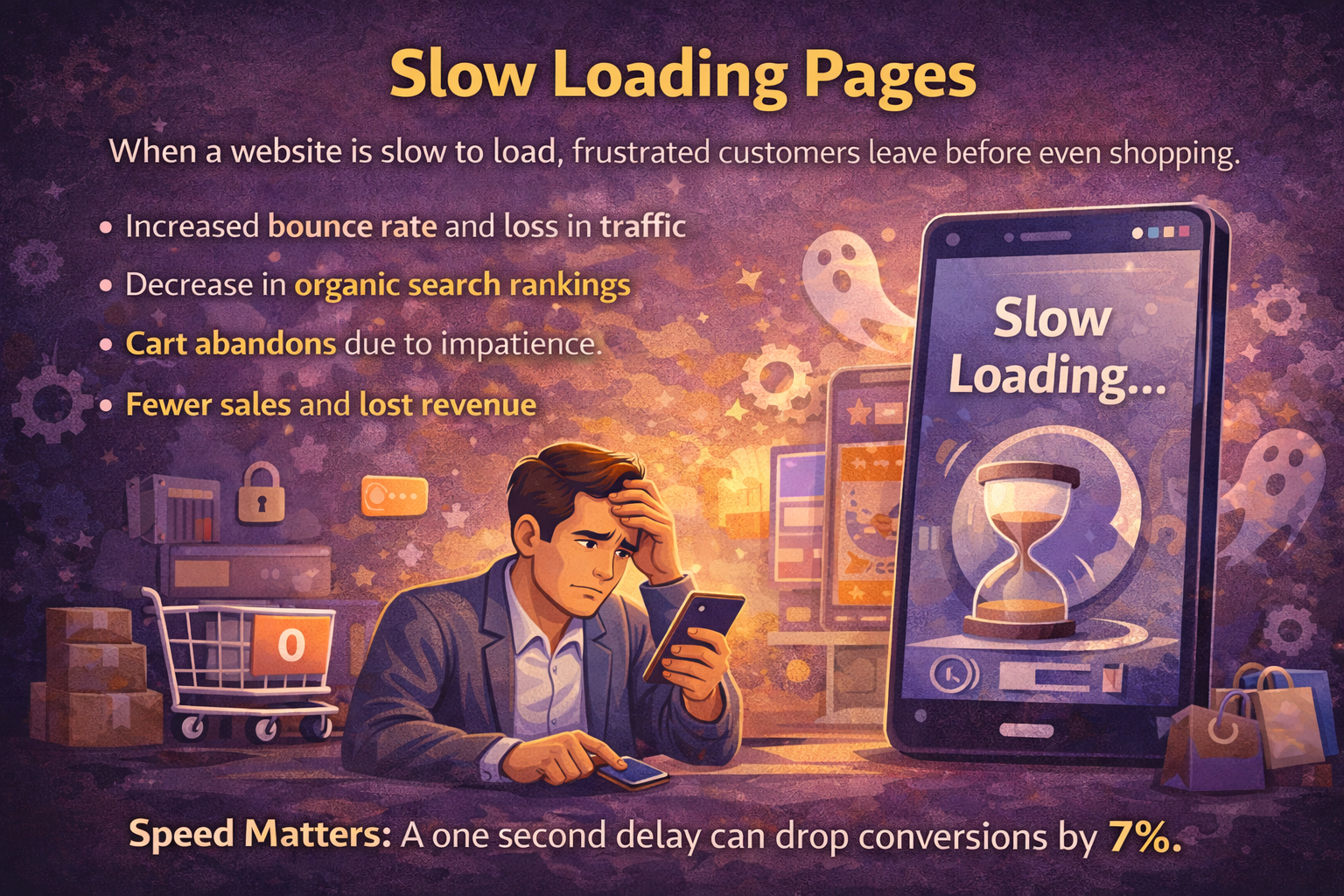
Online commerce is among the strongest selling factors using speed. An additional second of load time escalates abandonment.
Buyers feel like they are not sure when a page is taking a long time to open. They worry about security. They worry about quality. They are concerned with time wastage.
Most free ecommerce website templates include heavy code, large images, and scripts that slow everything down. Professional ecommerce website design services remove this weight and focus on speed. Fast pages create trust. Slow pages destroy it.
4. Poor Search Visibility
You may have a beautiful store, and you can get no sales because nobody does not know where it is. This is why seo for ecommerce website is essential.
Search engines attract ready-to-buy persons. However, in the absence of appropriate organization, product naming, category setup, and content, no store will be shown up in search results.
This problem is especially common for an ecommerce website in Pakistan, where many stores rely on social media only. Social media is beneficial, although search traffic brings permanent growth and steady sales. A store that is ranked high is made into a 24-hour selling machine.
5. No Clear Trust Signals
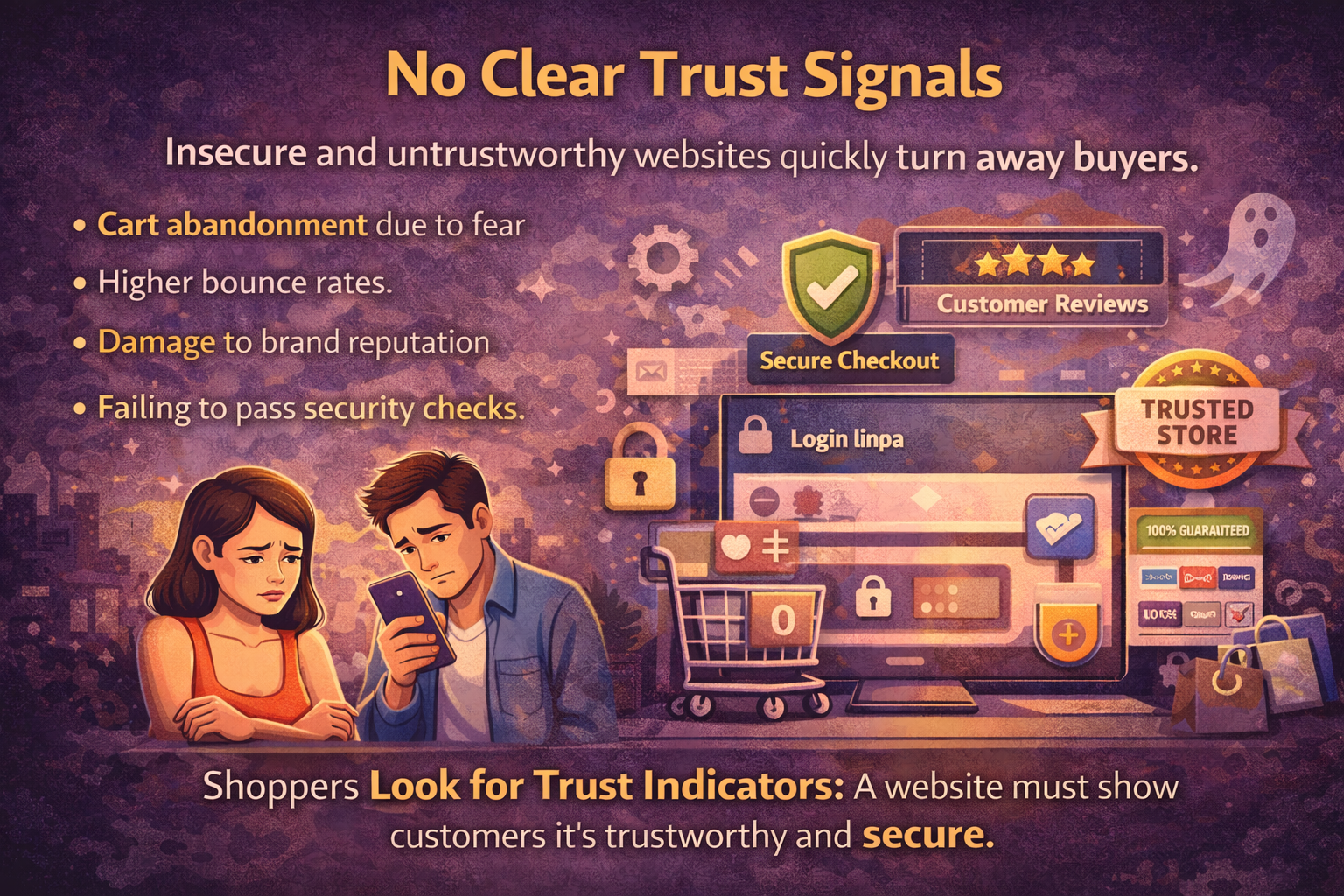
Individuals do not trust the internet. They need proof. If a store lacks reviews, contact information, a return policy, and a visible brand, visitors are hesitant. The question they ask is whether the business is genuine. They fear losing money.
A strong ecommerce website design with a Dubai-style layout shows trust at every step. It shows actual images, user comments, company data, and security of payment. Trust is not built with words. It is constructed using manifest evidence.
6. Product Pages That Do Not Persuade
Most of the stores use product pages as catalogs. They enumerate characteristics but lose feeling. Customers desire to understand the way a commodity benefits their lives. They want to imagine using it. They desire to feel good about their decision.
High quality images, clear descriptions, size guides, usage examples, and benefits are all part of professional ecommerce website design services. In the absence of these, buyers will not know and walk out without making a purchase decision.
7. Complicated Checkout Process
The checkout page is where one gets to make or lose money. Buyers leave their carts when they have too many form fields, are compelled to create an account, or are confused by different steps. They do not finalize the purchase.
Modern ecommerce website builder platforms allow simple one page checkout, guest purchases, and fast payment options. The best ecommerce website builder reduces effort so buyers can finish quickly and easily.

8. No Brand Personality
A personality-less store is a blank one. It feels replaceable. They desire to purchase brands that are human-like. They desire to relate themselves to values, story, and vision.
A store with a face of who they are, why they are here, and what makes them different creates loyalty. This is why many leading ecommerce website design Dubai brands invest heavily in branding and visual identity. A good brand makes customers become loyal customers.
9. No Data Based Improvements
Many store owners guess instead of measuring.
They do not look at:
- Where visitors leave
- Which products are ignored
- Which pages convert best
- How people move through the site
Without this data, growth is random. With data, growth becomes controlled. Professional ecommerce website design services use analytics tools to refine every page so sales improve over time.
10. Weak Content Strategy
There is a significant gap that a store can be missing by merely displaying products.
Guides, blogs, and tutorials are the content that attracts individuals in the process of making a decision. This is where seo for ecommerce website becomes powerful.
Search engines reward useful content. Educational brands are trusted by customers.
A store having good content develops traffic, authority, and long term sales.
How These Factors Work Together
All ten factors are connected. Design affects trust. Speed affects search ranking. Content affects visibility. Mobile affects conversion. When one element is weak, it hurts all others. The table below shows how each area impacts growth.
Area | Effect on Sales | Effect on Trust | Effect on Search |
Design | Guides buying | Builds confidence | Improves engagement |
Speed | Reduces drop off | Feels professional | Helps ranking |
Mobile | Increases orders | Feels modern | Improves user signals |
SEO | Brings buyers | Shows authority | Drives traffic |
Checkout | Finalizes sales | Feels secure | No direct impact |
Branding | Creates loyalty | Builds identity | Improves return visits |
FAQs:
When an ecommerce site is struggling to find its target audience?
An ecommerce site struggles to find its target audience when it has weak search visibility, unclear messaging, poor design flow, or attracts traffic that does not match buyer intent, causing visitors to leave without taking action.
What are the challenges faced by ecommerce?
Ecommerce faces challenges such as intense competition, low customer trust, slow websites, high advertising costs, poor conversion rates, weak brand loyalty, and difficulty standing out in crowded digital marketplaces.
What is the target audience of ecommerce?
The target audience of ecommerce includes people who prefer shopping online for convenience, price comparison, fast delivery, and wide product choices, ranging from casual buyers to repeat customers who value speed and ease.
Which of the following is a major problem with ecommerce?
One of the biggest problems with ecommerce is a lack of customer trust, as buyers worry about payment safety, product quality, and return policies when shopping from unfamiliar online stores.
What are the 7 types of audiences?
The seven types of audiences are mass audience, niche audience, loyal audience, first time buyers, returning customers, impulse shoppers, and value driven shoppers who compare prices and benefits before buying.
What can be barriers for potential customers in assessing your ecommerce site?
Barriers include slow loading pages, confusing navigation, weak product details, lack of reviews, complicated checkout, unclear pricing, and a poor mobile experience that prevents users from feeling confident enough to buy.
Conclusion
A successful ecommerce website is not built by accident. It is created through careful design, strong search visibility, fast performance, trust building, mobile optimization, and clear brand presence.
Most online stores lose potential audiences because they treat their website like a digital brochure instead of a living sales system. When businesses invest in the right ecommerce website design, use a powerful ecommerce website builder, choose the best ecommerce website builder for their needs, and implement seo for ecommerce website, growth becomes predictable and scalable.
The brands that fix these ten gaps do not fight for customers. Customers find them, trust them, and buy from them again and again.
Read More about Web Design:
Law Firm Website Design: Step-by-Step Guide
How a Professional Website Can Boost Your Small Business Growth