
Call Us Now:
+92 300 9842234
Side Info Heading
Side Info Text
Gallery Heading
Follow Us

What Is a PPC Marketing Agency?
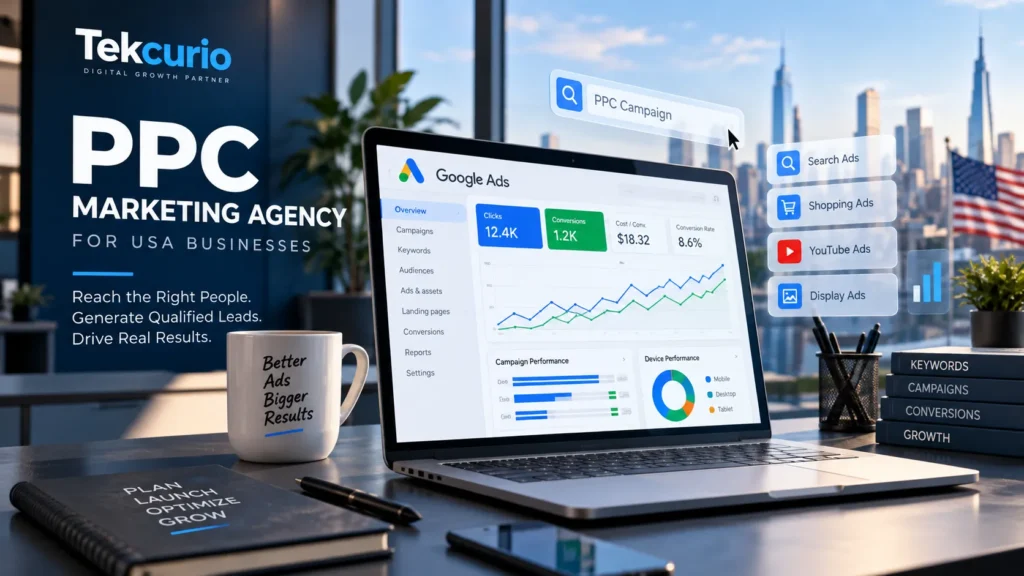
A PPC marketing agency manages paid advertising campaigns for other businesses. PPC means pay per click. In many PPC campaigns, an advertiser pays when a user clicks an ad. A PPC agency may manage:
- Google Search campaigns
- Google Shopping campaigns
- Performance Max
- remarketing
- YouTube advertising
- keyword research
- ad copy
- conversion tracking
- landing page testing
- budget management
The exact service should depend on the client’s goals. A local plumber may want phone calls. An ecommerce store may want profitable sales. A software company may want demo requests. These are different goals, so they should not use the same PPC strategy.
How Does PPC Marketing Work?
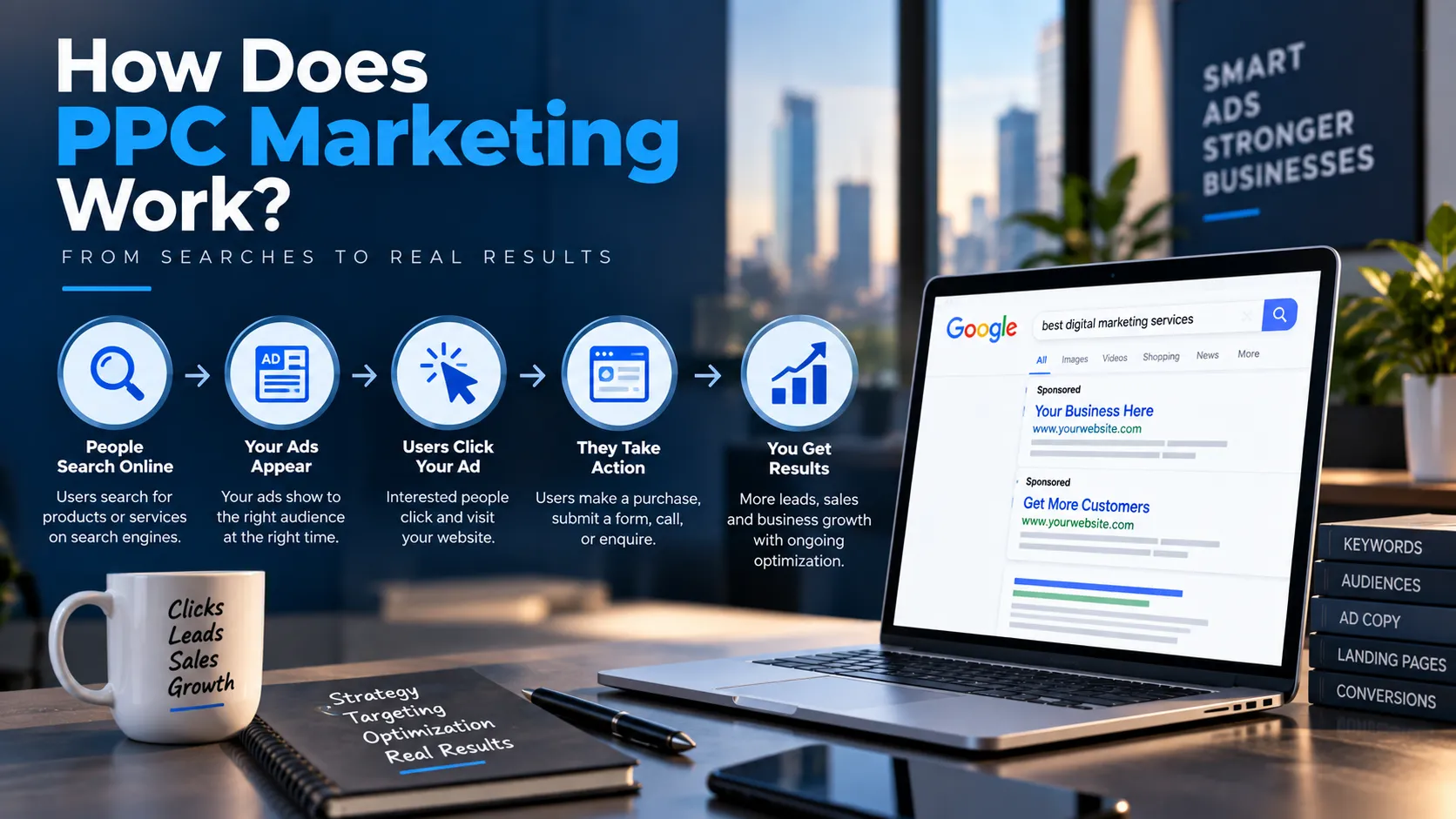
PPC ads allow businesses to reach users based on searches, location, intent, audiences, and other campaign settings. Imagine a roofing company in Houston. A homeowner searches for: roof repair near me. The roofing company may be eligible to show an ad for that search.
The highest bid does not always get the best ad position. Google says Ad Rank can consider the bid, ad and landing-page quality, auction competition, search context, and the expected impact of ad assets.
This matters because strong PPC is not just about paying more. Relevance also matters. The search, ad, and landing page should make sense together.
What Does a PPC Marketing Agency Actually Do?
A good agency should manage the full path from search to conversion. That starts before the first ad goes live.
Understand the Business
The agency should first learn how the company makes money. It should understand:
- the main products or services
- target locations
- ideal customers
- average order or customer value
- profit margins
- sales process
- lead quality
- business goals
This step is easy to skip. That can cause problems later. A campaign may look strong inside Google Ads but still send weak leads to the sales team.
Research Keywords and Search Intent
Keywords help connect ads with customer searches. But search volume alone is not enough. Intent matters more. Consider these two searches: how does PPC work and PPC management company. The first user may only want information. The second user may be looking for a service provider.
Google Ads currently uses broad, phrase, and exact keyword matching. Broad match can reach a wider range of related searches. Exact match gives tighter control. Negative keywords can stop ads from showing for unwanted terms. A strong agency does not choose one match type and forget about it. It checks what real users are searching for.
Build a Clear Campaign Structure
A clean account is easier to manage. For example, a home service company should not always place plumbing, HVAC, and electrical services inside one mixed campaign.
Separate campaigns can make budget control easier. They can also improve message relevance. A user searching for AC repair should see an ad about AC repair. They should not land on a page that mainly talks about plumbing.
Write Ads That Match the Search
Good PPC copy should answer a simple question:
Why should this user click this ad?
The answer may include price, service area, availability, product benefits, or a clear offer. Claims should be accurate. Avoid vague promises. “Best service guaranteed” tells the user very little. A clear offer is often more useful.
Review the Landing Page
A click is only the start. The landing page needs to continue the same message. Google’s Quality Score system uses three diagnostic areas: expected click-through rate, ad relevance, and landing page experience. Google also states that Quality Score is a diagnostic tool, not a KPI or direct auction input.
A useful landing page should answer the visitor’s main question fast. It should also make the next step clear. That may be: Call now, Request a quote, Buy online, or Book a consultation.
What PPC Services Can an Agency Provide?
A full Google Ads agency may manage several campaign types.
PPC Service | Main Use | Often Suitable For |
Search Ads | Reach active searchers | Local services, B2B, lead generation |
Shopping Ads | Promote products | Ecommerce |
Performance Max | Reach users across Google inventory | Ecommerce and lead generation |
YouTube Ads | Video advertising | Awareness and remarketing |
Remarketing | Reach past visitors | Longer sales journeys |
Conversion Tracking | Measure useful actions | Almost every PPC campaign |
Landing Page Testing | Improve conversion rate | Lead and sales campaigns |
Google describes Performance Max as a goal-based campaign type that can reach inventory across Search, YouTube, Display, Discover, Gmail, and Maps. That does not mean every business needs Performance Max. The campaign type should fit the goal and available data.
Why Do Businesses Use PPC Management Services?
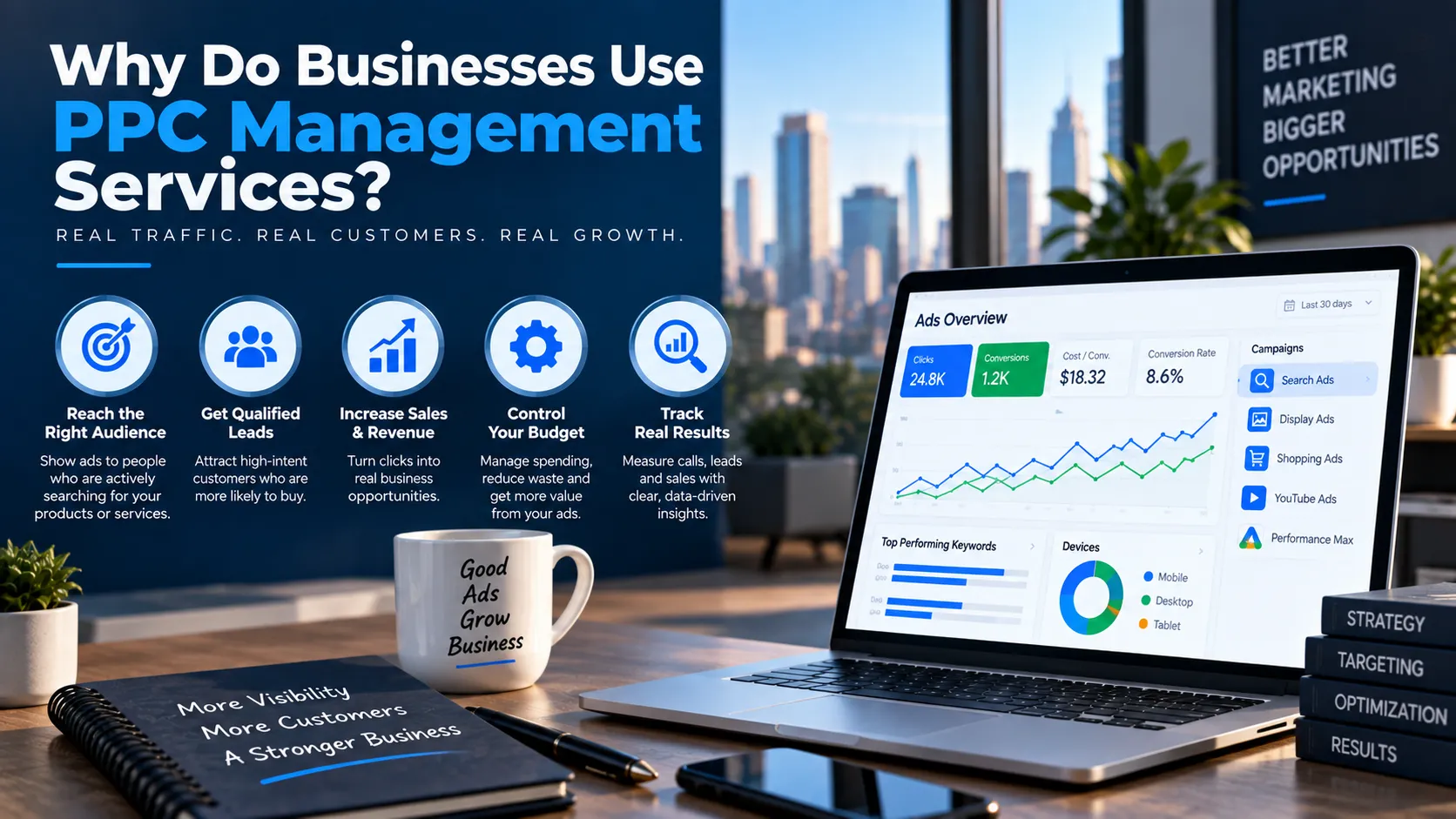
PPC can be managed in-house. But it takes time. It also needs regular checks. Search behavior changes. Competitors change offers. Cost per click can move. Lead quality can also change. A campaign that worked well last quarter may need a different approach today. Businesses often hire an agency to get:
- dedicated campaign management
- stronger tracking
- faster account reviews
- keyword and search-term analysis
- budget control
- ad testing
- landing-page feedback
- clearer reporting
The agency should still work with the internal team. Paid media cannot fix every business problem. If the offer is weak or leads are handled badly, PPC performance may suffer.
What Should Be Checked Before a PPC Campaign Goes Live?
A simple launch checklist can prevent costly mistakes. Before launch, check these areas:
- Is conversion tracking working?
- Are phone calls or forms being tracked?
- Do campaign locations match the service area?
- Are important negative keywords in place?
- Does each ad match its landing page?
- Does the landing page work on mobile?
- Is the daily budget realistic?
- Are the main conversion actions useful to the business?
- Can the sales team identify good and bad leads?
- Is there a plan for reviewing search terms after launch?
This process sounds basic. It is also one of the easiest ways to catch problems before they consume budget.
Why Is Conversion Tracking So Important?
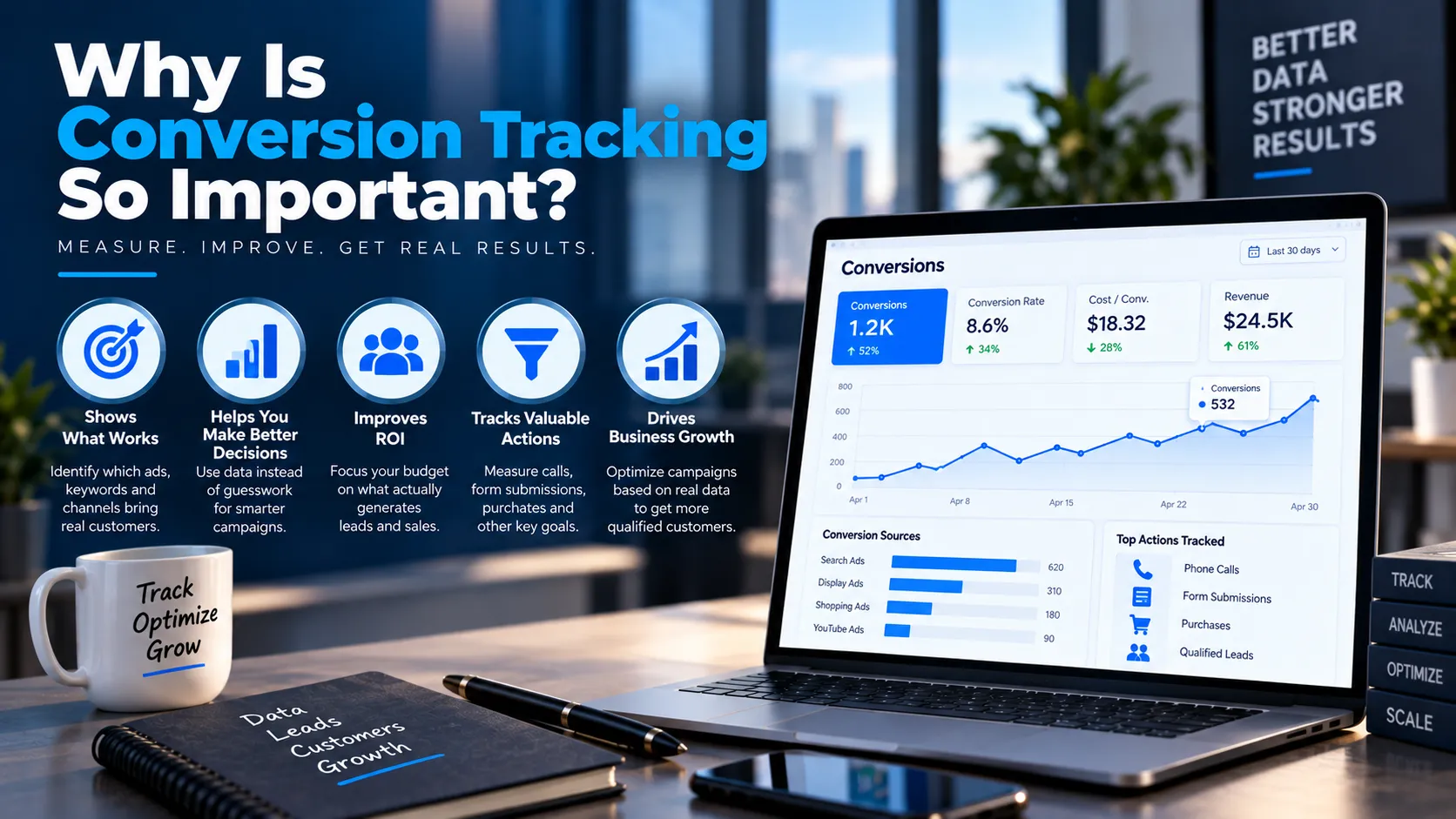
Conversion tracking shows what happens after a person interacts with an ad. Google defines a conversion action as a customer action that the advertiser considers valuable. Examples include purchases and phone calls.
Google Ads can also track website actions, app activity, calls, and some offline actions. This helps answer a much better question than: How many clicks did we get? The better question is: What did those clicks produce?
Google also supports enhanced conversions. It uses first-party data to improve conversion measurement. Google says this data can support modeled conversions and bidding optimization. Accurate tracking matters even more when automated bidding uses conversion data. Bad data can lead to bad decisions.
What Metrics Should a PPC Agency Track?
A useful PPC report should connect advertising activity to business results. Clicks alone are not enough. A campaign may get 1,000 clicks and still fail if none of those visitors become customers.
Common PPC metrics include cost per click, conversion rate, cost per lead, conversion value, return on ad spend, and impression share.
But the best metric depends on the company. A law firm may care about qualified consultations. An ecommerce brand may care about profit and revenue. A SaaS business may care about booked demos and customer acquisition cost. The agency should know which action actually matters.
A Simple PPC Example With Realistic Numbers
Consider a fictional HVAC company. This is only a sample. It is not real client data. The company spends $5,000 per month on ads. It gets:
Stage | Result |
Ad Spend | $5,000 |
Clicks | 500 |
Leads | 50 |
Qualified Leads | 30 |
Booked Jobs | 12 |
Average Job Value | $900 |
Revenue From Booked Jobs | $10,800 |
At first, the campaign appears to have a $100 cost per lead. But only 30 leads were qualified. That makes the cost per qualified lead about $167. This number may be more useful.
The company can then ask: Are 12 booked jobs enough to make the campaign profitable after labor, materials, and other costs? This is the type of question a PPC agency should help answer.
How Can a PPC Agency Reduce Wasted Ad Spend?
One of the first places to look is the search terms report. Google recommends reviewing search terms and adding negative keywords when searches are not relevant to the advertiser’s products or services.
For example, a company that sells premium office furniture may not want to pay for searches about free furniture plans. Location settings also matter.
Google Ads allows advertisers to target countries, cities, areas, and other geographic locations. Google notes that location targeting uses several signals and is not 100% accurate in every case. This means local businesses should still review geographic performance. Do not assume the settings are perfect.
What Should an Agency Check When Ads Get Clicks but No Leads?
This is one of the most useful PPC troubleshooting questions. If clicks are coming in but leads are not, check the full path. First, review search intent. The campaign may be attracting people who are researching instead of buying.
Next, check the landing page. Is the offer clear? Does the page load well on mobile? Is the form too long? Then check tracking. A working campaign can look broken if conversions are not recorded.
Also review the offer itself. A competitor may have better pricing, faster delivery, stronger proof, or a clearer call to action. PPC does not work in isolation.
PPC Agency vs In-House Management
Both models can work.
Factor | PPC Agency | In-House Team |
Specialist skills | Often broader | Depends on staff |
Daily management | Part of service | Requires internal time |
Tools and process | Usually established | Must be built internally |
Business knowledge | Takes time to learn | Usually strong |
Hiring needs | Lower | May require recruitment |
Control | Shared | Fully internal |
A large company may have enough work for an in-house paid media team. A smaller business may prefer an agency. Some companies use both. The internal team controls the business strategy, while the agency manages technical PPC work.
How Do You Choose a PPC Agency in the USA?
Do not choose a PPC agency in the USA only because it promises cheap leads. Ask how it measures lead or sales quality. Ask who will manage the account. Ask how often campaigns are reviewed. Ask how tracking is checked.
You should also know whether you keep access to your Google Ads account and data. For a USA business with many service areas, ask how the agency handles city and state campaigns. A company serving California, Texas, and Florida may need different budgets, landing pages, and offers. The same campaign should not always be copied across every market.
What Are Common PPC Agency Red Flags?
Be careful when an agency promises guaranteed sales or guaranteed first position. PPC results depend on many factors. These include demand, competition, budget, price, tracking, website quality, and sales follow-up.
Also watch for weak reporting. A report full of clicks and impressions may look impressive. It may still hide poor lead quality. A strong agency should be able to explain what changed, why it changed, and what happened after the change.
How Much Do PPC Management Services Cost?
There is no fixed PPC management price. Agencies may use:
- a monthly fee
- a percentage of ad spend
- a setup fee
- a mixed pricing model
A small local campaign may need less work than a national ecommerce account. Always separate ad spend from agency fees. Ad spend goes to the advertising platform. The management fee pays for the agency’s work. Ask for both numbers before signing.
How Long Does PPC Take to Work?
Ads may begin receiving traffic soon after they become eligible to run. Good optimization takes longer. A campaign needs enough data to show useful patterns. A local emergency service may collect leads quickly.
A B2B company with a long sales cycle may need more time. Do not make large decisions based on a tiny data sample. The goal is not constant change. The goal is better decisions.
Can a Google Ads Agency Guarantee Results?
No agency controls the whole market. It can control campaign setup, tracking, ads, budgets, targeting, and testing. It cannot control every competitor or every customer.
A better agency promise is a clear process. You should understand how it measures results and how it reacts when a campaign does not perform as planned.
Is PPC Worth It for Small Businesses?
It can be. The key question is customer economics. Suppose a new customer is worth $3,000 to a business. Paying $150 for a qualified lead may be reasonable if enough leads become customers.
For a low-margin product, the same cost may be too high. This is why a strong PPC marketing agency should understand revenue, not just clicks.
PPC Marketing Agency: A Practical Guide for USA Businesses
Jump To PPC Marketing Agency: A Practical Guide for USA

Boutique SEO Agency: A Practical Guide for Growing Your Business
Jump To Boutique SEO Agency: A Practical Guide for Growing
SEO Agency for Ecommerce: How to Choose the Right SEO Partner in the USA
Jump To SEO Agency for Ecommerce: How to Choose the
Multilingual SEO Agency: How to Choose the Right Partner for Global Growth
Jump To Multilingual SEO Agency: How to Choose the Right