

Call Us Now:
+92 300 9842234
Side Info Heading
Side Info Text
Gallery Heading
Follow Us

What Is an AI Video Creator?
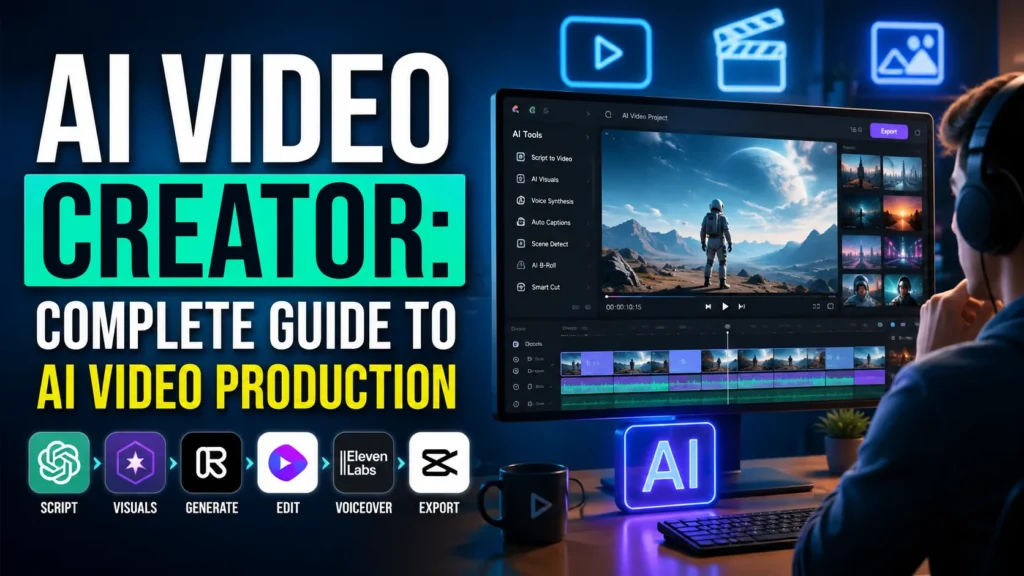
An AI video creator is a tool, platform, or professional service that uses artificial intelligence to help produce video content. The technology can automate parts of the production process. Depending on the tool, it may help with script creation, scene generation, voiceovers, avatars, animation, editing, captions, and content repurposing.
For example, a business could provide a short product brief. The AI system may turn that brief into a script, suggest scenes, generate visuals, add narration, and create a first video draft. That draft is not always ready to publish. A human should check the script, visuals, voice, branding, timing, and factual claims before the video goes live.
In simple terms, an AI video creator helps businesses produce video content faster. The quality still depends on the idea, the instructions, the tools, and the human editing behind it.
How Does Video Creator AI Work?
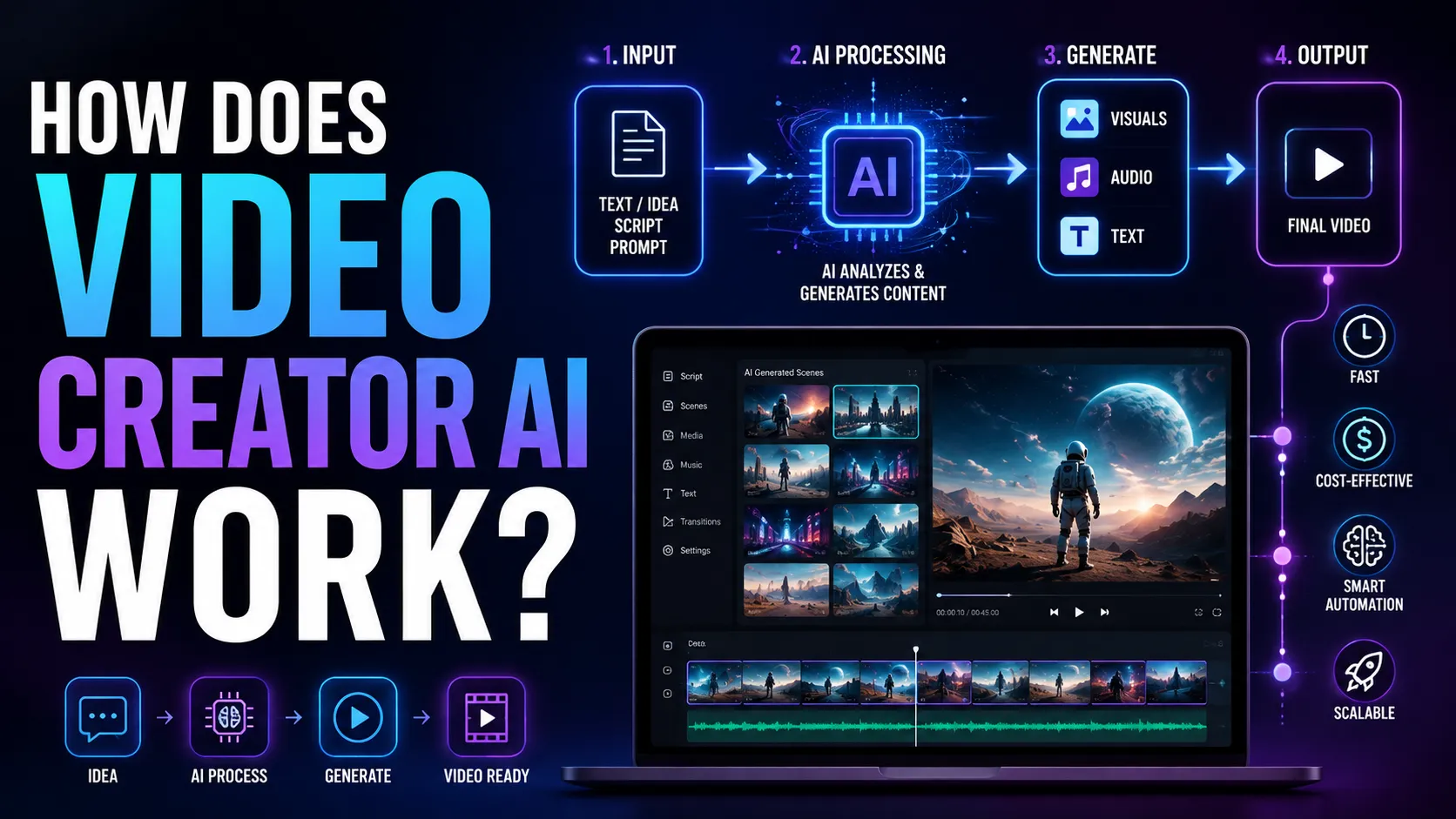
A typical video creator AI workflow looks like this:
Brief → Script → Storyboard → Visuals → Voice → Editing → Captions → Quality Check → Final Video
Each step can involve different levels of automation.
1. Start With a Brief
The brief defines the purpose of the video. It should answer basic questions:
- Who will watch it?
- What does the viewer need to know?
- What action should they take?
- Where will the video appear?
- How long should it be?
A clear brief usually produces a better result than a vague prompt.
2. Create the Script
AI can help turn an idea into a script. It can also shorten long content into a video format. For example, a 1,500-word blog post may become a 60-second educational video. The script still needs editing. AI may use generic language, repeat points, or make claims that need verification.
3. Build the Visual Story
The next step is deciding what viewers should see. AI may generate scenes from text prompts or animate existing images. This is where creative direction matters. A scene should support the narration. Random AI visuals may look impressive but add little value.
4. Add Voice and Sound
AI can generate narration in different voices and languages. The producer should check pronunciation, tone, speed, and clarity. Names, technical terms, brand names, and local references deserve extra attention.
5. Edit the Video
Editing brings the separate pieces together. This includes timing, transitions, music, captions, graphics, and scene changes. Human editing is often what turns an AI draft into a usable marketing video.
6. Review Before Publishing
The final step is quality control. The producer should check every scene and every spoken claim. This step should never be skipped just because the video was created with AI.
What Types of AI Video Tools Are Available?
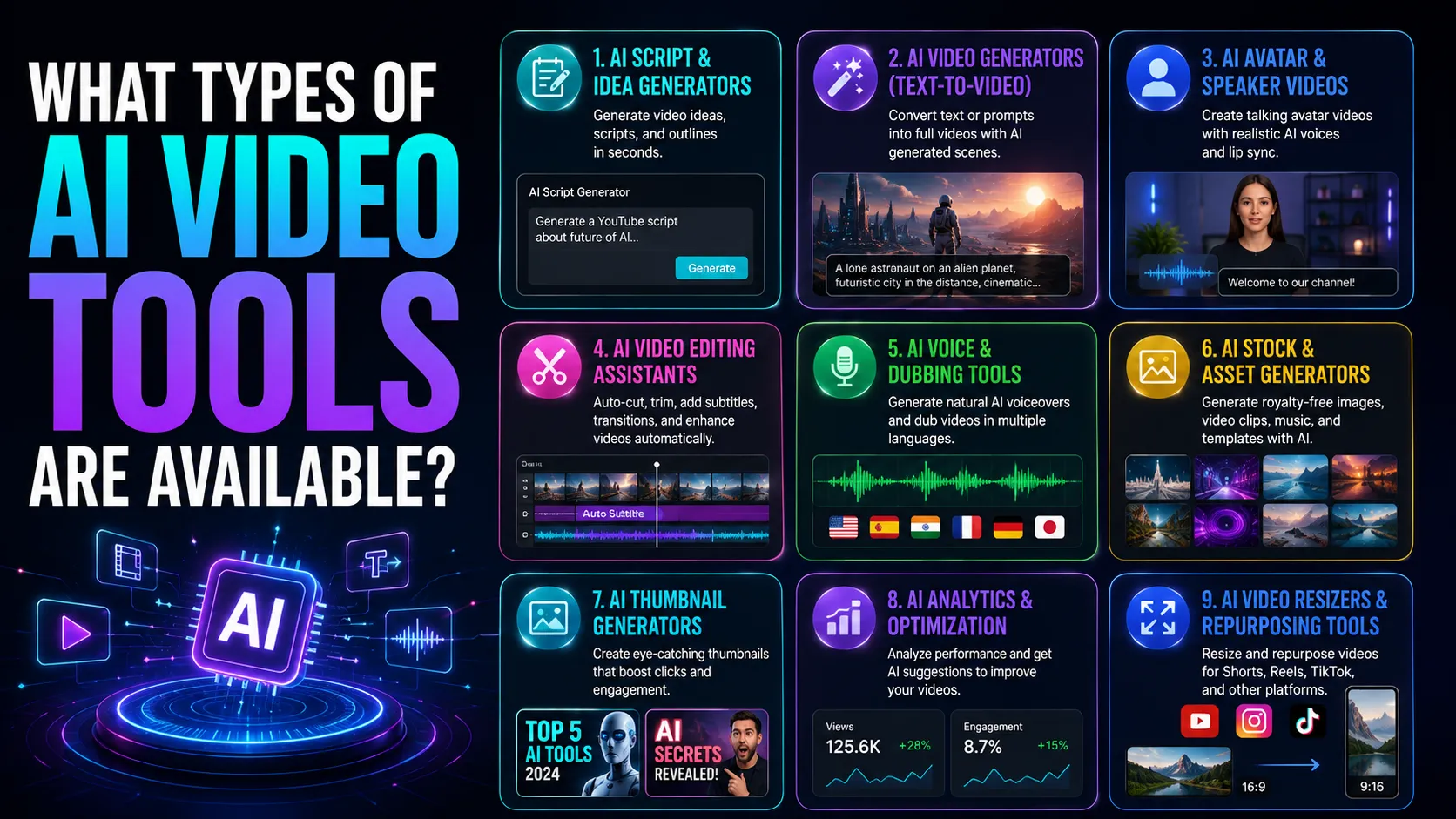
Not every AI video tool does the same job. Choosing the right category can save time and improve the final result.
Text-to-Video Tools
These tools create video scenes from written prompts. They can be useful for concept videos, creative scenes, social media content, and visual storytelling.
AI Avatar Tools
Avatar platforms create videos with digital presenters. They are useful for training, announcements, tutorials, onboarding, and some educational content.
Image-to-Video Tools
These tools animate still images. For example, a product image or photograph can be turned into a short motion clip.
AI Editing Tools
These tools focus on editing rather than generating entire videos. They may help with:
- Automatic captions
- Removing pauses
- Audio cleanup
- Video resizing
- Clip selection
- Background changes
- Short-form editing
Video Repurposing Tools
These systems help turn long videos into shorter pieces. A webinar, podcast, interview, or presentation can become several social clips.
Generative Video Tools
These tools create original video scenes from prompts or reference material. They are useful when traditional footage is not available or when a concept would be difficult to film. The best production workflow may use more than one type of tool.
What Can an AI Video Creator Make?
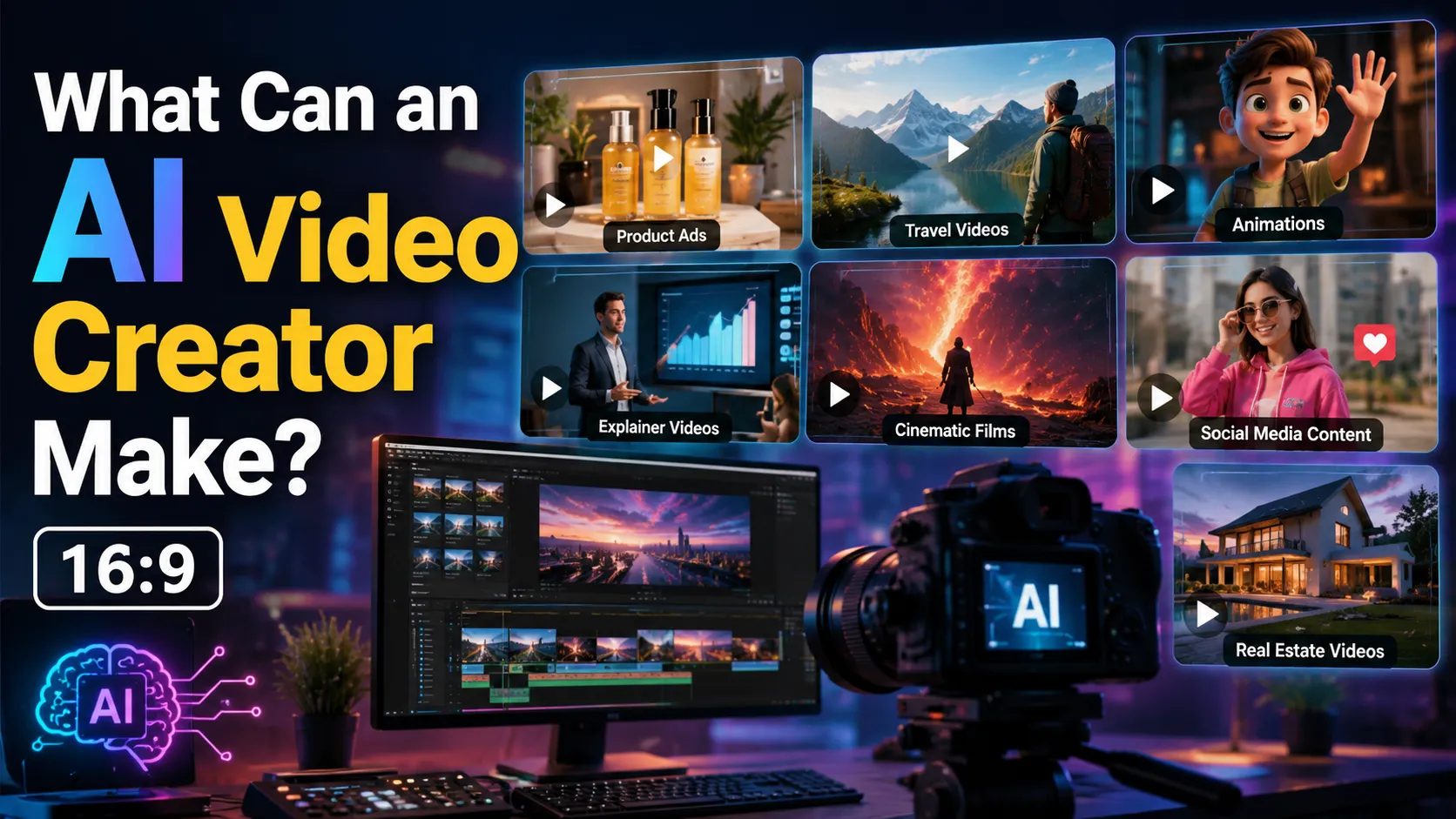
AI video creation can support many types of content. The right choice depends on the business and the audience.
Social Media Videos
Short-form content is one of the most common uses. Businesses can create:
- Educational clips
- Product highlights
- Tips
- Announcements
- Promotional videos
- Short advertisements
- FAQ videos
- Behind-the-scenes concepts
AI is especially useful when a business needs many content variations.
Explainer Videos
Explainer video production focuses on making a product, service, or process easier to understand. A software company, for example, can use an explainer to show how its platform solves a specific problem. The video does not need to explain the entire product. One clear problem and one clear solution often make a stronger story.
Product Videos
AI can assist with product demonstrations, feature videos, promotional clips, and ecommerce content. There is one important warning here. Generated products may not always look like the real product. AI can change a product’s:
- Shape
- Color
- Size
- Packaging
- Buttons
- Labels
- Proportions
- Features
That can create a trust problem. If the viewer is expected to buy the product, the final video should represent the actual product accurately.
Educational Content
Businesses can turn guides, articles, and FAQs into videos. This works well for topics that are easier to explain visually. Human review becomes even more important when the subject involves health, finance, law, safety, or other areas where inaccurate information can cause harm.
Training Videos
Companies can use AI-assisted production for employee training and onboarding. A business may create a consistent video format for new employees. It can then reuse the format for different departments or processes. This is one area where consistency and scalability can be more valuable than cinematic production.
What Are the Benefits of Using an AI Video Creator?
AI video production can solve several practical problems.
Faster Production
AI can reduce the time spent on repetitive tasks. A producer may not need to build every scene, caption, or variation manually. This can be useful for businesses that publish content every week.
Easier Scaling
Creating one video is different from creating fifty. When a business needs a large content library, repetitive manual work can become expensive. AI can help create first drafts and variations at a larger scale.
More Content From Existing Material
Existing content can become new video content. A single article can become several short videos. A webinar can become social clips. A product guide can become an explainer. This helps businesses get more value from content they already have.
Multiple Formats
One concept can be adapted for different channels. A business may need:
- A horizontal YouTube video
- A vertical short
- A square social post
- A short advertisement
- A captioned version
AI-assisted workflows can make these variations easier to produce.
Consistent Branding
A structured production system can keep brand elements consistent. These may include:
- Logo placement
- Typography
- Voice style
- Visual tone
- Messaging
- Intro and outro formats
Consistency becomes more important as content volume grows.
What Are the Limitations of AI Video Production?
AI video tools have improved quickly, but they still make mistakes. Some common problems include strange movement, inconsistent characters, incorrect text, weak lip-sync, unnatural voices, and inaccurate objects.
These problems are not always obvious at first glance. A scene may look impressive until someone notices that a product changes shape between shots. That is why human review matters.
Common Quality Problems
A producer should look for:
- Distorted hands or objects
- Inconsistent faces
- Product errors
- Wrong text
- Pronunciation mistakes
- Poor lip-sync
- Unnatural movement
- Incorrect subtitles
- Weak scene continuity
- Brand inconsistencies
- Unsupported claims
The more important the video, the more carefully it should be reviewed.
When Should You Use AI, Traditional Video, or Both?
There is no single production method that works for every project. A simple decision framework can help.
Use AI When You Need Speed and Scale
AI-assisted production makes sense when you need frequent content, multiple variations, educational videos, simple explainers, or repeatable social media assets.
Use Traditional Production When Authenticity Matters
Traditional filming is often better when the real person, real product, physical location, or live performance is central to the story. A customer testimonial is a good example. The value comes from the real person’s experience. Replacing that person with a synthetic avatar may weaken the message.
Use a Hybrid Workflow When You Need Both
Hybrid production combines real footage with AI-assisted tools. For example:
Real product footage → AI-assisted editing → captions → voice cleanup → short clips → platform-specific versions
This can work well for real estate, ecommerce, hospitality, professional services, and many other businesses.
Project Need | Recommended Approach |
Frequent social content | AI-assisted |
Simple explainer | AI + human editing |
Real customer testimonial | Traditional |
Exact product demonstration | Traditional or hybrid |
Training at scale | AI-assisted |
High-end commercial | Traditional or hybrid |
Multiple ad variations | AI-assisted |
Real estate content | Hybrid |
Live event coverage | Traditional |
Educational content | AI + human review |
The decision should start with the communication goal, not the technology.
When Should You Not Use AI Video?
AI is not always the best option. Traditional production may be the better choice when:
- A real person is central to the story
- A physical product must be shown exactly
- A live event needs to be documented
- Authentic customer emotion is important
- A physical location carries meaning
- A complex physical process must be demonstrated
- Cinematic realism is essential
This does not make AI less useful. It simply means that different production problems need different solutions.
Why AI Video Production Is Useful for Los Angeles Businesses
Los Angeles has a wide range of businesses. The content needs of a real estate company are very different from those of a restaurant, SaaS company, beauty brand, medical practice, or home service provider. Yet they share one challenge: they need content that gets attention without wasting production resources.
Los Angeles Real Estate
Real estate businesses can need property tours, neighborhood videos, buyer education, market explainers, and social clips. A hybrid approach can be useful here. The actual property can be filmed with a camera. AI-assisted editing can then help create shorter clips, captions, and different versions.
Restaurants and Hospitality
Restaurants can create videos around new menu items, seasonal promotions, chef stories, events, and frequently asked questions. Real food footage can provide authenticity. AI can then assist with editing, captions, voiceovers, and variations.
Technology and SaaS
Technology companies often have products that are difficult to explain in a few sentences. An AI-assisted explainer can show the problem, demonstrate the workflow, and explain the value in a simple way.
Healthcare Practices
Healthcare businesses can use video to introduce services, answer common questions, explain processes, and introduce staff. Accuracy is critical in this area. AI should assist the production process. It should not replace qualified review of medical information.
Fashion and Beauty
Brands can use AI-assisted production for campaign concepts, social clips, product education, and creative variations. But product appearance must remain accurate. If a shade, package, or physical product is changed by AI, the viewer may get the wrong impression.
Professional Services
Consultants, agencies, law firms, financial businesses, and other professional service companies can use educational videos to answer common customer questions. This can be more useful than publishing constant promotional videos.
What Does a Real AI Video Production Workflow Look Like?
The first AI-generated video is rarely the final video. That is a normal part of the process. A practical production workflow may look like this:
Brief
The team defines the audience, goal, platform, message, and desired length.
Research
Important claims, product information, customer questions, and brand requirements are collected.
Script
The first script is created and edited. Unnecessary claims and generic wording are removed.
Storyboard
The team decides what viewers should see during each part of the narration.
AI Generation
The required scenes, voices, animations, or other assets are created.
Review
The team checks the generated output. A weak scene can be regenerated instead of rebuilding the entire project.
Editing
The strongest scenes are combined. Timing, captions, music, transitions, and graphics are adjusted.
Quality Control
The final video is checked for factual, visual, technical, and branding errors.
Client Approval
The business reviews the video and requests any necessary changes.
Final Delivery
The finished video is exported in the formats needed for its intended platforms. This process is more realistic than assuming one prompt creates a perfect finished video.
What Does an Experienced AI Video Producer Check?
Good production is often about catching small problems before the audience sees them. An experienced producer checks more than resolution and video length.
Visual Accuracy
Does the product look like the real product? Do characters remain consistent? Are objects behaving naturally?
Brand Accuracy
Are the correct logos, colors, fonts, and messages being used?
Audio Quality
Is the voice natural? Are names pronounced correctly? Does the music overpower the narration?
Caption Accuracy
Are subtitles spelled correctly? Do they match the spoken words? Are they readable on mobile screens?
Message Clarity
Can someone understand the main point without watching the video twice?
Call to Action
Does the CTA match the goal? A product awareness video may not need the same CTA as a lead generation advertisement.
Factual Accuracy
Every important claim should be checked against reliable information. AI-generated text should never be treated as automatically accurate.
What Are AI Video Production Services?
AI video production services use artificial intelligence as part of a professional video workflow. Depending on the provider, services can include:
- Video strategy
- Scriptwriting
- Storyboarding
- AI scene generation
- AI avatars
- Voiceovers
- Animation
- Editing
- Captions
- Social media versions
- Explainer videos
- Product videos
- Content repurposing
- Multilingual versions
The number of AI tools used is not the main measure of quality. The real question is whether the service produces content that serves a clear business goal.
What Is an AI Video Production Agency?
An AI video production agency manages video creation as a service rather than simply providing software. The agency may handle the project from the first brief to the final export.
A typical workflow can include research, creative direction, scripting, production, editing, revisions, and quality control. This can be useful for businesses that need regular video content but do not have an internal production team.
How Do You Choose the Best AI Video Creator Agency?
The Best AI video creator agency for one business may not be the best for another. Start with the portfolio. Look for videos that show clear storytelling. Do not focus only on flashy AI effects. Then ask about the production process. A good provider should explain:
- Who writes the scripts
- Who reviews AI output
- How revisions work
- How branding is handled
- What licenses apply
- What formats are included
- How factual errors are checked
Also consider whether the agency can scale. If you need four videos today and forty next month, the production system should be able to handle that increase without a major drop in quality.
What Makes the Best AI Video Production Company?
The Best AI video production company is not simply the one with the newest AI tool. Look for a team that understands both technology and communication. A strong provider should be able to:
- Plan: Connect the video to a real business objective.
- Write: Create a script that sounds natural and stays focused.
- Create: Use AI where it improves the production process.
- Edit: Turn individual assets into a coherent story.
- Review: Catch visual, audio, factual, and branding problems.
- Adapt: Create versions for different platforms and audiences.
This combination is more valuable than technology alone.
What Is an AI Content Agency?
An AI content agency uses AI tools to support content creation across several channels. That can include articles, images, videos, social posts, advertisements, and content repurposing. The biggest opportunity is not simply producing more content. It is connecting content. For example:
Research → Blog article → Video → Short clips → Social posts → FAQ content → Email
One useful idea can support several channels. That can make content production more efficient while keeping the messaging consistent.
How Can AI Video Support SEO and AI Search?
Video can support a broader SEO strategy when it is connected to useful website content. A business can publish a video with:
- A clear title
- Useful surrounding copy
- Captions
- A transcript
- Relevant metadata
- Supporting FAQs
- Accurate descriptions
This gives search systems more context. It also helps people who prefer different ways of consuming information. For example, a service page can explain a topic in text and then provide a short video for visitors who prefer visual content. The same principle applies to AI search.
Clear definitions, direct answers, structured sections, and factual explanations make content easier for retrieval systems to interpret. However, no one can guarantee placement in an AI Overview, AI search result, or other generative search feature. Visibility depends on the query, competition, indexing, source quality, authority, and other search factors.
What Is an AI Video Maker and How Is It Different From an Agency?
An AI video maker usually refers to a software tool that helps users create videos from text, images, templates, or prompts. An agency provides a service around the technology. For example, a software tool may generate a first draft from a script.
An agency may research the audience, write the script, develop the concept, create the video, edit it, review the output, make revisions, and prepare final versions. A simple internal video may only need a tool. A major marketing campaign may need a complete production team. The choice depends on the project’s complexity.
How Much Do AI Video Production Services Cost?
There is no standard price for AI video production. The cost depends on what is being produced and how much professional work is involved. Important factors include:
- Video length
- Number of scenes
- Scriptwriting
- Voiceover
- Animation
- Custom visuals
- Editing
- Number of revisions
- Subtitles
- Multiple languages
- Platform-specific versions
- Licensing requirements
When comparing providers, ask what the quoted price includes. One company may offer automated video generation only. Another may include strategy, scripting, editing, revisions, and quality control. Those are very different services.
Can AI-Generated Videos Be Used Commercially?
They can be used commercially in many cases, but businesses should check the rights that apply to the specific tools and assets involved. This can include:
- AI-generated content
- Music
- Stock footage
- Images
- Voiceovers
- Digital avatars
- Uploaded client material
- Third-party assets
Businesses should also consider permission when using someone’s voice, face, or likeness. The exact rules depend on the platform, asset, contract, and intended use. A production provider should be able to explain what rights and licenses apply to the content it delivers.



Best Web Development Agency in Pakistan: How to Choose the Right Partner
SUMMARIZE THIS POST WITH ChatGPT GoogleAI Perplexity Claude Jump To

Graphic Design Services in Pakistan: A Complete Guide for Businesses
SUMMARIZE THIS POST WITH ChatGPT GoogleAI Perplexity Claude Jump To

Best Social Media Marketing Agency in Pakistan: A Complete Guide for 2026
SUMMARIZE THIS POST WITH ChatGPT GoogleAI Perplexity Claude Jump To

SEO Services in Pakistan: A Complete Guide to Growing Your Business Online
SUMMARIZE THIS POST WITH ChatGPT GoogleAI Perplexity Claude Jump To