+92 300 9842234
Side Info Heading
Side Info Text
Gallery Heading

Follow Us

Google Ads has emerged as one of the most accurate and quantifiable methods of expanding business, particularly those companies that are interested in targeting individuals with high purchasing intent. The majority of marketing channels are forcing your message to an interested or interested person.
Conversely, Google Ads will also find you customers who are in the process of seeking what you have to offer, and this will provide you with a shortcut to quality leads and sales. Once you get the patterns of its data, its intent and optimisation cycles, this platform is much more than a traffic tool, though it demonstrates a predictable revenue system.
This guide will cover ten tips that work to ensure you can be able to bring out the best of your campaigns and develop a competitive advantage that lasts in the long term.
1. See Where Google Ads Fits in Your Marketing System
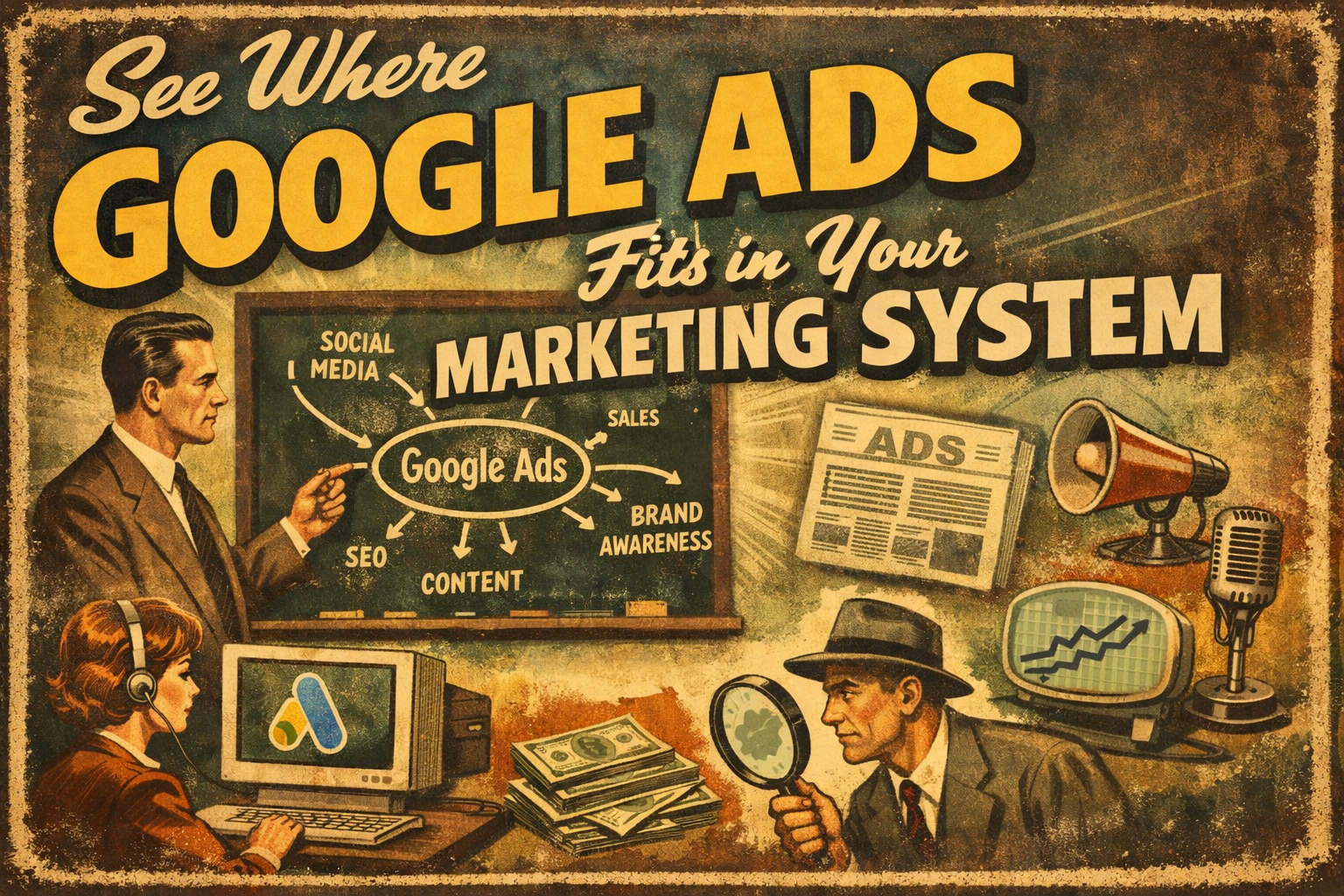
To start with, you have to know what Google Ads can provide to your larger marketing ecosystem. Most of the businesses treat it as a one-off channel and hope that traffic can be turned into buyers just by placing ads. As a matter of fact, it becomes strong when it is under a well-planned funnel.
Even the most effective advertisements will not perform well in case your landing pages are not strong, your sales follow-up is slow, or your prices are not clear. Such a solid base enables Google Ads to focus on what it best achieves, that is, high-intent demand.
That is why a clearly-positioned, on-point, and minimised customer-path strategy will always be better than a campaign constructed on random experimentation. When a Google Ads professional creates an account, he or she begins by mapping the search-to-conversion traffic flow, so that there is no point of interruption in the search and conversion process.
2. Set Clear, Measurable Campaign Goals
Any successful campaign has clear-cut and quantifiable objectives. In case all you want is more traffic, you will never be in a position to know whether your money is well spent. A meaningful goal links your advertisement investment to actual business results in the form of leads, purchases, bookings, or even calls.
Having a clear objective, it less difficult to organize your bidding strategy, approach to the landing page, and keywords. This transparency also assists you in seeing the problems at an early stage.
To illustrate, when your campaign gets clicks but not conversions, then there could be a problem with your offer or landing page. When you have good conversions but at high costs, your target market is either too wide. An objective goal will inform your optimization choices, be informed by data rather than assumptions.
3. Build a Tight Campaign Structure That Produces Clean Data

Profitable advertising is based on a clean structure. When campaigns are haphazardly combined with loosely connected keywords, ambiguous themes of ad groups, or a mixture of search intent, the information is noisy and almost unreadable.
The account is structured by a professional Google Ads specialist in such a manner that intent is isolated and each set of keywords is under strict control. This will enable you to know precisely what searches yield quality leads and which searches are eating your budget.
It is also easy to optimize using a clean structure since you can pause, scale, or refine specific segments without impacting the whole account. This will result in a high level of account efficiency and cost control in the course of time.
4. Prioritize Intent-Focused Keyword Research
Search volume should not determine the research of keywords. The actual strength of Google Ads is the ability to capture the intent. Keywords with high intent, such as buy, near me, price, often result in quicker conversion, whereas searches with comparison, such as your brand vs competitor, assist in getting customers who are about to make a purchase.
The success of the searchers is not the number of clicks, but their qualification. The correct process of keyword research also entails constant review of your search terms and getting rid of irrelevant search terms that drain your budget.
By eliminating noise in your campaigns, you end up with a more profitable and predictable traffic. Such discipline provides improved control and a much clearer view of the intent of the user.
5. Craft Ads That Match the Searcher’s Thought Process
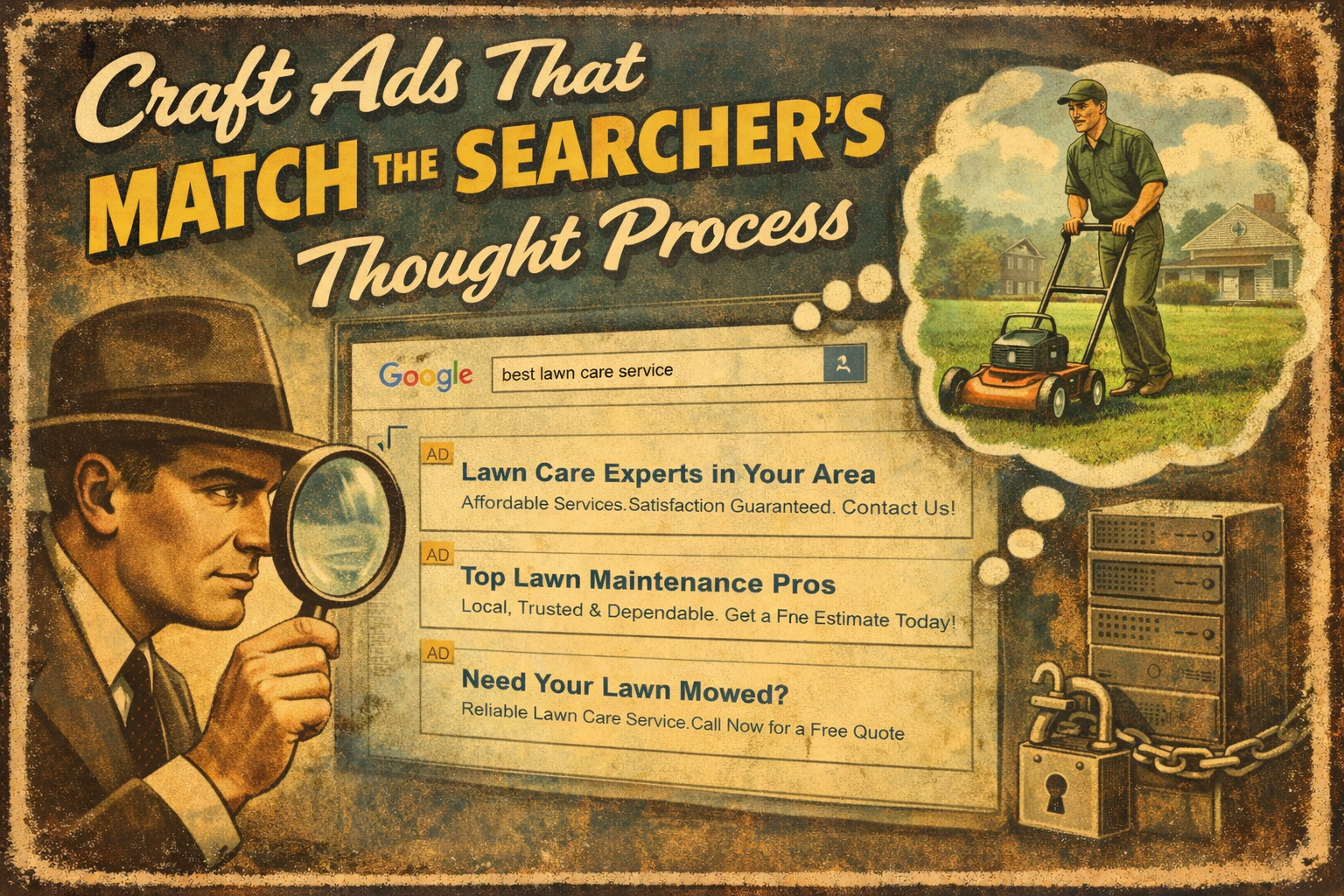
Your ad copy should be the one that is on the mind of the user when they are searching. Individuals tap on the advertisement that sounds most concerning their specific purpose. Having a headline that reflects the keyword and a description that gives a convincing but realistic value proposition, your click-through rate grows automatically.
Good advertisements address the issue directly that a user has and are specific, and provide a solution instead of empty promises. Powerful calls to action motivate the users to proceed to the next step. When your advertising text and the search purpose match, your advertisement will rise above the rest of the competitors and place your business as the most suitable option.
6. Use Landing Pages That Amplify Conversions
One of the greatest errors that businesses commit is driving paid traffic to a homepage. An advertisement-specific landing page created with the specific message of your advertisement is much more likely to convert. It is expected to make the offer clear, eliminate distractions, and direct a user to only one key action.
Even the most powerful ads will be ruined immediately once a slow or bizarre page is loaded. In case your landing page repeats the same promise that you made in your advertisement and answers the concern of the user in a clear and understandable way, your conversion rate will skyrocket.
The seamless transition between the search and the ad, and the landing page will provide users with a frictionless experience, which will result in increased revenue using the same traffic.
7. Let Data Determine the Best Bidding Strategy
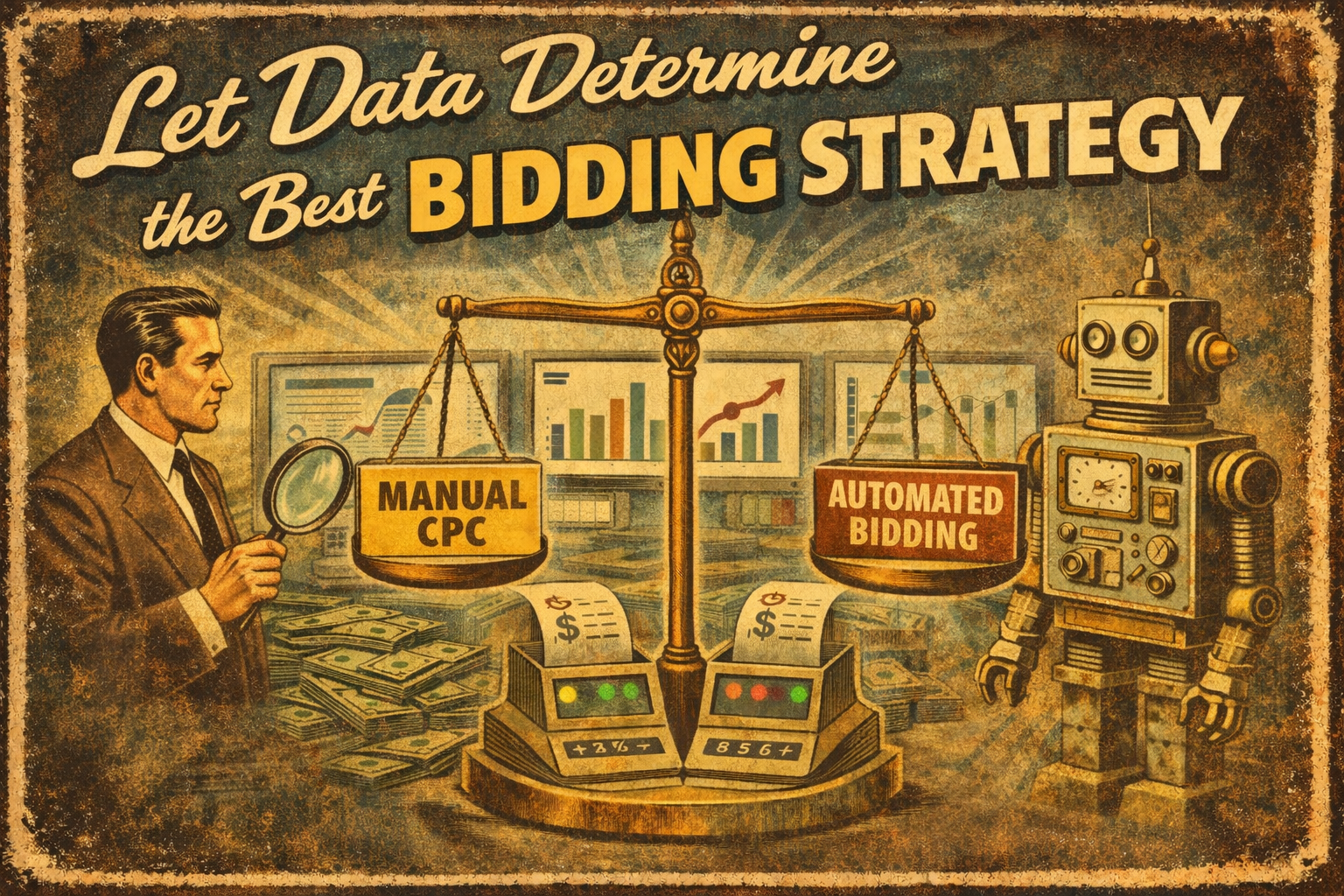
Rather than using intuition when making bidding decisions, use performance data. During the very initial phase of a campaign, the manual strategies will assist you in gathering clean information. Automated bidding can be used to amplify results once regular conversions are established. Smart bidding operates optimally when it is fed with good conversion data.
When tracking is incomplete or inconsistent, the algorithm will be maximising on the incorrect signals. Adherence is essential: it is not necessary to make constant changes, as it will restore the learning curve and slow down performance.
Comparing the cost per conversion, return on ad spend, and impression share, you figure out where the most lucrative demand can be found and how to address it as effectively as possible.
8. Combine Keyword Targeting with Audience Signals
Whereas keywords identify what the people seek, audience notifications identify who they are. By doing this, combining both together, you have much more accurate campaigns. The inclusion of in-market, affinity or custom audiences assists Google in knowing more about the nature of users who convert at higher rates.
Simultaneously, filtering out low-value audiences will make sure your money is spent on individuals with the greatest chances of purchasing.
The layered approach ensures that wasted money is minimised and the conversion rates are maximised without an increment in traffic. It also provides a feedback mechanism whereby Google gets to know about the exact customer profile you are interested in as time progresses.
9. Continuously A/B Test and Refine Your Campaigns
The process of optimisation is ongoing, rather than a single job. Create test versions of new ad varieties, landing pages, headlines and calls to action and test them individually to discover meaningful changes. Minor adjustments, which are directed by data, build up to enormous returns.
The target is to achieve a continuous rise in the level of click-through, reduce the cost per click, and enhance the conversion rates. Testing is further enhanced by good analytics, where you can view the behaviour of users after clicking your ad and where you can make improvements in your funnel.

10. Track Metrics That Directly Connect to Revenue
Google Ads is not a success in terms of clicks or impressions, but in terms of revenue and profit. Measure what is important: conversion rates, cost per conversion, revenue per lead, and lifetime customer value.
When you have proper tracking and attribution, you understand what campaigns attract the best customers and need to be optimised or eliminated. An entire story is told by your metrics, and you can scale without worrying that you are going to waste money and make assumptions.
FAQs:
Is $10 a day enough for Google Ads?
Yes, it will be sufficient to test small campaigns with 10/day, yet you will get slow and limited results based on the CPC of your industry.
What are Google Ads?
Google Ads is a paid search advertising system that is operated by Google, where enterprises put advertisements on the search results, YouTube, and other partners to acquire traffic and clientele.
Is $20 a day good for Google Ads?
Yes, $20/day provides more data and optimises faster, so it is a more appropriate initial budget when compared to $10/day.
How much does Google Ads cost?
The advertisers usually pay between 0.50 and 5 per click, depending on the competition and price bids in different industries.
How much does Google Ads pay per 1,000 views?
Google Ads is not paying the advertisers, it is you who is paying Google. But when you are referring to AdSense, then you normally get 1-10 dollars per 1000 views based on the niche.
Is $500 a month enough for Google Ads?
Yes, small businesses can afford campaigns with $500/month to test and collect data and make first leads.
Is Google ad-free or paid?
Google Ads is not free; it requires money that you have to pay per click or impression, or action, based on the type of bid that you are choosing.
Do we really see 4000 ads a day?
It is a guess; the majority of people see thousands of advertisements every day on phones, the Internet, applications, and outdoors.
How do I make $100 a day with Google AdSense?
High-traffic content, good SEO, and a highly paying niche are required to make you a consistent $100/day using AdSense.
Conclusion
Optimisation based on search intent, landing page experience, bidding strategy, and data makes Google Ads successful in the long run. Combining these factors, the platform turns into the expected engine of growth instead of an expensive risk of an advertisement.
The way to do this is by getting strategic and doing it consistently in your approach to your campaigns, and to refine them through analysis by month-end. You have created a system that gets better and better.
Through organised examination, effective tracking, and the recommendations that a proficient Google Ads specialist will employ, your organisation can use Google Ads to draw in high-purpose clients, surpass their competitors, and expand profitably.